Wang Laduona, Wu Yijun, Kang Kai, Zhang Xuanwei, Luo Ren, Tu Zegui, Zheng Yue, Lin Guo, Wang Hui, Tang Min, Yu Min, Zou Bingwen, Tong Ruizhan, Yi Linglu, Na Feifei, Xue Jianxin, Yao Zhuoran, Lu You
Division of Thoracic Tumor Multimodality Treatment, Cancer Center, West China Hospital, Sichuan University, Chengdu, China.
Laboratory of Clinical Cell Therapy, West China Hospital, Sichuan University, Chengdu, China.
Transl Lung Cancer Res. 2024 May 31;13(5):1032-1046. doi: 10.21037/tlcr-24-33. Epub 2024 May 21.
Cyclin-dependent kinases 4 and 6 (CDK4/6) inhibitors have shown significant activity against several solid tumors by reducing the phosphorylation of the canonical CDK4/6 substrate retinoblastoma (Rb) protein, while the anti-tumor effect of CDK4/6 inhibitors on Rb-deficient tumors is not clear. Most small cell lung cancers (SCLCs) are Rb-deficient and show very modest response to immune checkpoint blockade (ICB) despite recent advances in the use of immunotherapy. Here, we aimed to investigate the direct effect of CDK4/6 inhibition on SCLC cells and determine its efficacy in combination therapy for SCLC.
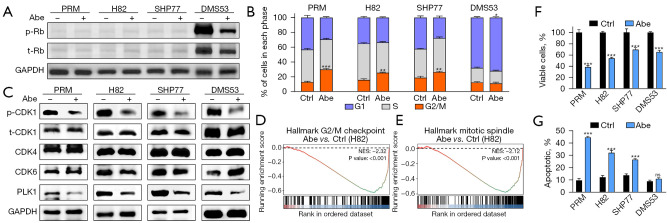
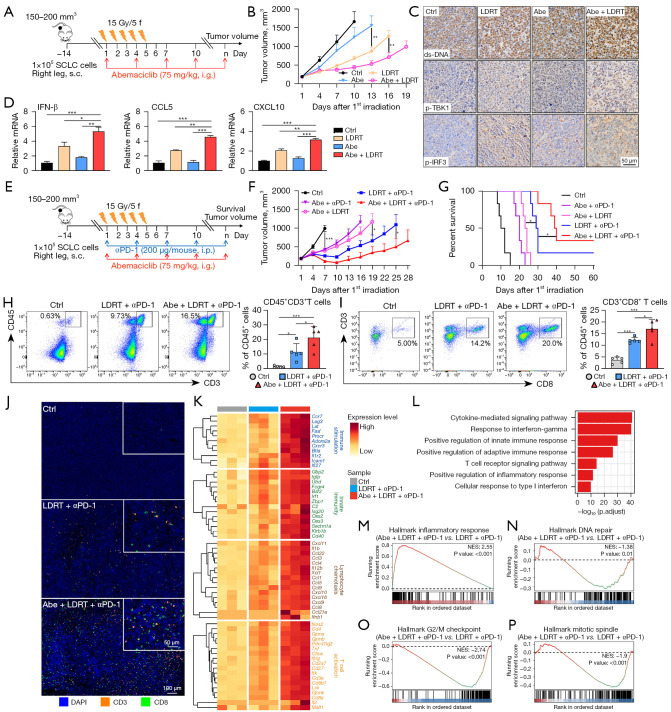
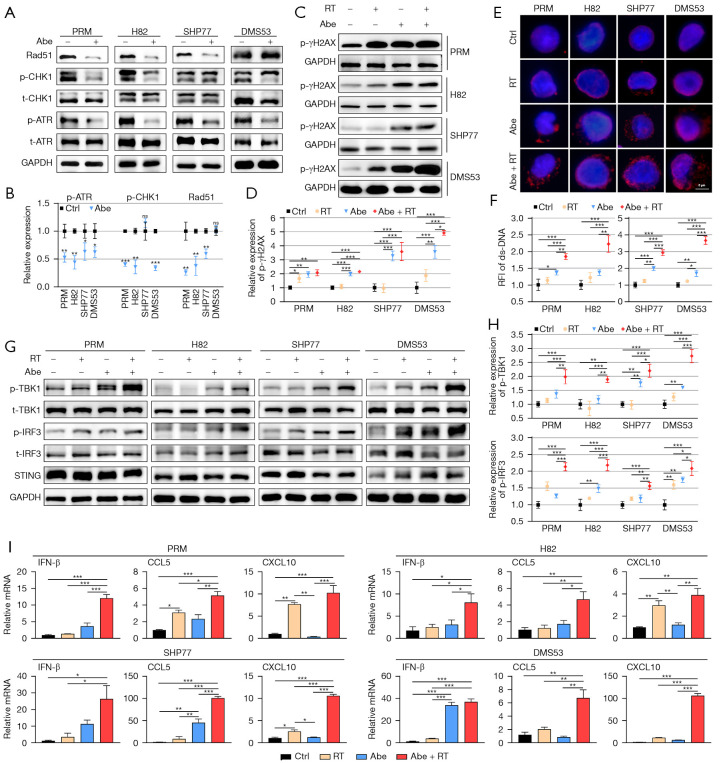
The immediate impact of CDK4/6 inhibitor abemaciclib on cell cycle, cell viability and apoptosis in four SCLC cell lines was initially checked. To explore the effect of abemaciclib on double-strand DNA (ds-DNA) damage induction and the combination impact of abemaciclib coupled with radiotherapy (RT), western blot, immunofluorescence (IF) and quantitative real-time polymerase chain reaction (qRT-PCR) were performed. An Rb-deficient immunocompetent murine SCLC model was established to evaluate efficacy of abemaciclib in combination therapy. Histological staining, flow cytometry analysis and RNA sequencing were performed to analyze alteration of infiltrating immune cells in tumor microenvironment (TME).
Here, we demonstrated that abemaciclib induced increased ds-DNA damage in Rb-deficient SCLC cells. Combination of abemaciclib and RT induced more cytosolic ds-DNA, and activated the STING pathway synergistically. We further showed that combining low doses of abemaciclib with low-dose RT (LDRT) plus anti-programmed cell death protein-1 (anti-PD-1) antibody substantially potentiated CD8 T cell infiltration and significantly inhibited tumor growth and prolonged survival in an Rb-deficient immunocompetent murine SCLC model.
Our results define previously uncertain DNA damage-inducing properties of CDK4/6 inhibitor abemaciclib in Rb-deficient SCLCs, and demonstrate that low doses of abemaciclib combined with LDRT inflame the TME and enhance the efficacy of anti-PD-1 immunotherapy in SCLC model, which represents a potential novel therapeutic strategy for SCLC.
细胞周期蛋白依赖性激酶4和6(CDK4/6)抑制剂通过降低经典CDK4/6底物视网膜母细胞瘤(Rb)蛋白的磷酸化,对多种实体瘤显示出显著活性,而CDK4/6抑制剂对Rb缺陷型肿瘤的抗肿瘤作用尚不清楚。大多数小细胞肺癌(SCLC)是Rb缺陷型,尽管免疫疗法的使用最近取得了进展,但对免疫检查点阻断(ICB)的反应非常有限。在此,我们旨在研究CDK4/6抑制对SCLC细胞的直接作用,并确定其在SCLC联合治疗中的疗效。
首先检查CDK4/6抑制剂阿贝西利对四种SCLC细胞系的细胞周期、细胞活力和凋亡的即时影响。为了探索阿贝西利对双链DNA(ds-DNA)损伤诱导的影响以及阿贝西利与放疗(RT)联合的影响,进行了蛋白质免疫印迹、免疫荧光(IF)和定量实时聚合酶链反应(qRT-PCR)。建立Rb缺陷的免疫活性小鼠SCLC模型,以评估阿贝西利在联合治疗中的疗效。进行组织学染色、流式细胞术分析和RNA测序,以分析肿瘤微环境(TME)中浸润免疫细胞的变化。
在此,我们证明阿贝西利在Rb缺陷的SCLC细胞中诱导ds-DNA损伤增加。阿贝西利与RT联合诱导更多的胞质ds-DNA,并协同激活STING通路。我们进一步表明,在Rb缺陷的免疫活性小鼠SCLC模型中,低剂量阿贝西利与低剂量RT(LDRT)加抗程序性细胞死亡蛋白1(抗PD-1)抗体联合使用,可显著增强CD8 T细胞浸润,显著抑制肿瘤生长并延长生存期。
我们的结果确定了CDK4/6抑制剂阿贝西利在Rb缺陷的SCLC中以前不确定的DNA损伤诱导特性,并证明低剂量阿贝西利与LDRT联合可使TME炎症化,并增强抗PD-1免疫疗法在SCLC模型中的疗效,这代表了一种潜在的SCLC新型治疗策略。