Department of Ecology, Environment and Plant Sciences, Stockholm University, 106 91, Stockholm, Sweden.
Department of Plant Biology and Biodiversity Management, Addis Ababa University, Addis Ababa, Ethiopia.
Commun Biol. 2024 Jun 10;7(1):714. doi: 10.1038/s42003-024-06381-5.
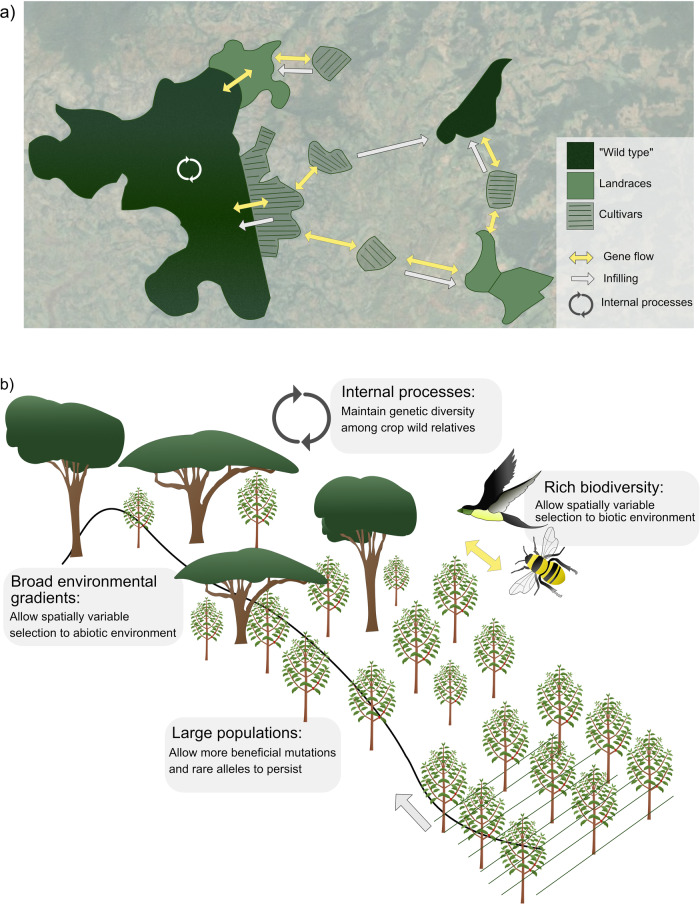
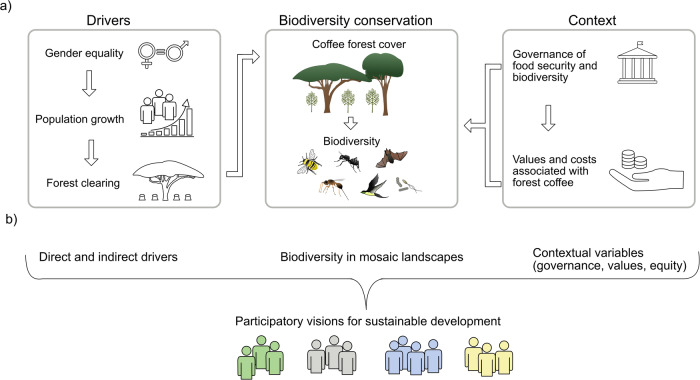
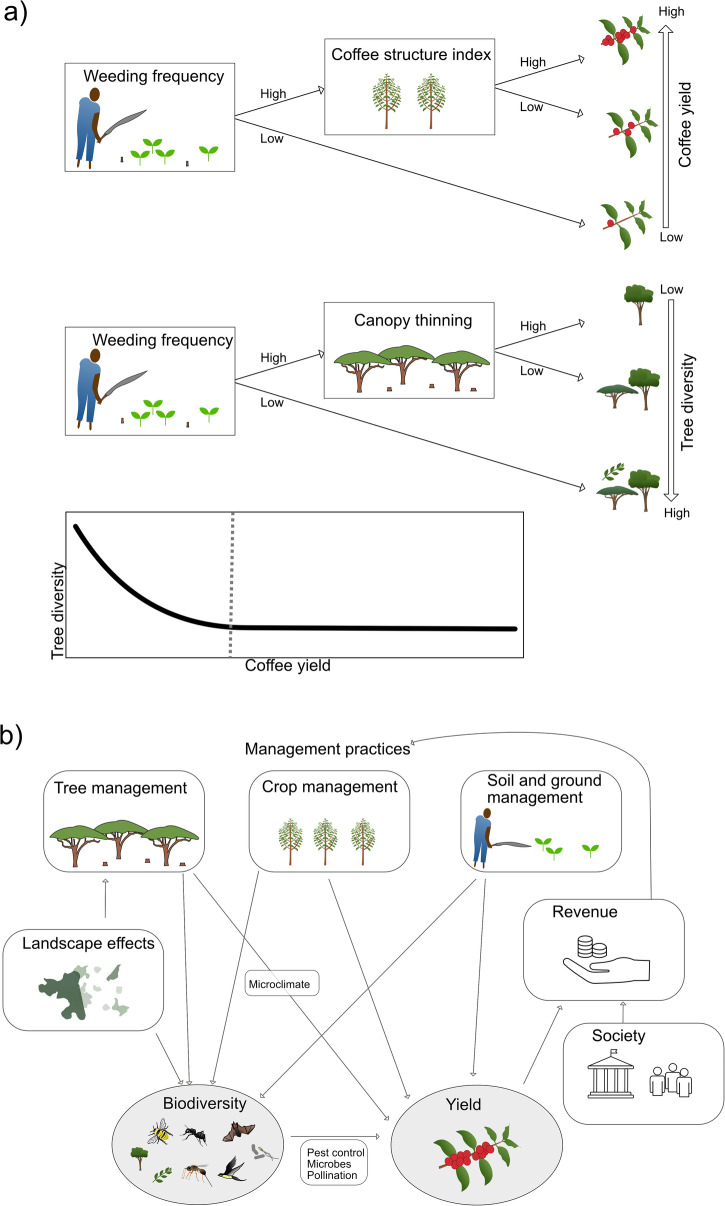
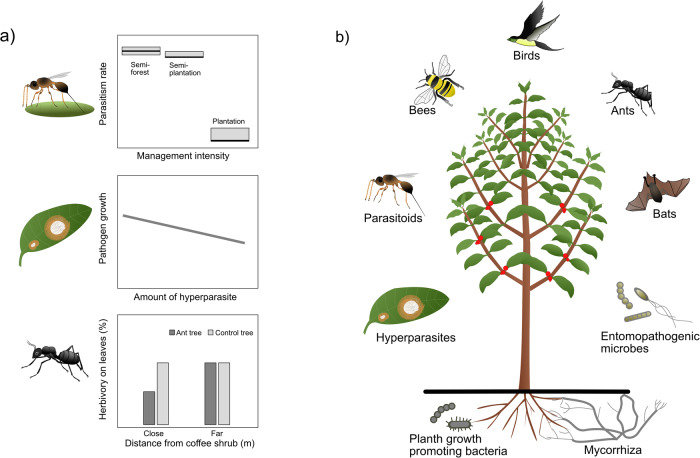
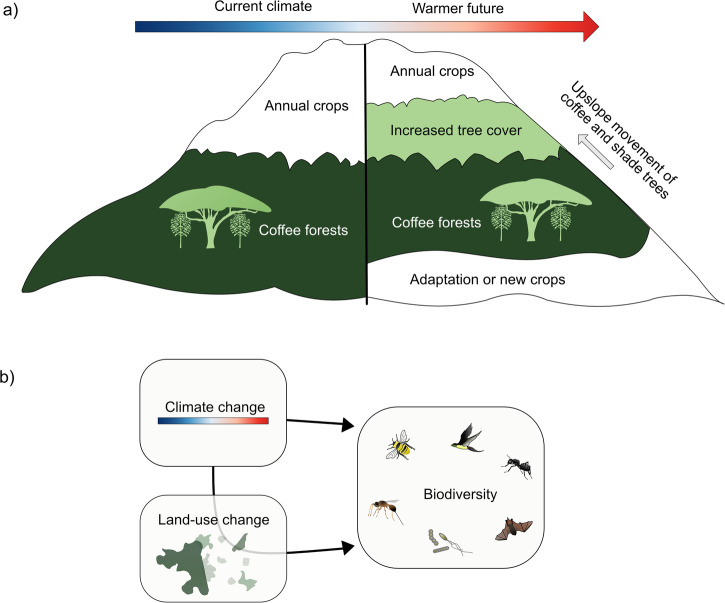
The reality for conservation of biodiversity across our planet is that all ecosystems are modified by humans in some way or another. Thus, biodiversity conservation needs to be implemented in multifunctional landscapes. In this paper we use a fascinating coffee-dominated landscape in southwest Ethiopia as our lens to derive general lessons for biodiversity conservation in a post-wild world. Considering a hierarchy of scales from genes to multi-species interactions and social-ecological system contexts, we focus on (i) threats to the genetic diversity of crop wild relatives, (ii) the mechanisms behind trade-offs between biodiversity and agricultural yields, (iii) underexplored species interactions suppressing pest and disease levels, (iv) how the interactions of climate change and land-use change sometimes provide opportunities for restoration, and finally, (v) how to work closely with stakeholders to identify scenarios for sustainable development. The story on how the ecology and evolution of coffee within its indigenous distribution shape biodiversity conservation from genes to social-ecological systems can inspire us to view other landscapes with fresh eyes. The ubiquitous presence of human-nature interactions demands proactive, creative solutions to foster biodiversity conservation not only in remote protected areas but across entire landscapes inhabited by people.
从全球范围来看,生物多样性保护的现实情况是,所有生态系统都在某种程度上受到人类的影响。因此,生物多样性保护需要在多功能景观中实施。在本文中,我们以埃塞俄比亚西南部一个迷人的咖啡主导景观为研究对象,从基因到多种物种相互作用以及社会生态系统的层次,得出在后野生世界中进行生物多样性保护的一般经验。我们重点关注(i)作物野生亲缘种遗传多样性面临的威胁,(ii)生物多样性与农业产量之间权衡取舍的背后机制,(iii)对病虫害水平具有抑制作用的物种相互作用,(iv)气候变化和土地利用变化的相互作用如何有时为恢复提供机会,以及(v)如何与利益相关者密切合作,确定可持续发展的情景。咖啡在其原生分布范围内的生态和进化如何从基因到社会生态系统塑造生物多样性保护的故事,可以启发我们用新的视角看待其他景观。人类与自然相互作用的普遍存在要求我们采取积极主动、富有创意的解决方案,不仅在偏远的保护区,而且在整个有人居住的景观中促进生物多样性保护。