Shenzhen Key Laboratory of Plant Genetic Engineering and Molecular Design, Southern University of Science and Technology, Shenzhen, 518055, China.
Peking University Institute of Advanced Agricultural Sciences, Shandong Laboratory of Advanced Agricultural Sciences at Weifang, Weifang, 61000, Shandong, China.
Nat Commun. 2024 Jun 15;15(1):5130. doi: 10.1038/s41467-024-49571-9.
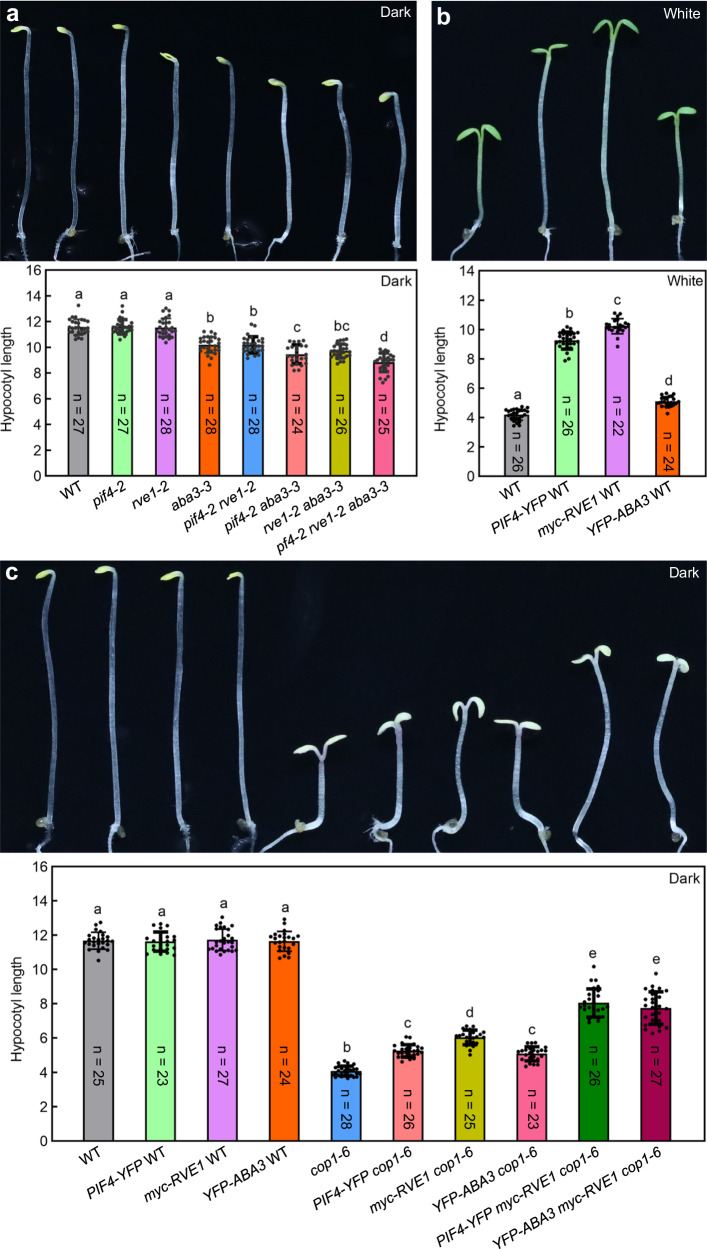
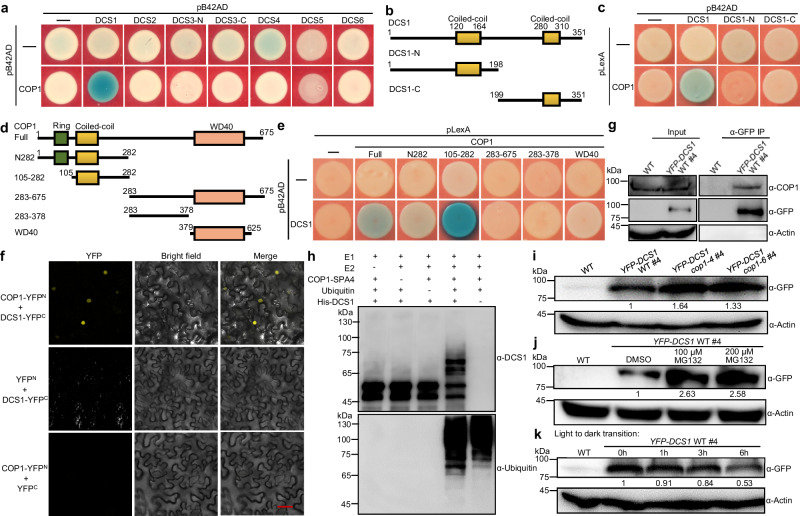
Intron retention (IR) is the most common alternative splicing event in Arabidopsis. An increasing number of studies have demonstrated the major role of IR in gene expression regulation. The impacts of IR on plant growth and development and response to environments remain underexplored. Here, we found that IR functions directly in gene expression regulation on a genome-wide scale through the detainment of intron-retained transcripts (IRTs) in the nucleus. Nuclear-retained IRTs can be kept away from translation through this mechanism. COP1-dependent light modulation of the IRTs of light signaling genes, such as PIF4, RVE1, and ABA3, contribute to seedling morphological development in response to changing light conditions. Furthermore, light-induced IR changes are under the control of the spliceosome, and in part through COP1-dependent ubiquitination and degradation of DCS1, a plant-specific spliceosomal component. Our data suggest that light regulates the activity of the spliceosome and the consequent IRT nucleus detainment to modulate photomorphogenesis through COP1.
内含子保留 (IR) 是拟南芥中最常见的可变剪接事件。越来越多的研究表明,IR 在基因表达调控中起着重要作用。IR 对植物生长发育和环境响应的影响仍未得到充分探索。在这里,我们发现 IR 通过在核内滞留内含子保留转录本 (IRTs),在全基因组范围内直接作用于基因表达调控。通过这种机制,核内保留的 IRTs 可以远离翻译。COP1 依赖性光对光信号基因(如 PIF4、RVE1 和 ABA3)的 IRT 的调节有助于幼苗对不断变化的光照条件的形态发育。此外,光诱导的 IR 变化受剪接体控制,部分通过 COP1 依赖性泛素化和降解植物特异性剪接体成分 DCS1 来实现。我们的数据表明,光调节剪接体的活性,以及随后的 IRT 核滞留,通过 COP1 来调节光形态发生。