Han Weijia, Song Ting, Huang Zhongyi, Liu Yanmin, Xu Bin, Huang Chunyang
Department of Gastroenterology, Shenzhen Hospital, Southern Medical University, Shenzhen, Guangdong, China.
Second Department of Liver Disease Center, Beijing Youan Hospital, Capital Medical University, Beijing, China.
Cell Biosci. 2024 Jun 15;14(1):80. doi: 10.1186/s13578-024-01253-1.
About 1/3 of primary biliary cholangitis (PBC) patients suffered from poor response worldwide. And these patients present intestinal disturbances. We aimed to identify signatures of microbiota and metabolites in PBC patients with poor response, comparing to patients with response.
This study enrolled 25 subjects (14 PBC patients with response and 11 PBC patients with poor response). Metatranscriptomics and metabolomics analysis were carried out on their fecal.
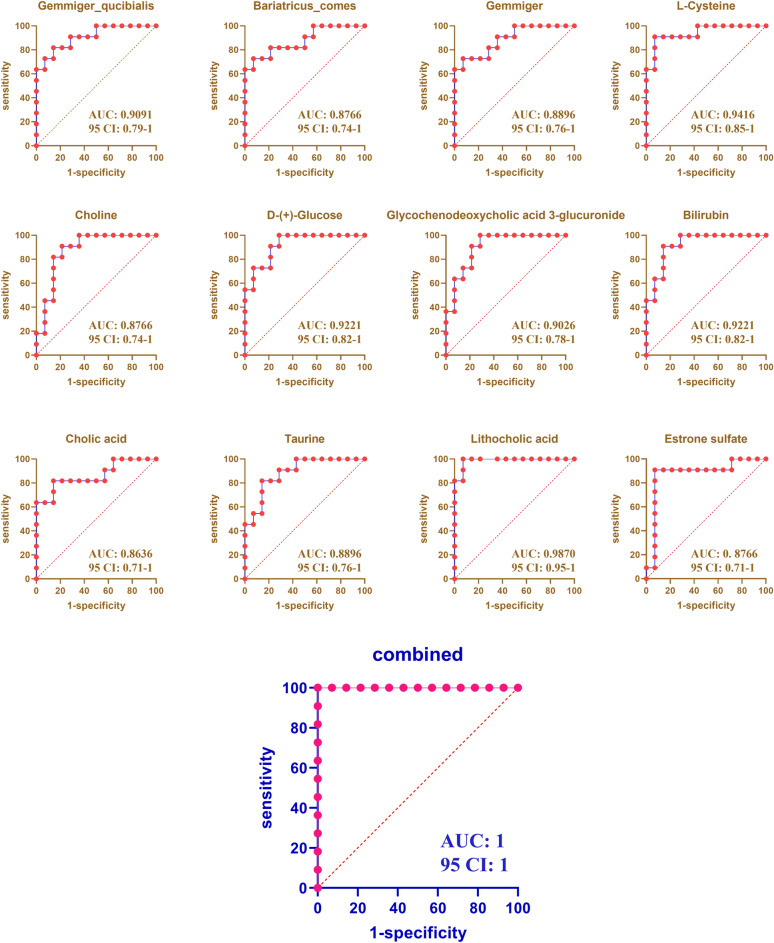
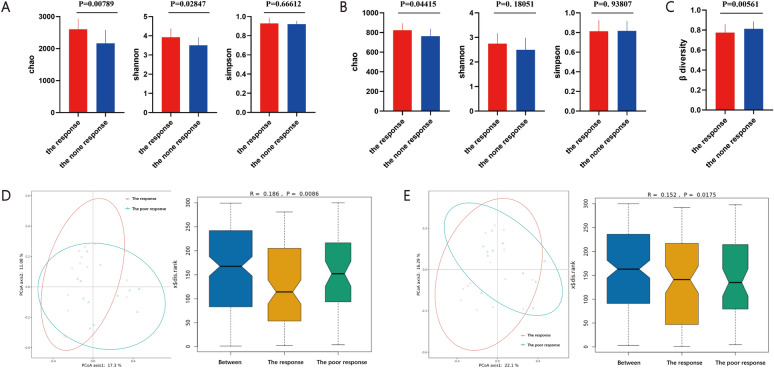
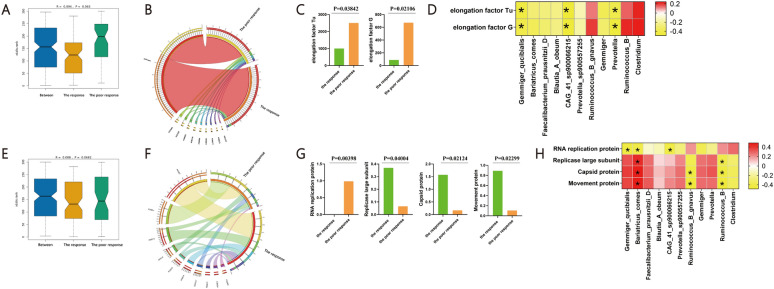
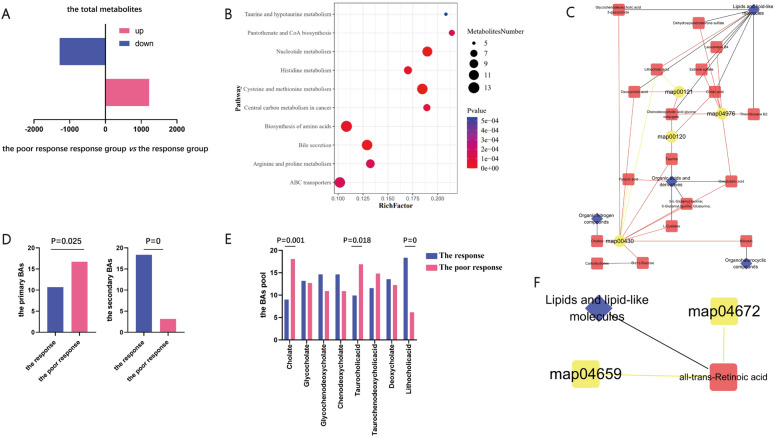
PBC patients with poor response had significant differences in the composition of bacteria, characterized by decreased Gemmiger etc. and increased Ruminococcus etc. The differential microbiota functions characterized by decreased abundance of elongation factor Tu and elongation factor G base on the KO database, as well as decreased abundance of Replicase large subunit etc. based on the SWISS-PROT database. PBC with poor response also had significant differences in 17 kinds of bacterial metabolites, characterized by decreased level of metabolites vital in bile acids metabolism pathway (L-Cysteine etc.) and the all-trans-Retinoic acid, a kind of immune related metabolite. The altered microbiota was associated with the differential expressed metabolites and clinical liver function indicators. 1 bacterial genera, 2 bacterial species and 9 metabolites simultaneously discriminated PBC with poor response from PBC with response with high accuracy.
PBC patients with poor response exhibit unique changes in microbiota and metabolite. Gut microbiota and metabolite-based algorithms could be used as additional tools for differential prediction of PBC with poor prognosis.
在全球范围内,约三分之一的原发性胆汁性胆管炎(PBC)患者治疗反应不佳。这些患者存在肠道功能紊乱。我们旨在识别治疗反应不佳的PBC患者的微生物群和代谢物特征,并与治疗有反应的患者进行比较。
本研究纳入了25名受试者(14名治疗有反应的PBC患者和11名治疗反应不佳的PBC患者)。对他们的粪便进行了宏转录组学和代谢组学分析。
治疗反应不佳的PBC患者在细菌组成上有显著差异,其特征为Gemmiger等减少,而瘤胃球菌等增加。基于KO数据库,差异微生物群功能的特征是延伸因子Tu和延伸因子G的丰度降低;基于SWISS-PROT数据库,复制酶大亚基等的丰度降低。治疗反应不佳的PBC患者在17种细菌代谢物上也有显著差异,其特征为胆汁酸代谢途径中至关重要的代谢物(L-半胱氨酸等)水平降低,以及一种免疫相关代谢物全反式维甲酸水平降低。微生物群的改变与差异表达的代谢物和临床肝功能指标相关。1个细菌属、2个细菌种和9种代谢物能够同时准确地区分治疗反应不佳的PBC患者和治疗有反应的PBC患者。
治疗反应不佳的PBC患者在微生物群和代谢物方面表现出独特的变化。基于肠道微生物群和代谢物的算法可作为预测预后不良的PBC的辅助工具。