Department of Obstetrics, Women's Hospital of Nanjing Medical University, Nanjing Women and Children's Healthcare Hospital, 123rd Tianfei Street, Mochou Road, Nanjing, 210004, China.
Nanjing Maternal and Child Health Institute, Women's Hospital of Nanjing Medical University, Nanjing Women and Children's Healthcare Hospital, Nanjing, China.
Metabolomics. 2024 Jun 16;20(4):65. doi: 10.1007/s11306-024-02134-x.
Preeclampsia is a pregnancy-specific clinical syndrome and can be subdivided into early-onset preeclampsia (EOPE) and late-onset preeclampsia (LOPE) according to the gestational age of delivery. Patients with preeclampsia have aberrant lipid metabolism. This study aims to compare serum lipid profiles of normal pregnant women with EOPE or LOPE and screening potential biomarkers to diagnose EOPE or LOPE.
Twenty normal pregnant controls (NC), 19 EOPE, and 19 LOPE were recruited in this study. Untargeted lipidomics based on ultra-performance liquid chromatography-tandem mass spectrometry (UPLC-MS/MS) was used to compare their serum lipid profiles.
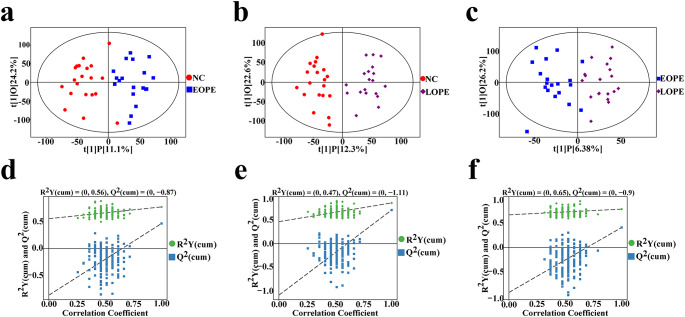
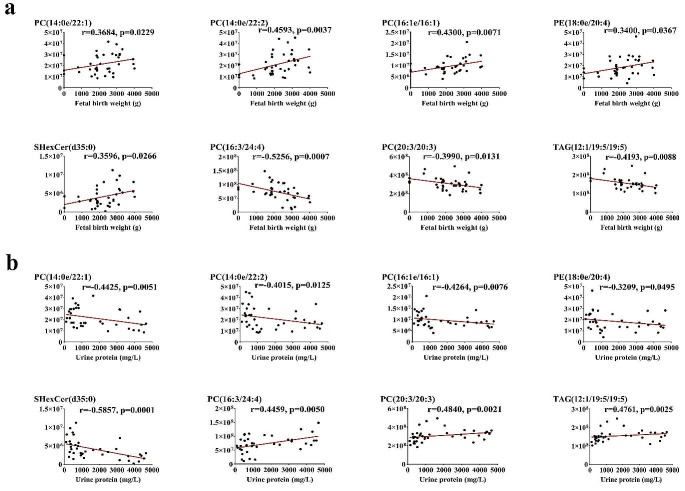
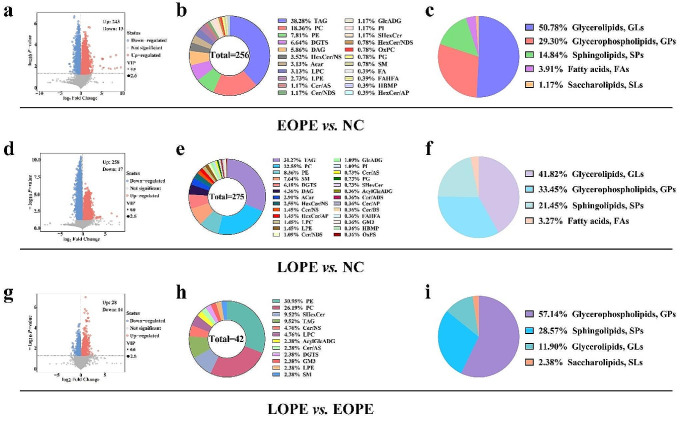
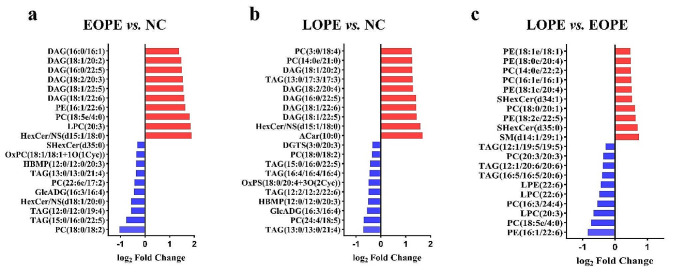
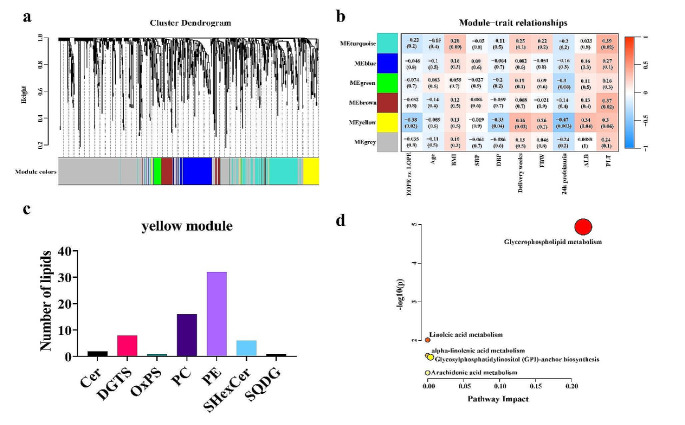
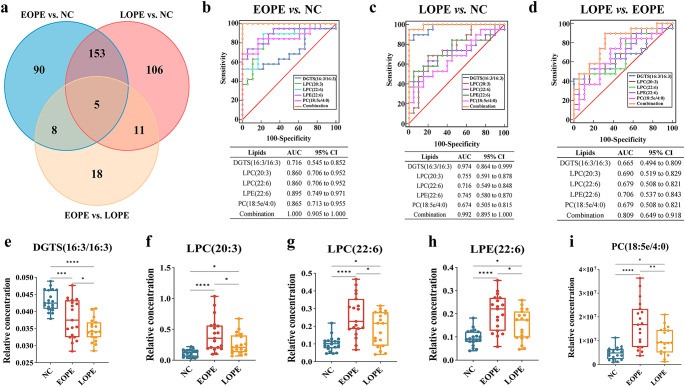
The lipid metabolism profiles significantly differ among the NC, EOPE, and LOPE. Compared to the NC, there were 256 and 275 distinct lipids in the EOPE and LOPE, respectively. Furthermore, there were 42 different lipids between the LOPE and EOPE, of which eight were significantly associated with fetal birth weight and maternal urine protein. The five lipids that both differed in the EOPE and LOPE were DGTS (16:3/16:3), LPC (20:3), LPC (22:6), LPE (22:6), PC (18:5e/4:0), and a combination of them were a potential biomarker for predicting EOPE or LOPE. The receiver operating characteristic analysis revealed that the diagnostic power of the combination for distinguishing the EOPE from the NC and for distinguishing the LOPE from the NC can reach 1.000 and 0.992, respectively. The association between the lipid modules and clinical characteristics of EOPE and LOPE was investigated by the weighted gene co-expression network analysis (WGCNA). The results demonstrated that the main different metabolism pathway between the EOPE and LOPE was enriched in glycerophospholipid metabolism.
Lipid metabolism disorders may be a potential mechanism of the pathogenesis of preeclampsia. Lipid metabolites have the potential to serve as biomarkers in patients with EOPE or LOPE. Furthermore, lipid metabolites correlate with clinical severity indicators for patients with EOPE and LOPE, including fetal birth weight and maternal urine protein levels.
子痫前期是一种妊娠特有的临床综合征,可以根据分娩时的孕龄分为早发型子痫前期(EOPE)和晚发型子痫前期(LOPE)。子痫前期患者存在脂质代谢异常。本研究旨在比较正常孕妇与 EOPE 或 LOPE 的血清脂质谱,并筛选潜在的生物标志物来诊断 EOPE 或 LOPE。
本研究纳入了 20 名正常孕妇对照(NC)、19 名 EOPE 和 19 名 LOPE。采用基于超高效液相色谱-串联质谱(UPLC-MS/MS)的非靶向脂质组学比较了她们的血清脂质谱。
NC、EOPE 和 LOPE 之间的脂质代谢谱存在显著差异。与 NC 相比,EOPE 和 LOPE 分别有 256 和 275 种不同的脂质。此外,LOPE 和 EOPE 之间有 42 种不同的脂质,其中 8 种与胎儿出生体重和母亲尿蛋白显著相关。在 EOPE 和 LOPE 中都存在差异的 5 种脂质为 DGTS(16:3/16:3)、LPC(20:3)、LPC(22:6)、LPE(22:6)、PC(18:5e/4:0),它们的组合可能是预测 EOPE 或 LOPE 的潜在生物标志物。受试者工作特征分析显示,该组合区分 EOPE 与 NC 以及 LOPE 与 NC 的诊断能力分别可达 1.000 和 0.992。加权基因共表达网络分析(WGCNA)研究了脂质模块与 EOPE 和 LOPE 临床特征的关系。结果表明,EOPE 和 LOPE 之间主要的不同代谢途径富集于甘油磷脂代谢。
脂质代谢紊乱可能是子痫前期发病机制的潜在机制。脂质代谢物有可能成为 EOPE 或 LOPE 患者的生物标志物。此外,脂质代谢物与 EOPE 和 LOPE 患者的临床严重程度指标相关,包括胎儿出生体重和母亲尿蛋白水平。