
呼吸系统疾病中铜稳态失调:当前知识综述
Copper homeostasis dysregulation in respiratory diseases: a review of current knowledge.
作者信息
Song Wei, Yue Yuanyi, Zhang Qiang, Wang Xueqing
机构信息
Department of Pulmonary and Critical Care Medicine, Shengjing Hospital of China Medical University, Shenyang, China.
Department of Gastroenterology, Shengjing Hospital of China Medical University, Shenyang, China.
出版信息
Front Physiol. 2024 May 31;15:1243629. doi: 10.3389/fphys.2024.1243629. eCollection 2024.
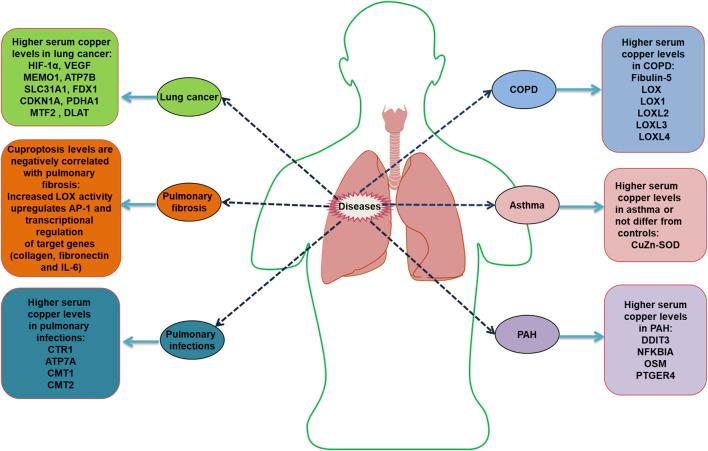
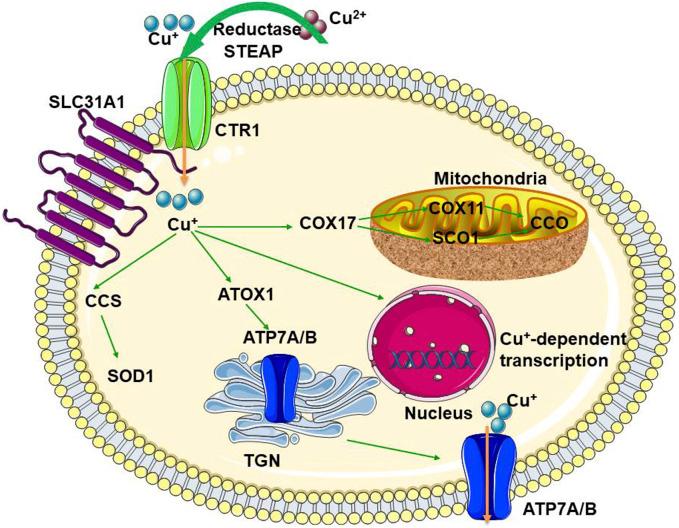
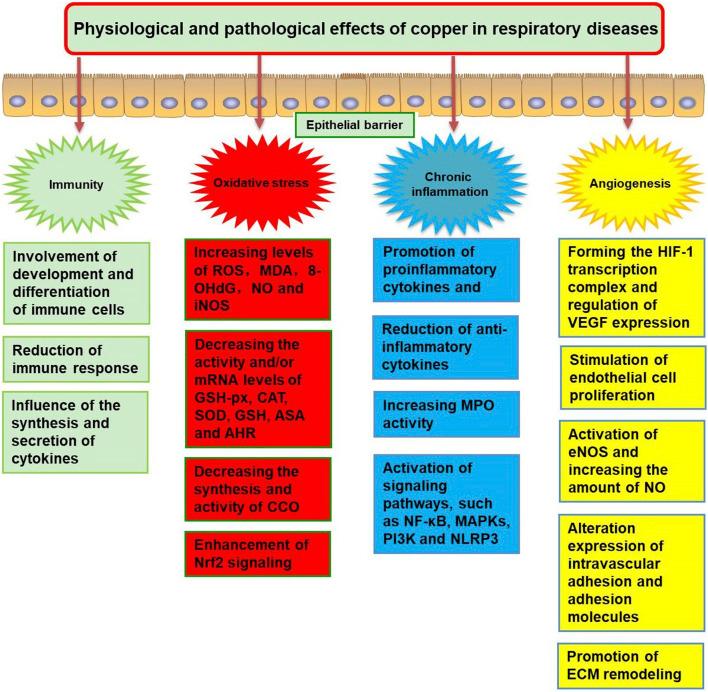
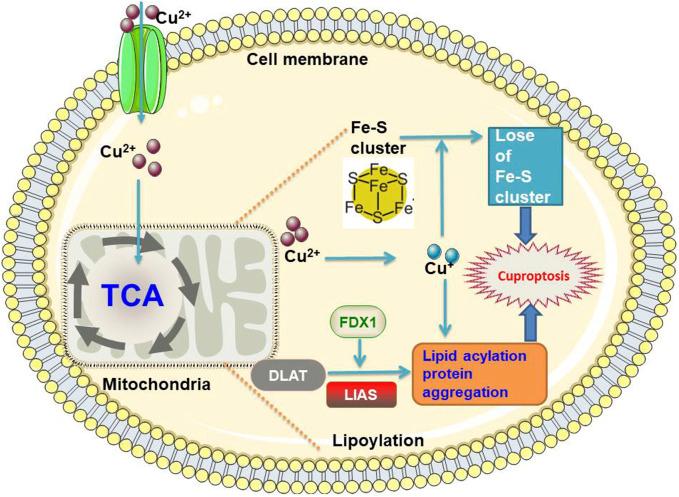
Cu is an essential micronutrient for various physiological processes in almost all human cell types. Given the critical role of Cu in a wide range of cellular processes, the local concentrations of Cu and the cellular distribution of Cu transporter proteins in the lung are essential for maintaining a steady-state internal environment. Dysfunctional Cu metabolism or regulatory pathways can lead to an imbalance in Cu homeostasis in the lungs, affecting both acute and chronic pathological processes. Recent studies have identified a new form of Cu-dependent cell death called cuproptosis, which has generated renewed interest in the role of Cu homeostasis in diseases. Cuproptosis differs from other known cell death pathways. This occurs through the direct binding of Cu ions to lipoylated components of the tricarboxylic acid cycle during mitochondrial respiration, leading to the aggregation of lipoylated proteins and the subsequent downregulation of Fe-S cluster proteins, which causes toxic stress to the proteins and ultimately leads to cell death. Here, we discuss the impact of dysregulated Cu homeostasis on the pathogenesis of various respiratory diseases, including asthma, chronic obstructive pulmonary disease, idiopathic interstitial fibrosis, and lung cancer. We also discuss the therapeutic potential of targeting Cu. This study highlights the intricate interplay between copper, cellular processes, and respiratory health. Copper, while essential, must be carefully regulated to maintain the delicate balance between necessity and toxicity in living organisms. This review highlights the need to further investigate the precise mechanisms of copper interactions with infections and immune inflammation in the context of respiratory diseases and explore the potential of therapeutic strategies for copper, cuproptosis, and other related effects.
铜是几乎所有人类细胞类型中各种生理过程所必需的微量营养素。鉴于铜在广泛的细胞过程中发挥着关键作用,肺中铜的局部浓度以及铜转运蛋白的细胞分布对于维持稳态的内部环境至关重要。铜代谢或调节途径功能失调可导致肺中铜稳态失衡,影响急性和慢性病理过程。最近的研究发现了一种新的铜依赖性细胞死亡形式,称为铜死亡,这重新引发了人们对铜稳态在疾病中的作用的兴趣。铜死亡不同于其他已知的细胞死亡途径。这是通过铜离子在 mitochondrial respiration 期间直接与三羧酸循环的脂酰化成分结合而发生的,导致脂酰化蛋白聚集以及随后铁硫簇蛋白的下调,这会对蛋白质造成毒性应激并最终导致细胞死亡。在这里,我们讨论了铜稳态失调对包括哮喘、慢性阻塞性肺疾病、特发性肺纤维化和肺癌在内的各种呼吸系统疾病发病机制的影响。我们还讨论了针对铜的治疗潜力。这项研究强调了铜、细胞过程和呼吸健康之间复杂的相互作用。铜虽然必不可少,但必须仔细调节,以在生物体中维持必要性和毒性之间的微妙平衡。这篇综述强调了在呼吸系统疾病背景下进一步研究铜与感染和免疫炎症相互作用的精确机制以及探索针对铜、铜死亡和其他相关效应的治疗策略潜力的必要性。
 Zotero 插件