Ueda Morio, Lee Jongbeom, Yi Hyeonseok, Lee Gang-Ho, Kim Yu-Jin, Kim Geon-Hee, Oh Kyeongseok, Yoon Seong-Ho, Nakabayashi Koji, Park Joo-Il
Kyushu Environmental Evaluation Association, Fukuoka 813-0004, Japan.
Department of Chemical & Biological Engineering, Hanbat National University, Daejeon 34158, Republic of Korea.
Molecules. 2024 May 26;29(11):2508. doi: 10.3390/molecules29112508.
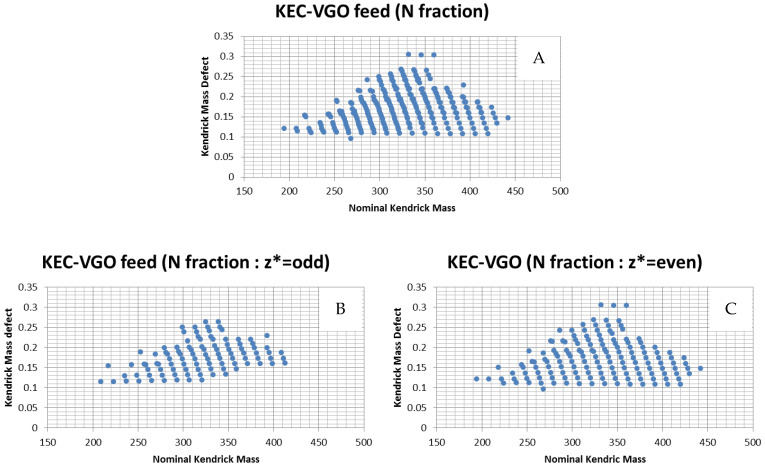
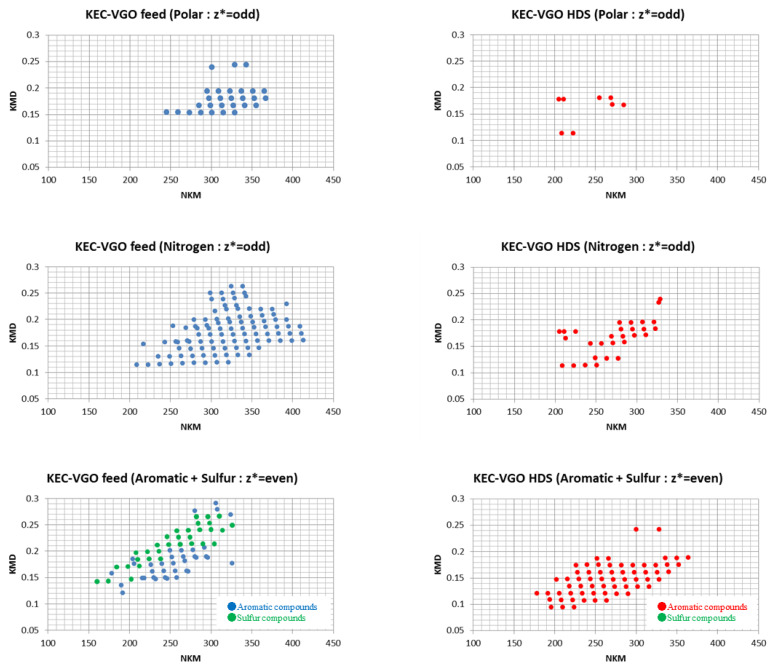
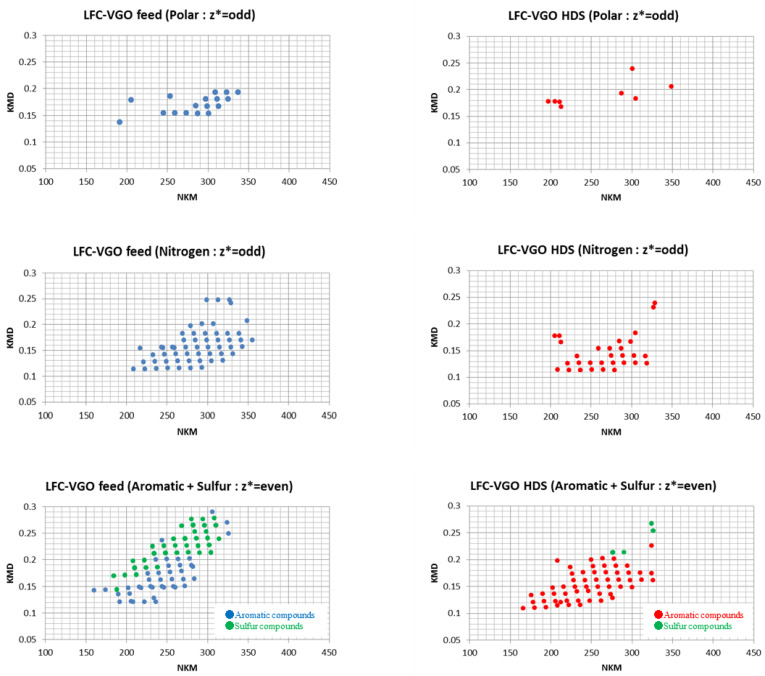
Analysis of the heavy fractions in crude oil has been important in petroleum industries. It is well known that heavy fractions such as vacuum gas oils (VGOs) include heteroatoms, of which sulfur and nitrogen are often characterized in many cases. We conducted research regarding the molecular species analysis of VGOs. Further refine processes using VGOs are becoming important when considering carbon recycling. In this work, we attempted to classify compounds within VGOs provided by Kuwait Institute for Scientific Research. Two VGOs were priorly distillated from Kuwait Export crude and Lower Fars crude. Quantitative analysis was performed mainly using matrix-assisted laser desorption ionization time of flight mass spectrometry (MALDI-TOFMS). MALDI-TOF-MS has been developed for analyzing high-molecular-weight compounds such as polymer and biopolymers. As matrix selection is one of the most important aspects in MALDI-TOFMS, the careful selection of a matrix was firstly evaluated, followed by analysis using a Kendrick plot with nominal mass series (z*). The objective was to evaluate if this work could provide an effective classification of VGOs compounds. The Kendrick plot is a well-known method for processing mass data. The difference in the Kendrick mass defect (KMD) between CHS and CHO is only 0.0005 mass units, which makes it difficult in general to distinguish these compounds. However, since the z* value showed effective differences during the classification of these compounds, qualitative analysis could be possible. The analysis using nominal mass series showed the potential to be used as an effective method in analyzing heavy fractions.
原油重馏分的分析在石油工业中一直很重要。众所周知,重馏分如减压瓦斯油(VGO)含有杂原子,在许多情况下,其中的硫和氮是其特征。我们开展了关于VGO分子种类分析的研究。考虑到碳循环利用,使用VGO的进一步精炼工艺正变得越来越重要。在这项工作中,我们试图对科威特科学研究所提供的VGO中的化合物进行分类。两种VGO预先从科威特出口原油和下法尔斯原油中蒸馏得到。主要使用基质辅助激光解吸电离飞行时间质谱(MALDI-TOFMS)进行定量分析。MALDI-TOF-MS已被开发用于分析高分子量化合物,如聚合物和生物聚合物。由于基质选择是MALDI-TOFMS中最重要的方面之一,首先对基质的仔细选择进行了评估,然后使用具有标称质量系列(z*)的肯德里克图进行分析。目的是评估这项工作是否能对VGO化合物进行有效分类。肯德里克图是一种处理质量数据的知名方法。CHS和CHO之间的肯德里克质量缺陷(KMD)差异仅为0.0005质量单位,这使得一般情况下难以区分这些化合物。然而,由于z*值在这些化合物的分类过程中显示出有效差异,因此定性分析是可能的。使用标称质量系列的分析显示出有潜力作为一种分析重馏分的有效方法。