Zhang Ziyue, Zhang Jie, Zhao Xingyuan, Cheng Xuequn, Liu Xin, Zhang Qifu
Corrosion & Protection Center, University of Science & Technology Beijing, Beijing 100083, China.
National Engineering Laboratory of Advanced Coating Technology for Metals, Central Iron & Steel Research Institute, Beijing 100081, China.
Materials (Basel). 2024 Jun 3;17(11):2719. doi: 10.3390/ma17112719.
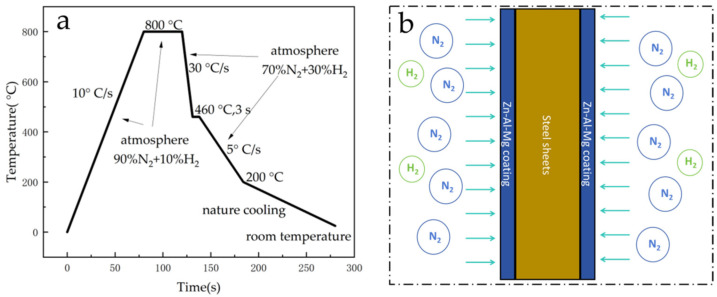
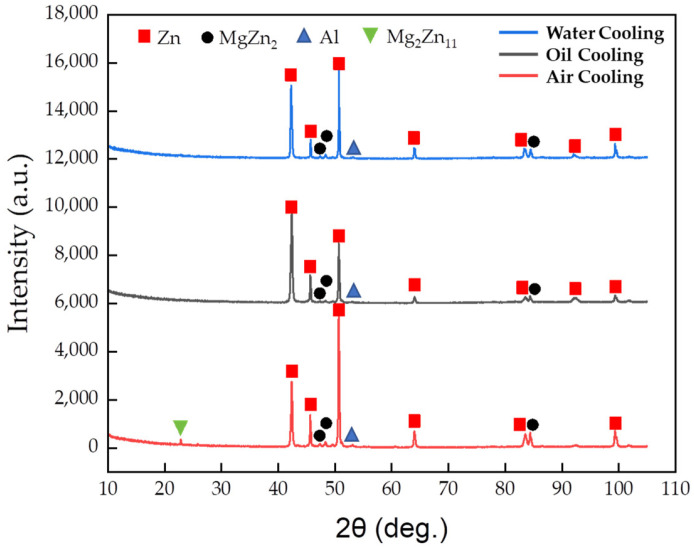
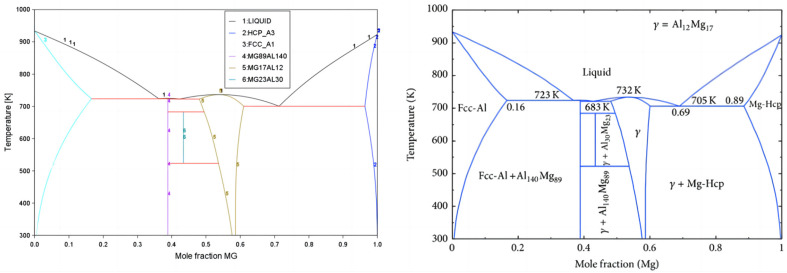
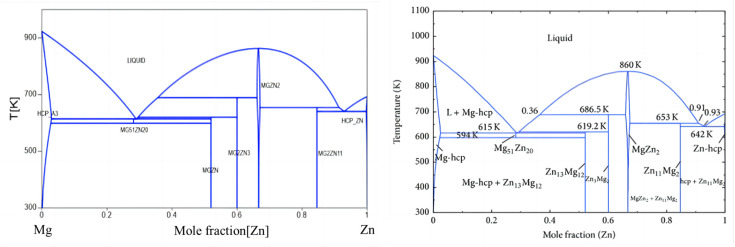
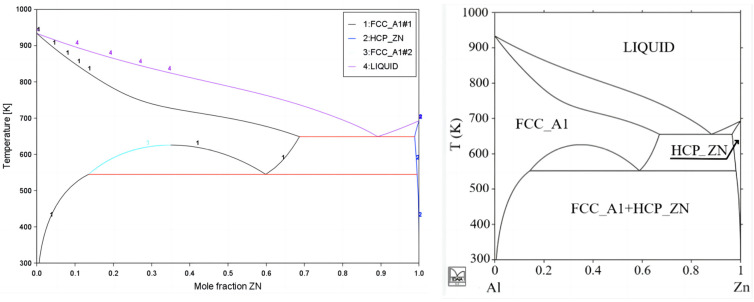
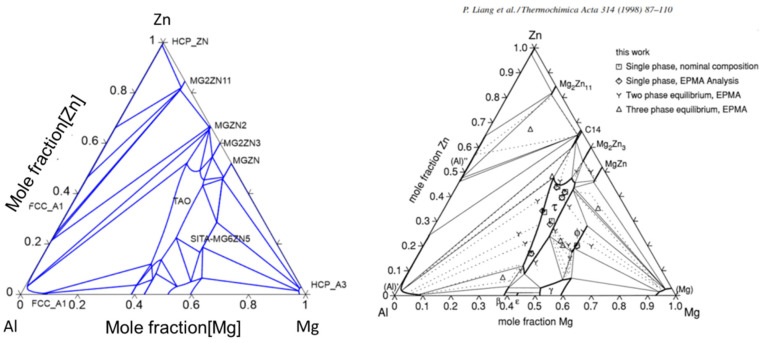
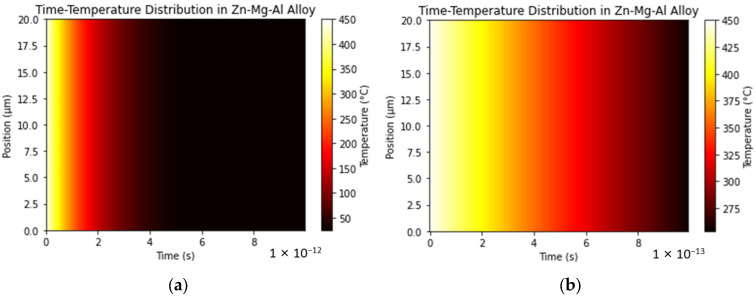
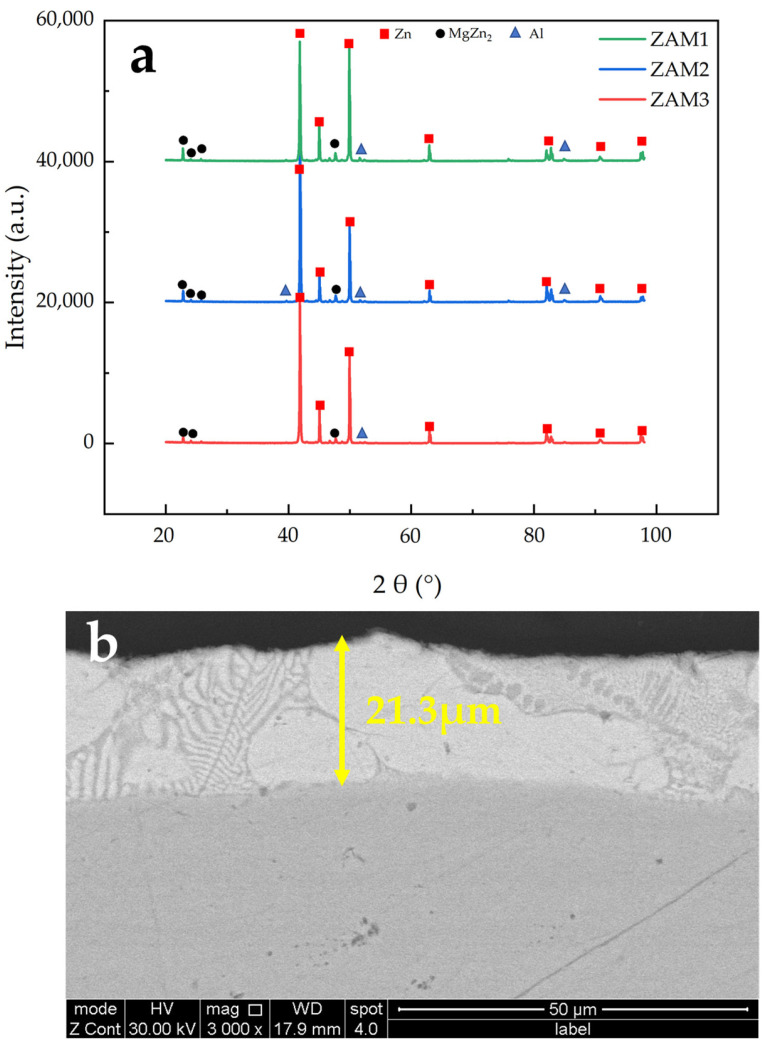
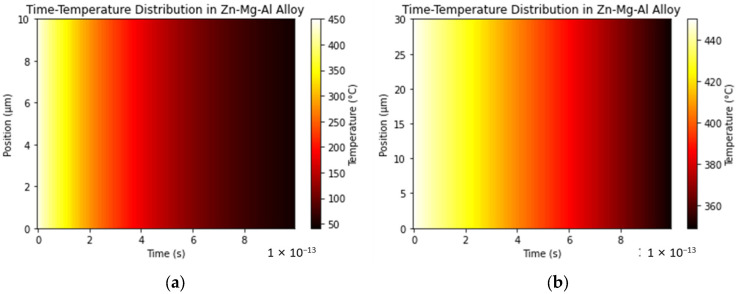
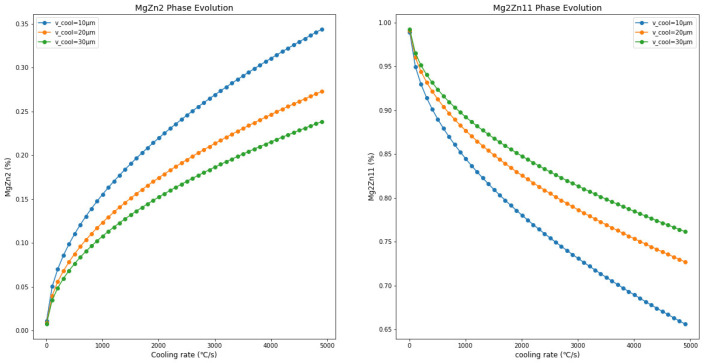
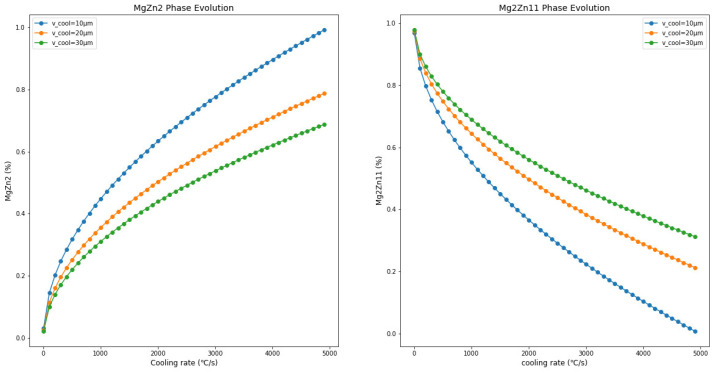
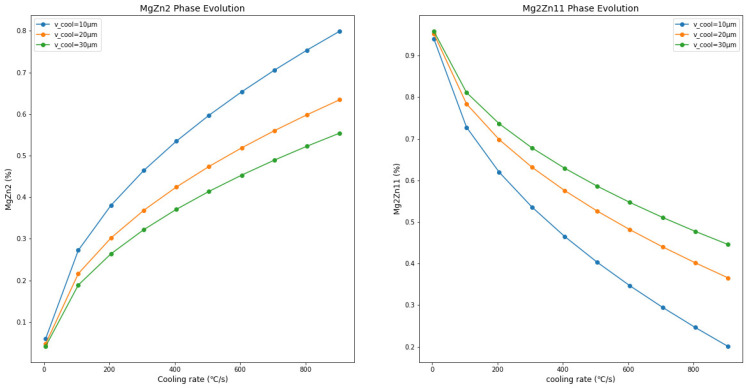
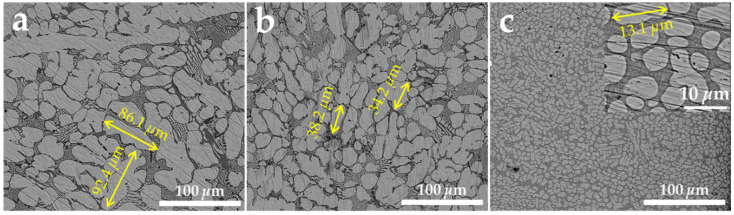
This study delves into the formation, transformation, and impact on coating performance of MgZn and MgZn phases in low-aluminum Zn-Al-Mg alloy coatings, combining thermodynamic simulation calculations with experimental verification methods. A thermodynamic database for the Zn-Al-Mg ternary system was established using the CALPHAD method, and this alloy's non-equilibrium solidification process was simulated using the Scheil model to predict phase compositions under varying cooling rates and coating thicknesses. The simulation results suggest that the MgZn phase might predominate in coatings under simulated production-line conditions. However, experimental results characterized using XRD phase analysis show that the MgZn phase is the main phase existing in actual coatings, highlighting the complexity of the non-equilibrium solidification process and the decisive effect of experimental conditions on the final phase composition. Further experiments confirmed that cooling rate and coating thickness significantly influence phase composition, with faster cooling and thinner coatings favoring the formation of the metastable phase MgZn.
本研究结合热力学模拟计算与实验验证方法,深入探究了低铝锌铝镁合金涂层中MgZn相的形成、转变及其对涂层性能的影响。采用CALPHAD方法建立了Zn-Al-Mg三元系的热力学数据库,并利用Scheil模型模拟了该合金的非平衡凝固过程,以预测不同冷却速率和涂层厚度下的相组成。模拟结果表明,在模拟生产线条件下,涂层中MgZn相可能占主导地位。然而,通过XRD相分析表征的实验结果表明,MgZn相是实际涂层中存在的主要相,这突出了非平衡凝固过程的复杂性以及实验条件对最终相组成的决定性作用。进一步的实验证实,冷却速率和涂层厚度对相组成有显著影响,冷却速度越快、涂层越薄越有利于亚稳相MgZn的形成。