Hamilton Adam M, Blackmer-Raynolds Lisa, Li Yaqing, Kelly Sean, Kebede Nardos, Williams Anna, Chang Jianjun, Garraway Sandra M, Srinivasan Shanthi, Sampson Timothy R
Department of Cell Biology, Emory University School of Medicine, Atlanta GA 30329.
Division of Digestive Diseases, Department of Medicine, Emory University School of Medicine, Atlanta GA 30329.
bioRxiv. 2024 Jun 8:2024.06.06.597793. doi: 10.1101/2024.06.06.597793.
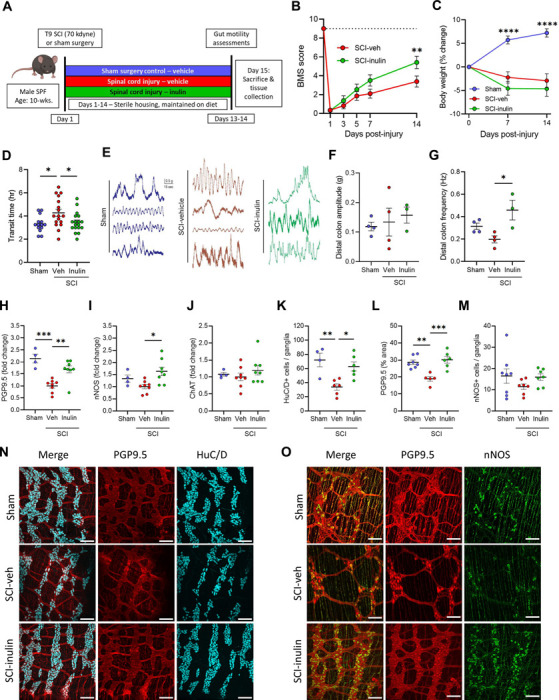
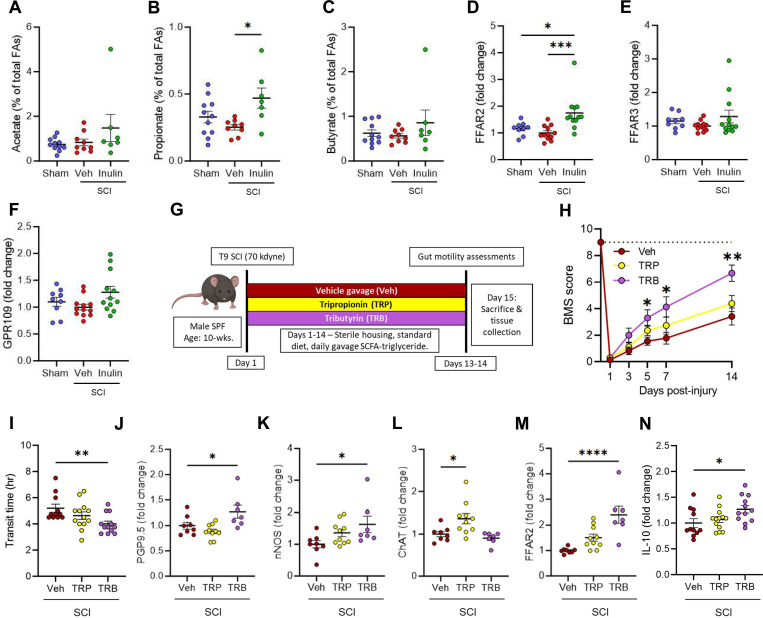
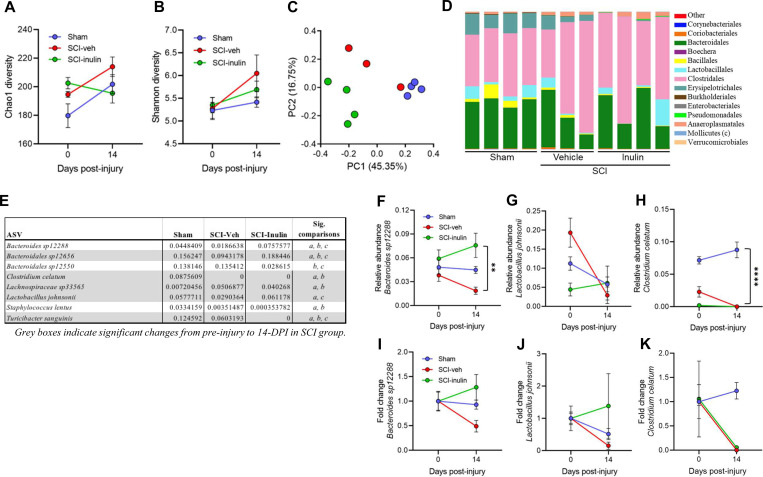
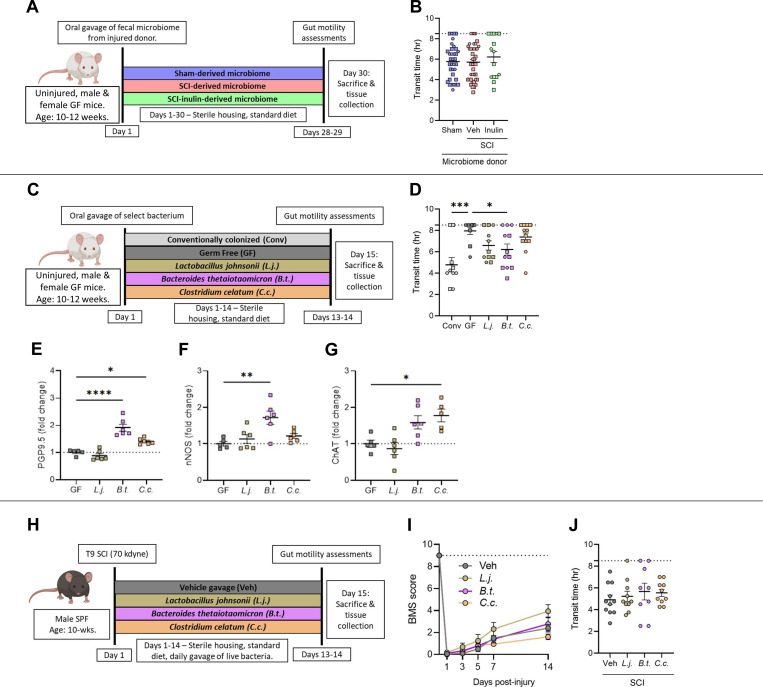
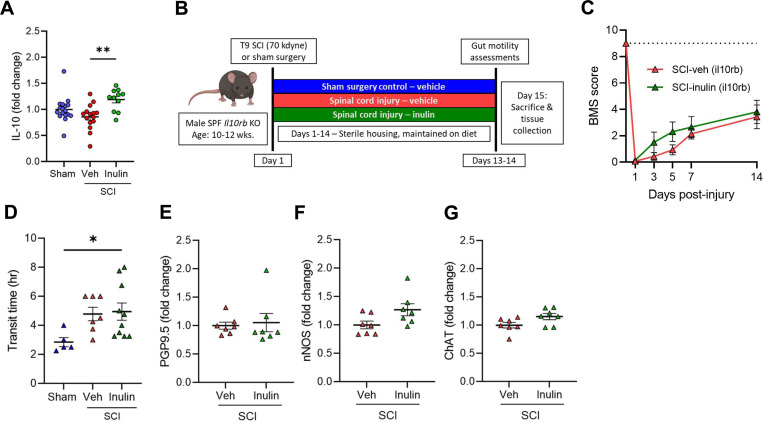
Spinal cord injury (SCI) results in a plethora of physiological dysfunctions across all body systems, including intestinal dysmotility and atrophy of the enteric nervous system (ENS). Typically, the ENS has capacity to recover from perturbation, so it is unclear why intestinal pathophysiologies persist after traumatic spinal injury. With emerging evidence demonstrating SCI-induced alterations to the gut microbiome composition, we hypothesized that modulation of the gut microbiome could contribute to enteric nervous system recovery after injury. Here, we show that intervention with the dietary fiber, inulin prevents ENS atrophy and limits SCI-induced intestinal dysmotility in mice. However, SCI-associated microbiomes and exposure to specific SCI-sensitive gut microbes are not sufficient to modulate injury-induced intestinal dysmotility. Intervention with microbially-derived short-chain fatty acid (SCFA) metabolites prevents ENS dysfunctions and phenocopies inulin treatment in injured mice, implicating these microbiome metabolites in protection of the ENS. Notably, inulin-mediated resilience is dependent on signaling by the cytokine IL-10, highlighting a critical diet-microbiome-immune axis that promotes ENS resilience following SCI. Overall, we demonstrate that diet and microbially-derived signals distinctly impact recovery of the ENS after traumatic spinal injury. This protective diet-microbiome-immune axis may represent a foundation to uncover etiological mechanisms and future therapeutics for SCI-induced neurogenic bowel.
脊髓损伤(SCI)会导致全身所有系统出现大量生理功能障碍,包括肠道运动功能紊乱和肠神经系统(ENS)萎缩。通常情况下,肠神经系统有能力从扰动中恢复,所以目前尚不清楚为什么创伤性脊髓损伤后肠道病理生理学状况仍然持续存在。随着越来越多的证据表明SCI会导致肠道微生物群组成发生改变,我们推测调节肠道微生物群可能有助于损伤后肠神经系统的恢复。在此,我们表明,用膳食纤维菊粉进行干预可防止小鼠肠神经系统萎缩,并限制SCI诱导的肠道运动功能紊乱。然而,与SCI相关的微生物群以及暴露于特定的对SCI敏感的肠道微生物并不足以调节损伤诱导的肠道运动功能紊乱。用微生物衍生的短链脂肪酸(SCFA)代谢产物进行干预可防止损伤小鼠的肠神经系统功能障碍,并模拟菊粉治疗的效果,这表明这些微生物群代谢产物参与了对肠神经系统的保护。值得注意的是,菊粉介导的恢复能力依赖于细胞因子IL-10的信号传导,突出了一条关键的饮食-微生物群-免疫轴,该轴在SCI后促进肠神经系统的恢复能力。总体而言,我们证明饮食和微生物衍生信号对创伤性脊髓损伤后肠神经系统的恢复有明显影响。这种保护性的饮食-微生物群-免疫轴可能为揭示SCI诱导的神经源性肠道的病因机制和未来治疗方法奠定基础。