Esposito Matteo, Migliaccio Antonella, Credendino Sara Carmela, Maturi Rufina, Prevete Nella, De Vita Gabriella
Dipartimento di Medicina Molecolare e Biotecnologie Mediche (DMMBM), Università degli Studi di Napoli Federico II, Via Pansini 5, 80131, Napoli, Italy.
Dipartimento di Scienze Mediche Traslazionali (DiSMeT), Università degli Studi di Napoli Federico II, Via Pansini 5, 80131, Napoli, Italy.
Cell Death Discov. 2024 Jun 22;10(1):297. doi: 10.1038/s41420-024-02063-7.
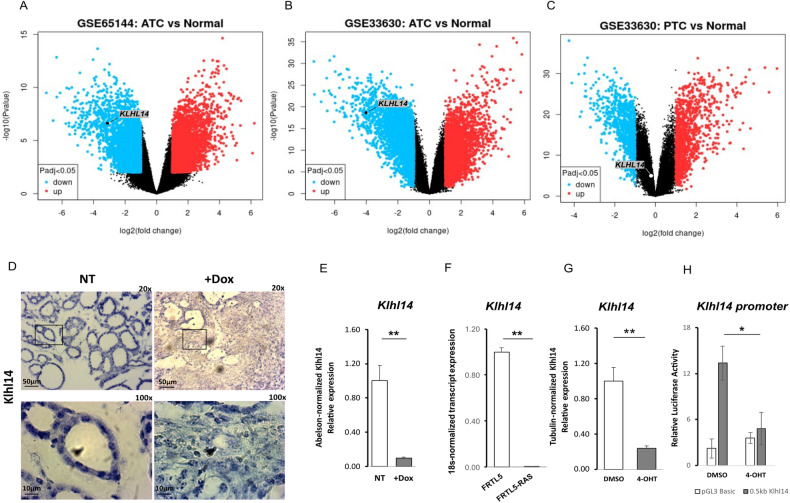
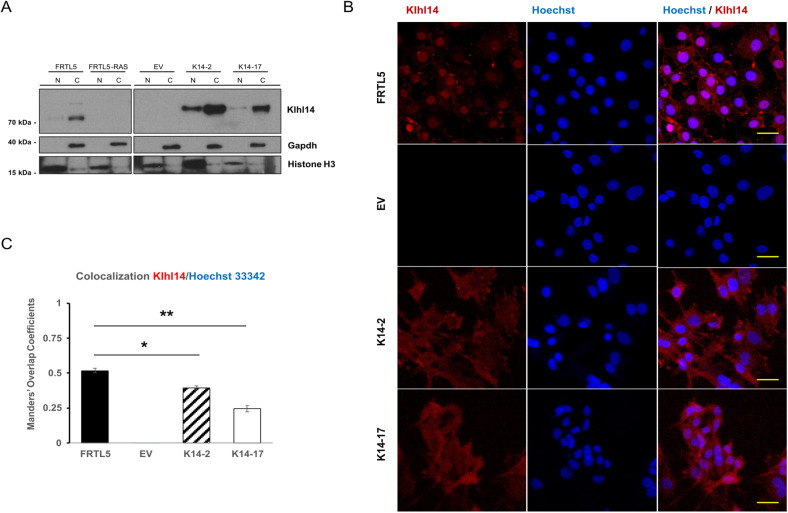
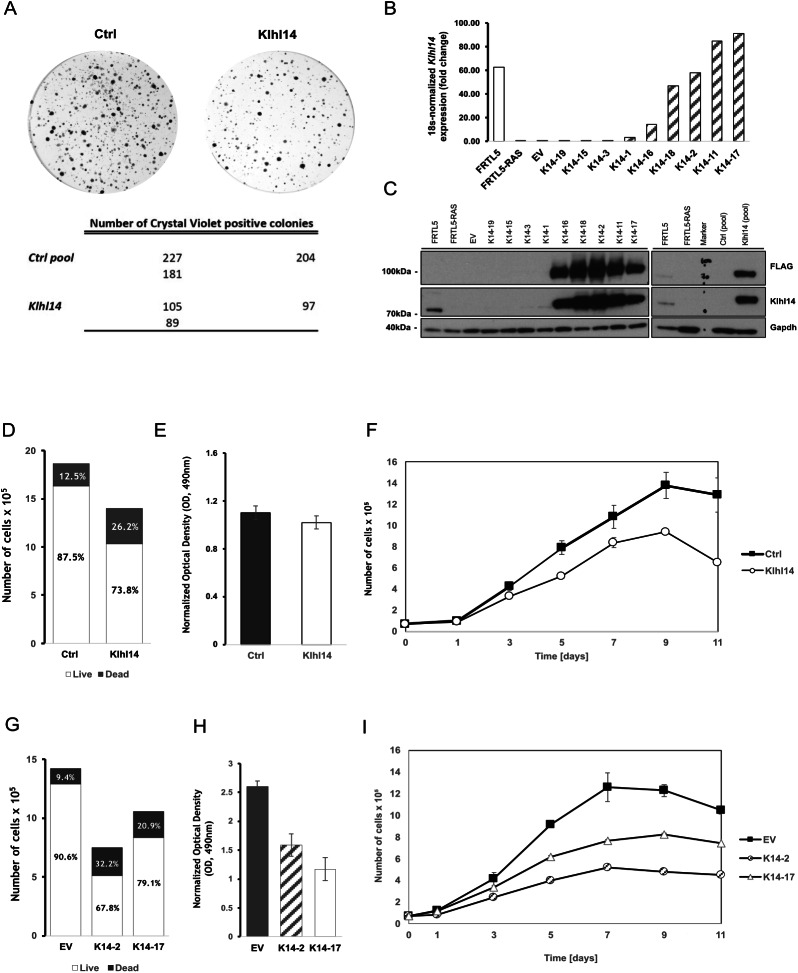
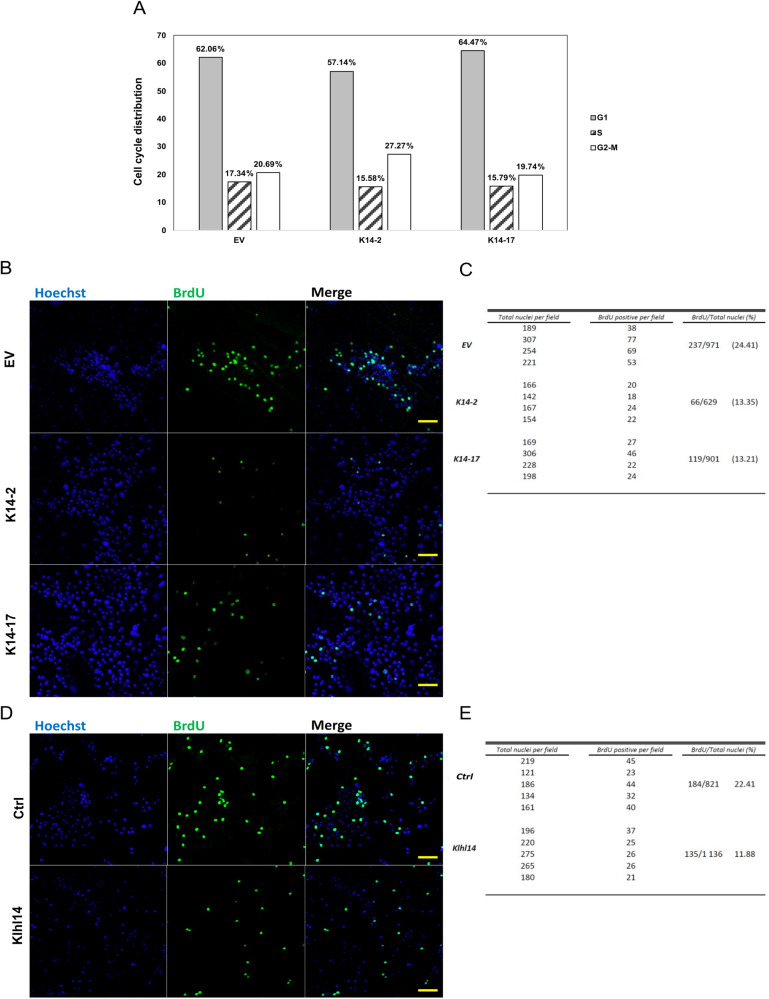
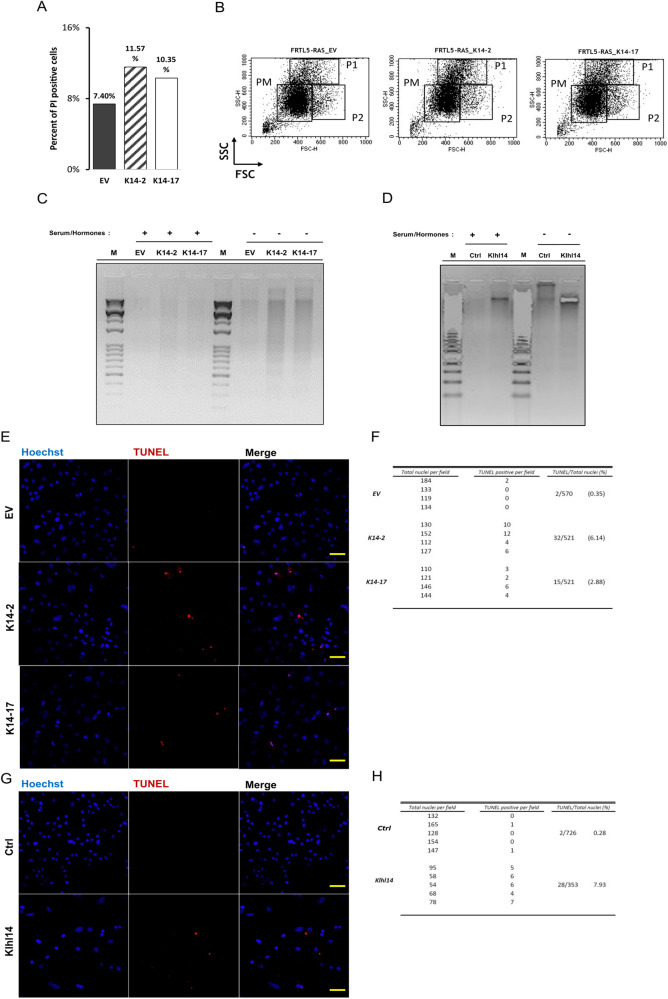
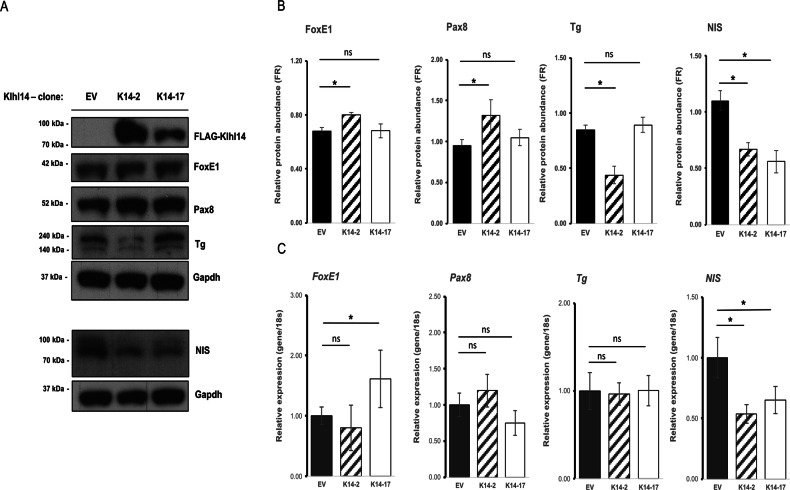
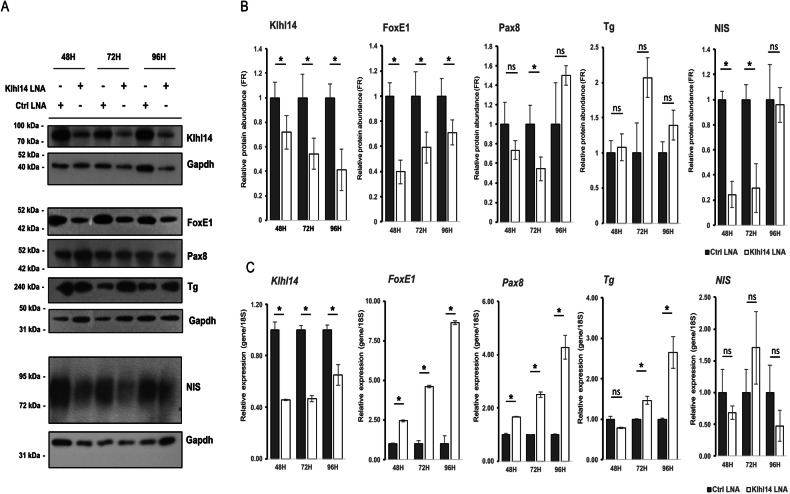
KLHL14 is a substrate-binding subunit of Cullin-RING ligase 3 ubiquitin ligase complex, highly enriched in thyroid since early embryonic development, together with its antisense RNA KLHL14-AS. We have previously demonstrated that Klhl14-AS is a competing endogenous RNA regulating several differentiation and survival factors in thyroid cancer, acting as tumor suppressor. Recently, also KLHL14 has been shown to function as tumor suppressor in diffuse large B-cell lymphoma and in malignant mesothelioma. Here we show that KLHL14 expression is strongly reduced in anaplastic thyroid cancer, the less differentiated and most aggressive type of thyroid neoplasia. Such reduction is reproduced in different in vivo and in vitro models of thyroid cancer, being invariably associated with loss of differentiation. When Klhl14 expression is rescued in thyroid transformed cells, it reduces the cell proliferation rate and increase the number of apoptotic cells. On the other side, Klhl14 loss of function in normal thyroid cells affects the expression of several regulatory as well as functional thyroid markers. All these findings suggest that KLHL14 could be considered as a novel tumor suppressor in thyroid cancer, by also revealing its physiological role in the maintenance of a fully differentiated and functional thyroid phenotype.
KLHL14是Cullin-RING连接酶3泛素连接酶复合物的底物结合亚基,自胚胎早期发育以来在甲状腺中高度富集,与其反义RNA KLHL14-AS一起。我们之前已经证明,Klhl14-AS是一种竞争性内源RNA,可调节甲状腺癌中的几种分化和存活因子,起到肿瘤抑制作用。最近,KLHL14在弥漫性大B细胞淋巴瘤和恶性间皮瘤中也被证明具有肿瘤抑制功能。在这里,我们表明KLHL14在间变性甲状腺癌中表达强烈降低,间变性甲状腺癌是甲状腺肿瘤中分化程度较低且侵袭性最强的类型。这种降低在不同的甲状腺癌体内和体外模型中都有重现,并且总是与分化丧失相关。当在甲状腺转化细胞中挽救Klhl14表达时,它会降低细胞增殖率并增加凋亡细胞的数量。另一方面,正常甲状腺细胞中Klhl14功能丧失会影响几种调节性以及功能性甲状腺标志物的表达。所有这些发现表明,KLHL14可被视为甲状腺癌中的一种新型肿瘤抑制因子,同时也揭示了其在维持完全分化和功能性甲状腺表型中的生理作用。