Faculty of Medicine, University of Ljubljana, Ljubljana, Slovenia.
Department of Endocrinology, Diabetes, and Metabolic Diseases, University Children's Hospital, University Medical Centre Ljubljana, Ljubljana, Slovenia.
Front Endocrinol (Lausanne). 2024 Jun 11;15:1365700. doi: 10.3389/fendo.2024.1365700. eCollection 2024.
Glycogen storage disease type 1b (GSD-1b) is characterized by neutropenia and neutrophil dysfunction generated by the accumulation of 1,5-anhydroglucitol-6-phosphate in neutrophils. Sodium-glucose co-transporter 2 inhibitors, such as empagliflozin, facilitate the removal of this toxic metabolite and ameliorate neutropenia-related symptoms, including severe infections and inflammatory bowel disease (IBD). Our case series presents the treatment of three pediatric GSD-1b patients with empagliflozin over a follow-up of three years; the most extended reported follow-up period to date.
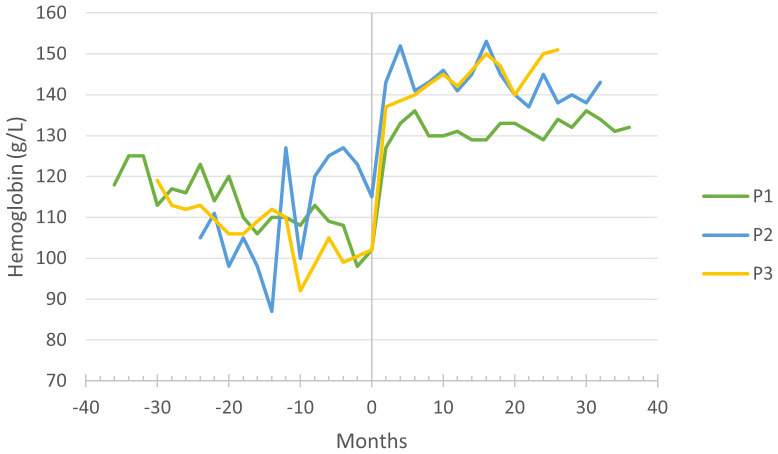
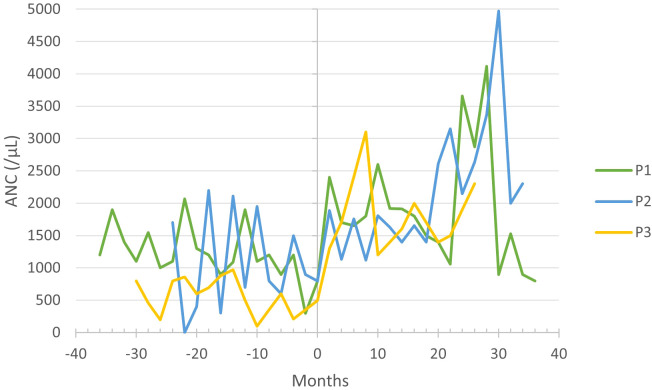
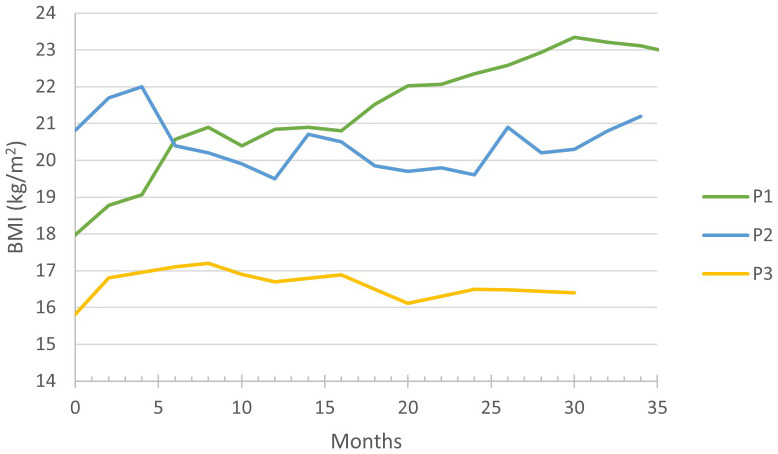
A retrospective analysis of empagliflozin treatment of three pediatric GSD-1b patients (two male and one female; ages at treatment initiation: 4.5, 2.5 and 6 years) was performed. Clinical and laboratory data from a symmetrical period of up to three years before and after the therapy introduction was reported. Data on the clinical course of the treatment, IBD activity, the need for antibiotic treatment and hospitalizations, neutrophil count and function, and markers of inflammation were assessed. Prior the introduction of empagliflozin, patients had recurrent oral mucosa lesions and infections, abdominal pain, and anemia. During empagliflozin treatment, the resolution of aphthous stomatitis, termination of abdominal pain, reduced frequency and severity of infections, anemia resolution, increased appetite, and improved wound healing was observed in all patients, as well as an increased body mass index in two of them. In a patient with IBD, long-term deep remission was confirmed. An increased and stabilized neutrophil count and an improved neutrophil function enabled the discontinuation of G-CSF treatment in all patients. A trend of decreasing inflammation markers was detected.
During the three-year follow-up period, empagliflozin treatment significantly improved clinical symptoms and increased the neutrophil count and function, suggesting that targeted metabolic treatment could improve the immune function in GSD-1b patients.
糖原贮积病 1b 型(GSD-1b)的特征是中性粒细胞中 1,5-脱水葡萄糖醇-6-磷酸的积累导致中性粒细胞减少和功能障碍。钠-葡萄糖共转运蛋白 2 抑制剂,如恩格列净,可促进这种有毒代谢物的清除,并改善与中性粒细胞减少相关的症状,包括严重感染和炎症性肠病(IBD)。我们的病例系列报告了用恩格列净治疗 3 例儿童 GSD-1b 患者的情况,随访时间为 3 年;这是迄今为止报告的最长随访时间。
对 3 例接受恩格列净治疗的儿童 GSD-1b 患者(2 名男性,1 名女性;治疗开始时年龄分别为 4.5 岁、2.5 岁和 6 岁)进行了回顾性分析。报告了治疗前和治疗后最长达 3 年的对称期的临床和实验室数据。评估了治疗的临床过程、IBD 活动、抗生素治疗和住院的需要、中性粒细胞计数和功能以及炎症标志物的数据。在引入恩格列净之前,患者有复发性口腔黏膜病变和感染、腹痛和贫血。在接受恩格列净治疗期间,所有患者均观察到口腔溃疡愈合、腹痛终止、感染频率和严重程度降低、贫血缓解、食欲增加和伤口愈合改善,其中 2 例患者体重指数增加。在患有 IBD 的患者中,长期深度缓解得到确认。中性粒细胞计数和功能的增加和稳定使所有患者停用 G-CSF 治疗。检测到炎症标志物的下降趋势。
在 3 年的随访期间,恩格列净治疗显著改善了临床症状,增加了中性粒细胞计数和功能,表明靶向代谢治疗可改善 GSD-1b 患者的免疫功能。