Hayduk Sean A, Hughes Amanda C, Winter Rachel L, Milton Mia D, Ward Sara Jane
Center for Substance Abuse Research, Department of Neural Sciences, Lewis Katz School of Medicine, Temple University, Philadelphia, PA 19140, USA.
Biomedicines. 2024 May 22;12(6):1145. doi: 10.3390/biomedicines12061145.
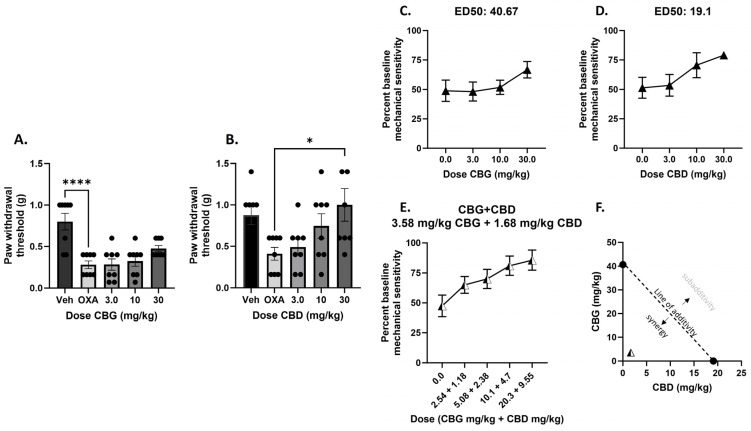
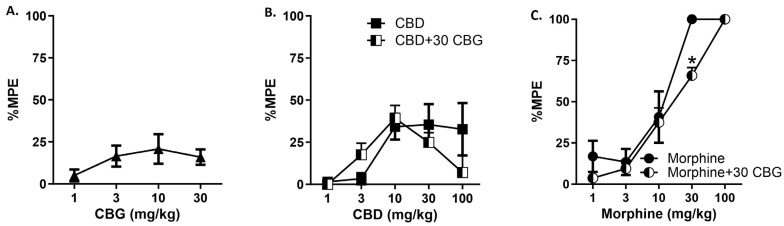
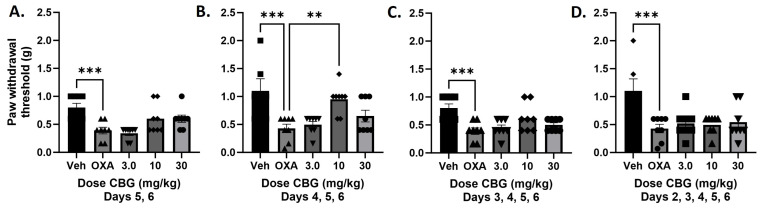
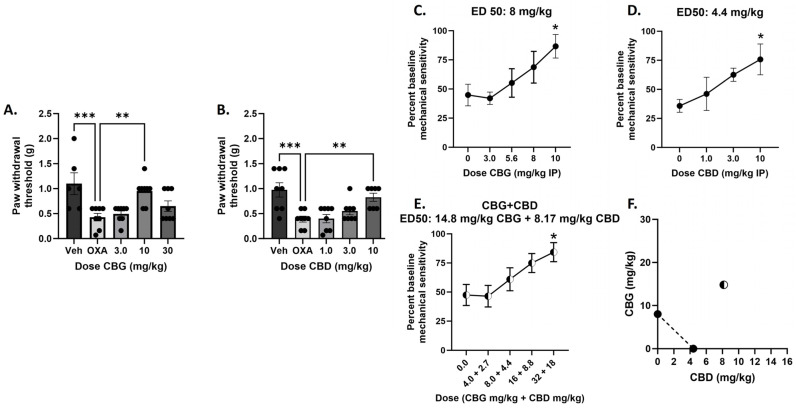
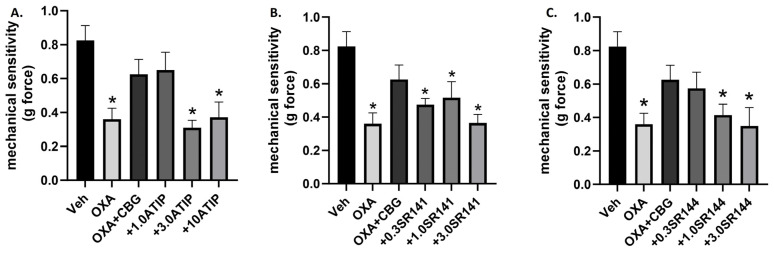
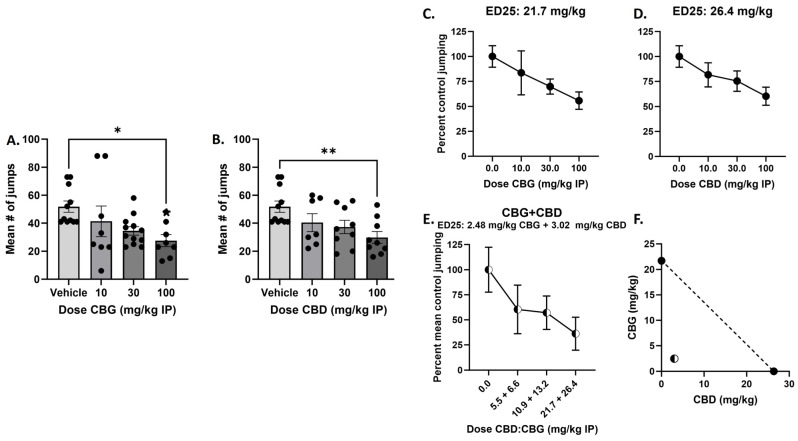
Chemotherapy-induced peripheral neuropathy (CIPN) is one of the most prevalent and dose-limiting complications in chemotherapy patients, with estimates of at least 30% of patients experiencing persistent neuropathy for months or years after treatment cessation. An emerging potential intervention for the treatment of CIPN is cannabinoid-based pharmacotherapies. We have previously demonstrated that treatment with the psychoactive CB1/CB2 cannabinoid receptor agonist Δ-tetrahydrocannabinol (Δ-THC) or the non-psychoactive, minor phytocannabinoid cannabidiol (CBD) can attenuate paclitaxel-induced mechanical sensitivity in a mouse model of CIPN. We then showed that the two compounds acted synergically when co-administered in the model, giving credence to the so-called entourage effect. We and others have also demonstrated that CBD can attenuate several opioid-associated behaviors. Most recently, it was reported that another minor cannabinoid, cannabigerol (CBG), attenuated cisplatin-associated mechanical sensitivity in mice. Therefore, the goals of the present set of experiments were to determine the single and combined effects of cannabigerol (CBG) and cannabidiol (CBD) in oxaliplatin-associated mechanical sensitivity, naloxone-precipitated morphine withdrawal, and acute morphine antinociception in male C57BL/6 mice. Results demonstrated that CBG reversed oxaliplatin-associated mechanical sensitivity only under select dosing conditions, and interactive effects with CBD were sub-additive or synergistic depending upon dosing conditions too. Pretreatment with a selective α2-adrenergic, CB1, or CB2 receptor selective antagonist significantly attenuated the effect of CBG. CBG and CBD decreased naloxone-precipitated jumping behavior alone and acted synergistically in combination, while CBG attenuated the acute antinociceptive effects of morphine and CBD. Taken together, CBG may have therapeutic effects like CBD as demonstrated in rodent models, and its interactive effects with opioids or other phytocannabinoids should continue to be characterized.
化疗引起的周围神经病变(CIPN)是化疗患者中最常见且限制剂量的并发症之一,据估计至少30%的患者在停止治疗后数月或数年仍存在持续性神经病变。一种新兴的治疗CIPN的潜在干预措施是基于大麻素的药物疗法。我们之前已经证明,使用具有精神活性的CB1/CB2大麻素受体激动剂Δ-四氢大麻酚(Δ-THC)或无精神活性的次要植物大麻素大麻二酚(CBD)进行治疗,可以减轻CIPN小鼠模型中紫杉醇诱导的机械敏感性。然后我们表明,在该模型中共同给药时,这两种化合物具有协同作用,这支持了所谓的“随从效应”。我们和其他人还证明,CBD可以减轻几种与阿片类药物相关的行为。最近,有报道称另一种次要大麻素大麻萜酚(CBG)可减轻小鼠顺铂相关的机械敏感性。因此,本系列实验的目的是确定大麻萜酚(CBG)和大麻二酚(CBD)对雄性C57BL/6小鼠奥沙利铂相关机械敏感性、纳洛酮诱发的吗啡戒断反应以及急性吗啡镇痛作用的单一和联合作用。结果表明,CBG仅在特定给药条件下才能逆转奥沙利铂相关的机械敏感性,并且与CBD的相互作用也因给药条件而异,可能是次加性或协同性的。用选择性α2-肾上腺素能、CB1或CB2受体选择性拮抗剂进行预处理可显著减弱CBG的作用。CBG和CBD单独使用时均可降低纳洛酮诱发的跳跃行为,联合使用时具有协同作用,而CBG可减弱吗啡和CBD的急性镇痛作用。综上所述,CBG可能像CBD一样在啮齿动物模型中具有治疗作用,其与阿片类药物或其他植物大麻素的相互作用仍有待进一步研究。