Wang Mengmeng, Bo Zongyi, Zhang Chengcheng, Guo Mengjiao, Wu Yantao, Zhang Xiaorong
Jiangsu Co-Innovation Center for the Prevention and Control of Important Animal Infectious Disease and Zoonoses, College of Veterinary Medicine, Yangzhou University, Yangzhou 225009, China.
Joint International Research Laboratory of Agriculture and Agri-Product Safety, The Ministry of Education of China, Yangzhou University, Yangzhou 225009, China.
Animals (Basel). 2024 Jun 13;14(12):1784. doi: 10.3390/ani14121784.
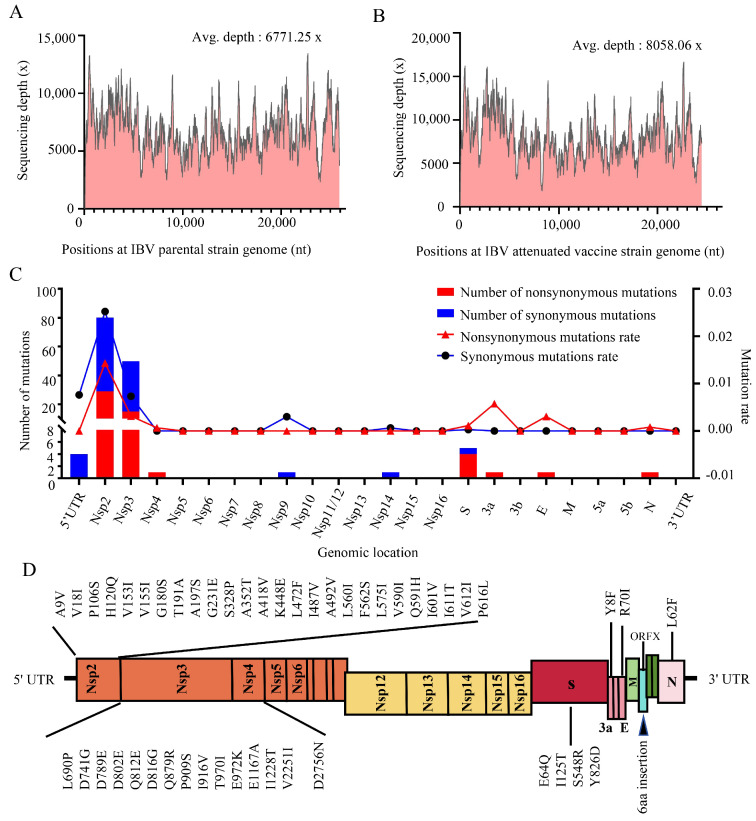
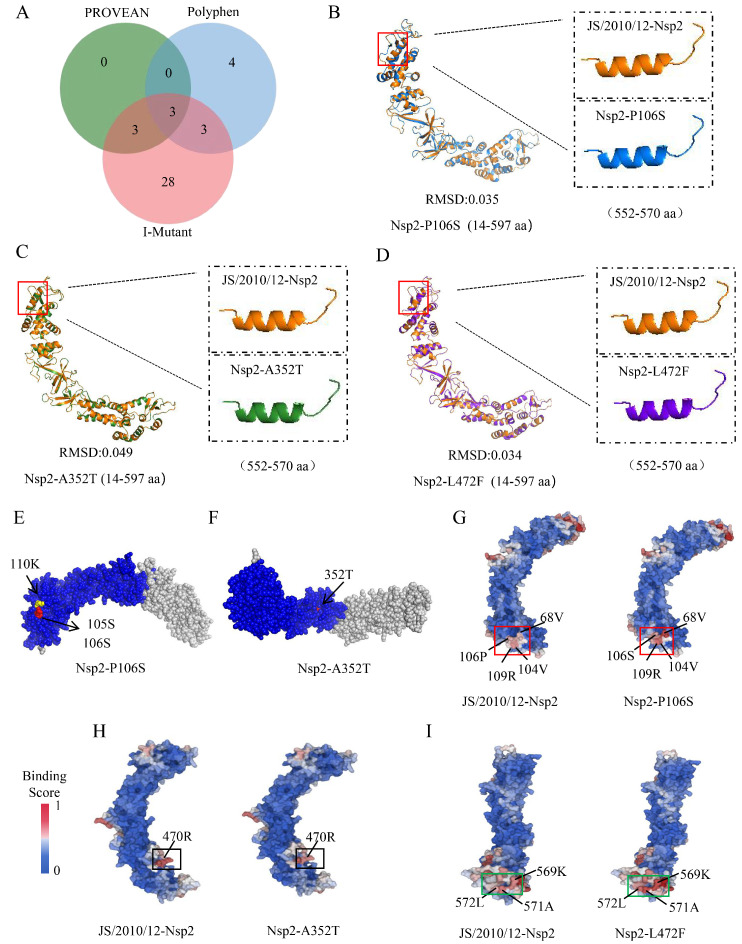
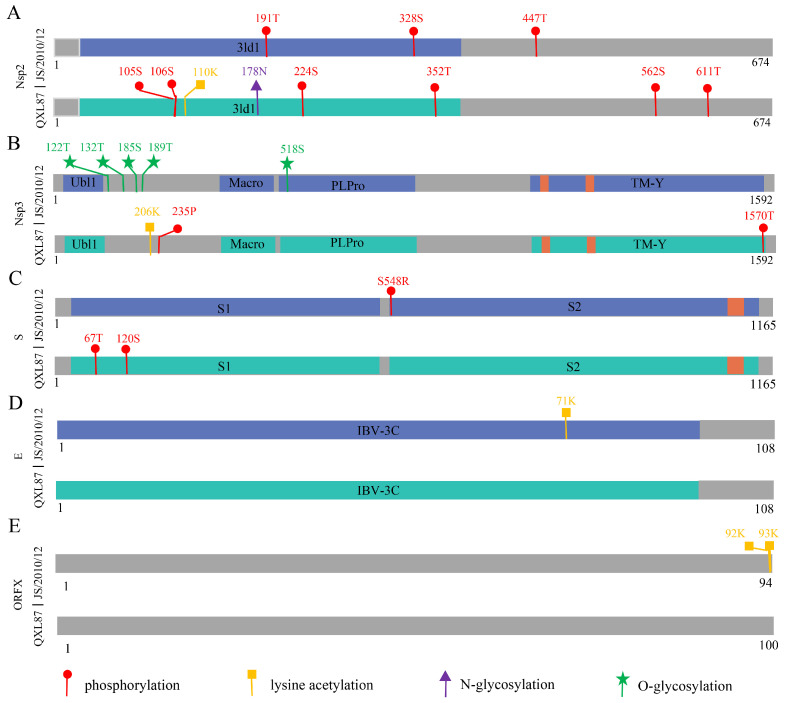
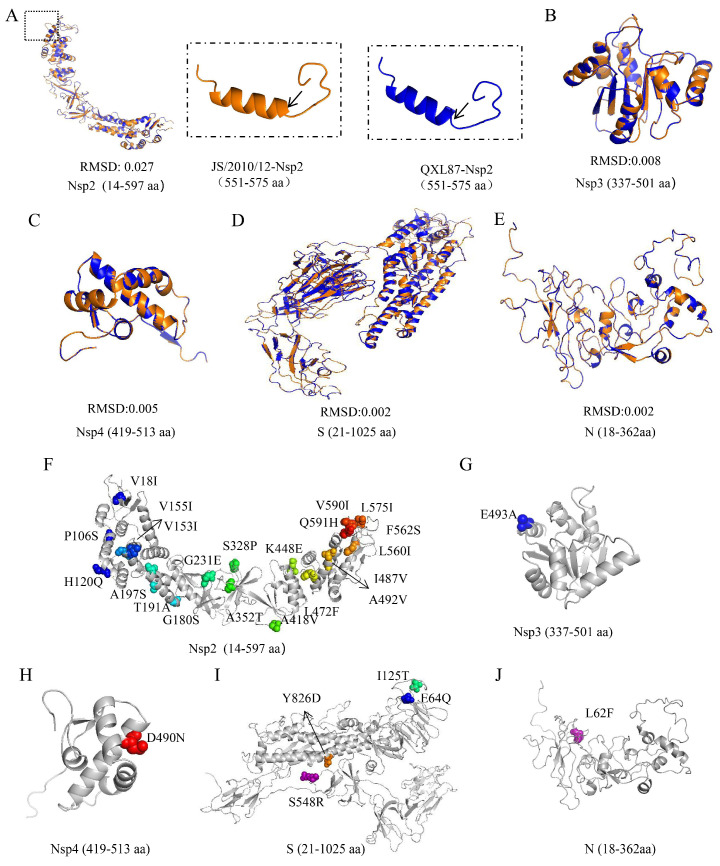
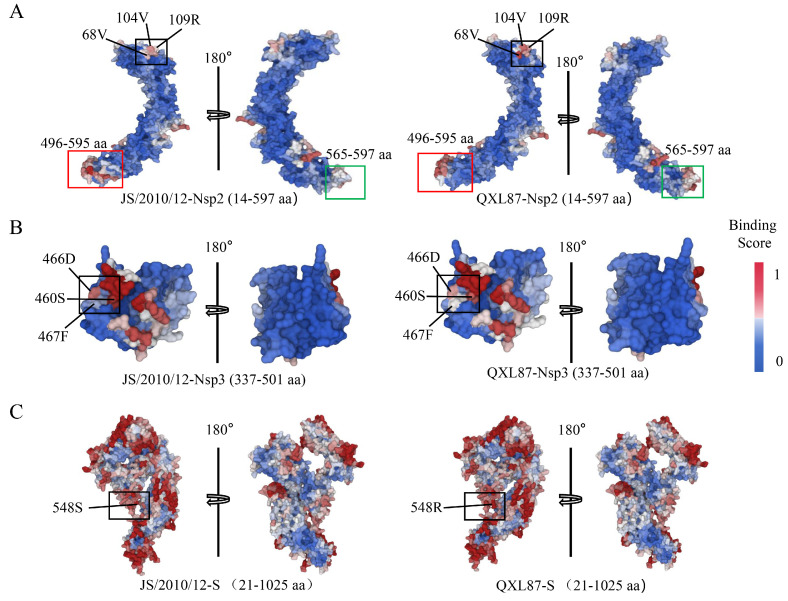
The QXL87 live attenuated vaccine strain for infectious bronchitis represents the first approved QX type (GI-19 lineage) vaccine in China. This strain was derived from the parental strain CK/CH/JS/2010/12 through continuous passage in SPF chicken embryos. To elucidate the molecular mechanism behind its attenuation, whole-genome sequencing was conducted on both the parental and attenuated strains. Analysis revealed 145 nucleotide mutations in the attenuated strain, leading to 48 amino acid mutations in various proteins, including Nsp2 (26), Nsp3 (14), Nsp4 (1), S (4), 3a (1), E (1), and N (1). Additionally, a frameshift mutation caused by a single base insertion in the ORFX resulted in a six-amino-acid extension. Subsequent comparison of post-translational modification sites, protein structure, and protein-protein binding sites between the parental and attenuated strains identified three potential virulence genes: Nsp2, Nsp3, and S. The amino acid mutations in these proteins not only altered their conformation but also affected the distribution of post-translational modification sites and protein-protein interaction sites. Furthermore, three potential functional mutation sites-P106S, A352T, and L472F, all located in the Nsp2 protein-were identified through PROVEAN, PolyPhen, and I-Mutant. Overall, our findings suggest that Nsp2, Nsp3, and S proteins may play a role in modulating IBV pathogenicity, with a particular focus on the significance of the Nsp2 protein. This study contributes to our understanding of the molecular mechanisms underlying IBV attenuation and holds promise for the development of safer live attenuated IBV vaccines using reverse genetic approaches.
用于传染性支气管炎的QXL87活疫苗株是中国首个获批的QX型(GI-19谱系)疫苗。该毒株是通过在SPF鸡胚中连续传代,从亲本毒株CK/CH/JS/2010/12衍生而来。为阐明其致弱背后的分子机制,对亲本毒株和致弱毒株都进行了全基因组测序。分析显示致弱毒株中有145个核苷酸突变,导致多种蛋白质中出现48个氨基酸突变,包括Nsp2(26个)、Nsp3(14个)、Nsp4(1个)、S(4个)、3a(1个)、E(1个)和N(1个)。此外,ORFX中单个碱基插入导致的移码突变导致六个氨基酸的延伸。随后对亲本毒株和致弱毒株之间的翻译后修饰位点、蛋白质结构和蛋白质-蛋白质结合位点进行比较,确定了三个潜在的毒力基因:Nsp2、Nsp3和S。这些蛋白质中的氨基酸突变不仅改变了它们的构象,还影响了翻译后修饰位点和蛋白质-蛋白质相互作用位点的分布。此外,通过PROVEAN、PolyPhen和I-Mutant鉴定出三个潜在的功能突变位点——P106S、A352T和L472F,均位于Nsp2蛋白中。总体而言,我们的研究结果表明,Nsp2、Nsp3和S蛋白可能在调节传染性支气管炎病毒致病性中发挥作用,尤其关注Nsp2蛋白的重要性。本研究有助于我们理解传染性支气管炎病毒致弱的分子机制,并有望利用反向遗传方法开发更安全的传染性支气管炎病毒活疫苗。