Stevenson Louise K, Page Amy J, Dowson Matthew, ElBadry Sameh K, Barnieh Francis M, Falconer Robert A, El-Khamisy Sherif F
School of Biosciences, Healthy Lifespan and Neuroscience Institutes, University of Sheffield, Sheffield, United Kingdom.
Institute of Cancer Therapeutics, Faculty of Life Sciences, University of Bradford, Bradford, United Kingdom.
Front Cell Dev Biol. 2024 Jun 12;12:1359105. doi: 10.3389/fcell.2024.1359105. eCollection 2024.
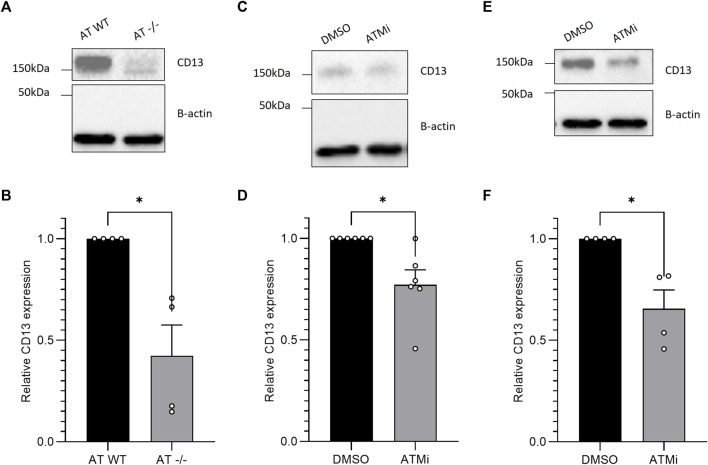
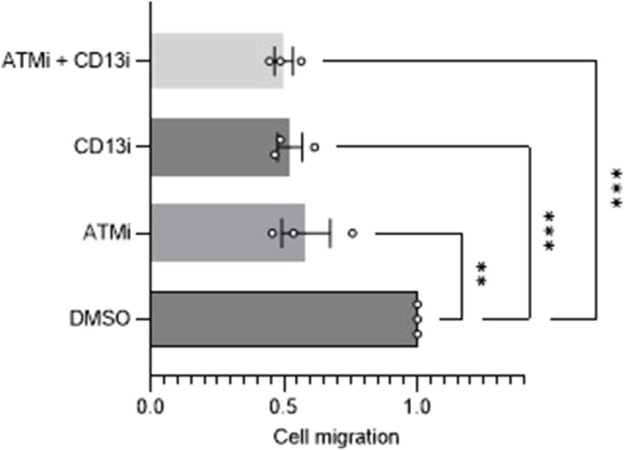
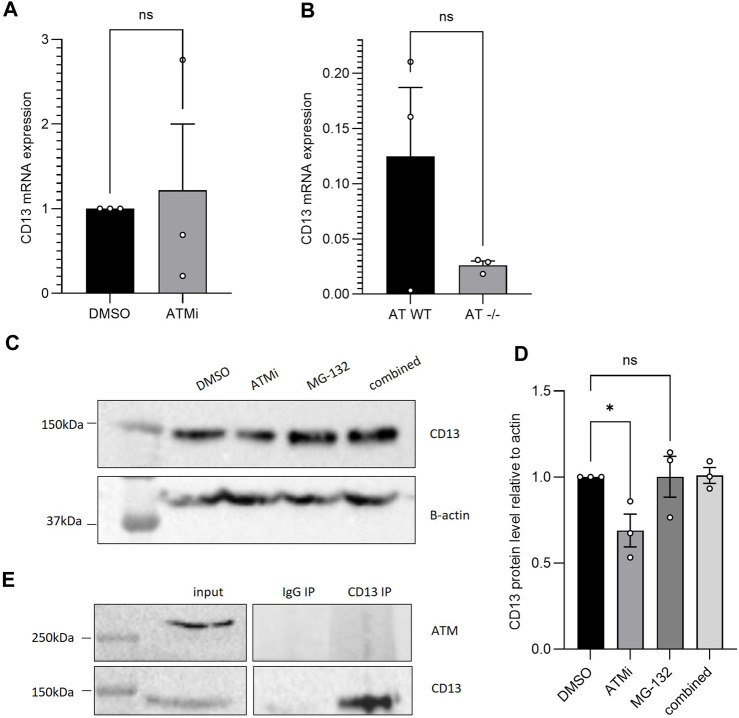
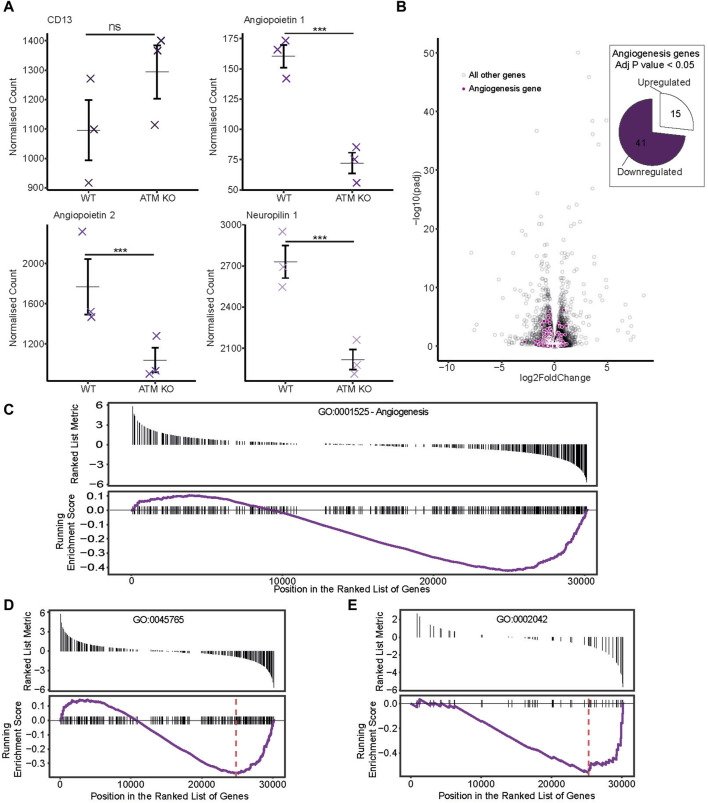
Classically, ATM is known for its role in sensing double-strand DNA breaks, and subsequently signaling for their repair. Non-canonical roles of ATM include transcriptional silencing, ferroptosis, autophagy and angiogenesis. Angiogenesis mediated by ATM signaling has been shown to be VEGF-independent via p38 signaling. Independently, p38 signaling has been shown to upregulate metalloproteinase expression, including MMP-2 and MMP-9, though it is unclear if this is linked to ATM. Here, we demonstrate ATM regulates aminopeptidase-N (CD13/APN/ANPEP) at the protein level. Positive correlation was seen between ATM activity and CD13 protein expression using both "wildtype" (WT) and knockout (KO) ataxia telangiectasia (AT) cells through western blotting; with the same effect shown when treating neuroblastoma cancer cell line SH-SY5Y, as well as AT-WT cells, with ATM inhibitor (ATMi; KU55933). However, qPCR along with publically available RNAseq data from Hu et al. (J. Clin. Invest., 2021, 131, e139333), demonstrated no change in mRNA levels of CD13, suggesting that ATM regulates CD13 levels via controlling protein degradation. This is further supported by the observation that incubation with proteasome inhibitors led to restoration of CD13 protein levels in cells treated with ATMi. Migration assays showed ATM and CD13 inhibition impairs migration, with no additional effect observed when combined. This suggests an epistatic effect, and that both proteins may be acting in the same signaling pathway that influences cell migration. This work indicates a novel functional interaction between ATM and CD13, suggesting ATM may negatively regulate the degradation of CD13, and subsequently cell migration.
传统上,ATM以其在感知双链DNA断裂并随后发出修复信号中的作用而闻名。ATM的非经典作用包括转录沉默、铁死亡、自噬和血管生成。已证明由ATM信号介导的血管生成通过p38信号通路不依赖于VEGF。独立地,已证明p38信号通路可上调金属蛋白酶的表达,包括MMP-2和MMP-9,尽管尚不清楚这是否与ATM有关。在这里,我们证明ATM在蛋白质水平上调节氨肽酶N(CD13/APN/ANPEP)。通过蛋白质印迹法,在“野生型”(WT)和共济失调毛细血管扩张症(AT)基因敲除(KO)细胞中,观察到ATM活性与CD13蛋白表达之间呈正相关;在用ATM抑制剂(ATMi;KU55933)处理神经母细胞瘤癌细胞系SH-SY5Y以及AT-WT细胞时,也显示出相同的效果。然而,qPCR以及Hu等人(《临床研究杂志》,2021年,131卷,e139333)公开的RNAseq数据表明,CD13的mRNA水平没有变化,这表明ATM通过控制蛋白质降解来调节CD13水平。用蛋白酶体抑制剂孵育导致在用ATMi处理的细胞中CD13蛋白水平恢复,这一观察结果进一步支持了这一点。迁移实验表明,抑制ATM和CD13会损害迁移,联合抑制时未观察到额外的影响。这表明存在上位效应,并且这两种蛋白质可能在影响细胞迁移的同一信号通路中起作用。这项工作表明ATM和CD13之间存在一种新的功能相互作用,表明ATM可能负向调节CD13的降解,进而调节细胞迁移。