Department of Surgery, UTHealth at Houston, Houston, TX, 77030, USA.
McWilliams School of Biomedical Informatics, UTHealth at Houston, Houston, TX, 77030, USA.
J Mol Med (Berl). 2024 Aug;102(8):1051-1061. doi: 10.1007/s00109-024-02460-6. Epub 2024 Jun 28.
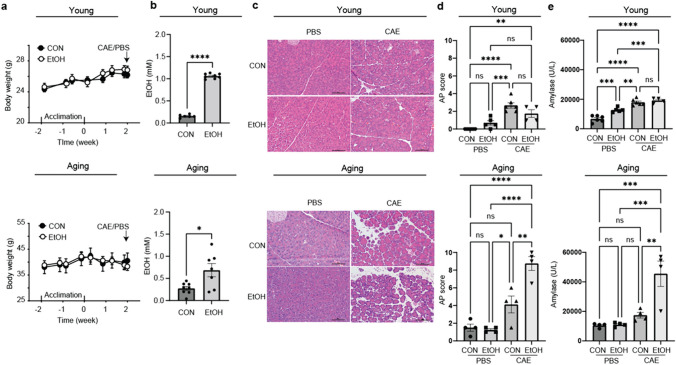
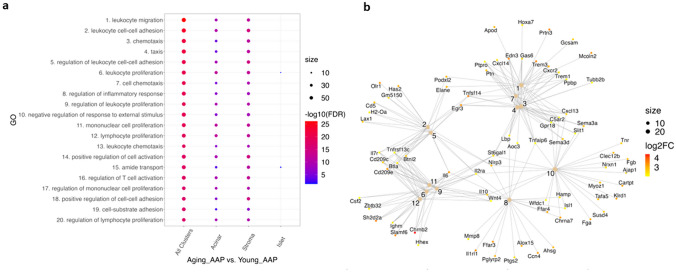
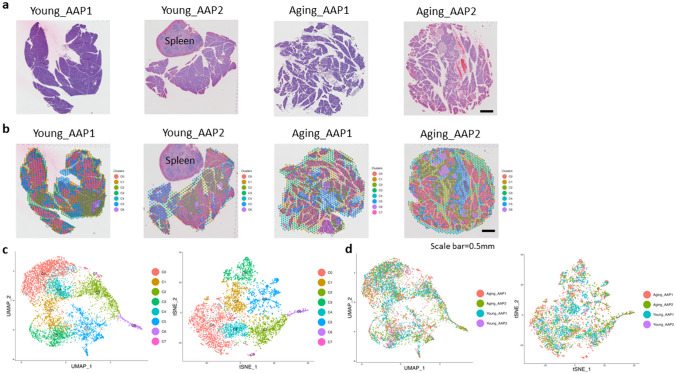
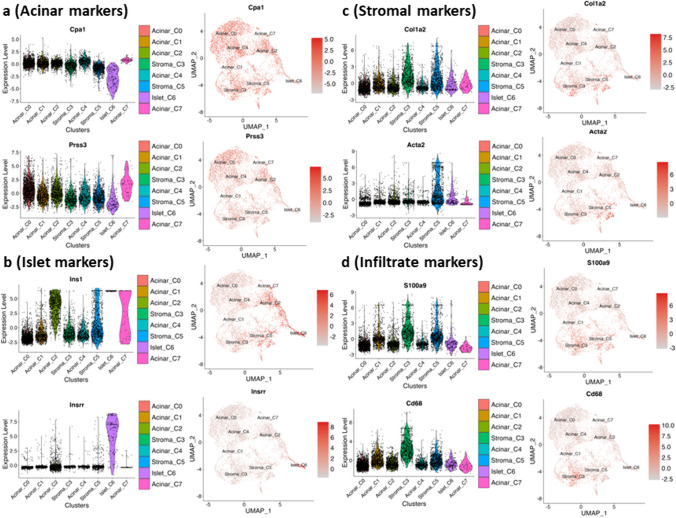
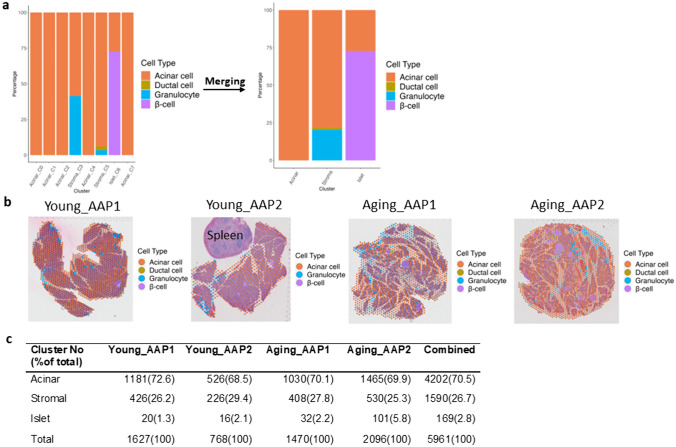
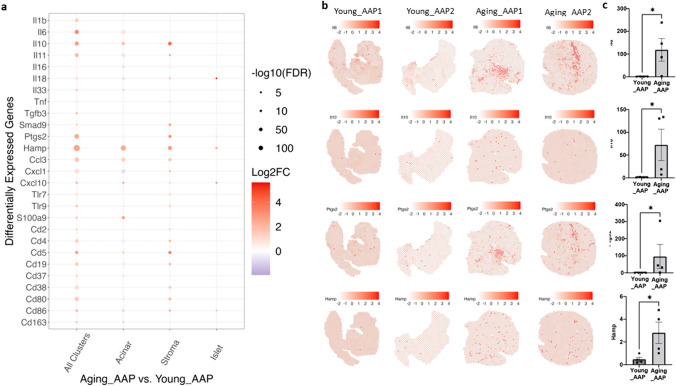
The rapidly aging population is consuming more alcohol, leading to increased alcohol-associated acute pancreatitis (AAP) with high mortality. However, the mechanisms remain undefined, and currently there are no effective therapies available. This study aims to elucidate aging- and alcohol-associated spatial transcriptomic signature by establishing an aging AAP mouse model and applying Visium spatial transcriptomics for understanding of the mechanisms in the context of the pancreatic tissue. Upon alcohol diet feeding and caerulein treatment, aging mice (18 months) developed significantly more severe AAP with 5.0-fold increase of injury score and 2.4-fold increase of amylase compared to young mice (3 months). Via Visium spatial transcriptomics, eight distinct tissue clusters were revealed from aggregated transcriptomes of aging and young AAP mice: five acinar, two stromal, and one islet, which were then merged into three clusters: acinar, stromal, and islet for the comparative analysis. Compared to young AAP mice, > 1300 differentially expressed genes (DEGs) and approximately 3000 differentially regulated pathways were identified in aging AAP mice. The top five DEGs upregulated in aging AAP mice include Mmp8, Ppbp, Serpina3m, Cxcl13, and Hamp with heterogeneous distributions among the clusters. Taken together, this study demonstrates spatial heterogeneity of inflammatory processes in aging AAP mice, offering novel insights into the mechanisms and potential drivers for AAP development. KEY MESSAGES: Mechanisms regarding high mortality of AAP in aging remain undefined. An aging AAP mouse model was developed recapturing clinical exhibition in humans. Spatial transcriptomics identified contrasted DEGs in aging vs. young AAP mice. Top five DEGs were Mmp8, Ppbp, Serpina3m, Cxcl13, and Hamp in aging vs. young AAP mice. Our findings shed insights for identification of molecular drivers in aging AAP.
人口老龄化导致酒精消费增加,进而导致与酒精相关的急性胰腺炎(AAP)发病率上升,死亡率也随之升高。然而,其具体机制仍未阐明,目前也尚无有效的治疗方法。本研究旨在通过建立一个老龄 AAP 小鼠模型,并应用 Visium 空间转录组学来研究胰腺组织中的相关机制,从而阐明与年龄和酒精相关的空间转录组特征。在给予酒精饮食和蛙皮素处理后,老龄(18 个月)小鼠比年轻(3 个月)小鼠发展出更严重的 AAP,其损伤评分增加了 5 倍,淀粉酶增加了 2.4 倍。通过 Visium 空间转录组学,从老龄和年轻 AAP 小鼠的聚集转录组中揭示了 8 个不同的组织簇:5 个腺泡、2 个基质和 1 个胰岛,然后将其合并为 3 个簇:腺泡、基质和胰岛,用于比较分析。与年轻 AAP 小鼠相比,老龄 AAP 小鼠中存在超过 1300 个差异表达基因(DEGs)和大约 3000 个差异调节通路。在老龄 AAP 小鼠中上调的前 5 个 DEGs 包括 Mmp8、Ppbp、Serpina3m、Cxcl13 和 Hamp,它们在不同簇中呈不均匀分布。综上所述,本研究表明老龄 AAP 小鼠的炎症过程存在空间异质性,为 AAP 发病机制和潜在驱动因素提供了新的见解。