Department of Surgery, Helsinki University Hospital and University of Helsinki, Haartmaninkatu 4, 00290, Helsinki, Finland.
Department of Bacteriology and Immunology, Helsinki University Hospital and University of Helsinki, Helsinki, Finland.
Dig Dis Sci. 2024 Sep;69(9):3333-3343. doi: 10.1007/s10620-024-08530-6. Epub 2024 Jun 28.
Necroptosis, a programmed inflammatory cell death, is involved in the pathogenesis of acute pancreatitis (AP). We compared levels of interleukin (IL)-33 (released upon necroptosis), sST2 (soluble IL-33 receptor), MLKL, RIPK1 and RIPK3 (necroptosis executioner proteins), and proinflammatory cytokines IL-6, TNF and IL-1β at various severity categories and stages of AP.
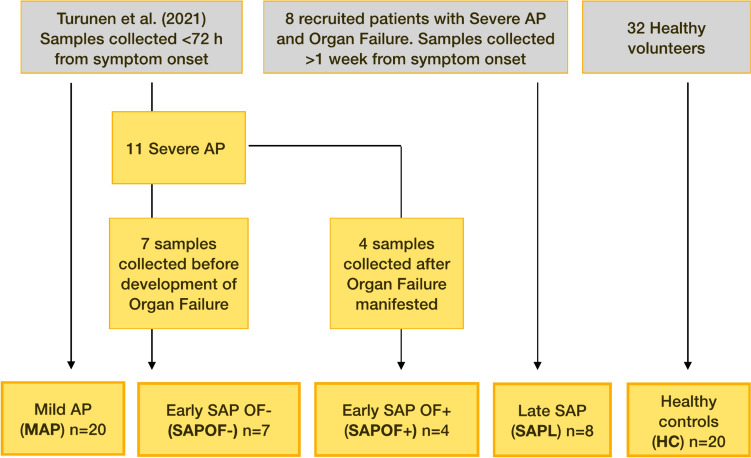
Plasma from 20 patients with early mild AP (MAP) (symptom onset < 72 h), 7 with severe AP (SAP) without and 4 with persistent organ failure (OF) at sampling, 8 patients with late SAP and 20 healthy controls (HC) were studied by ELISAs.
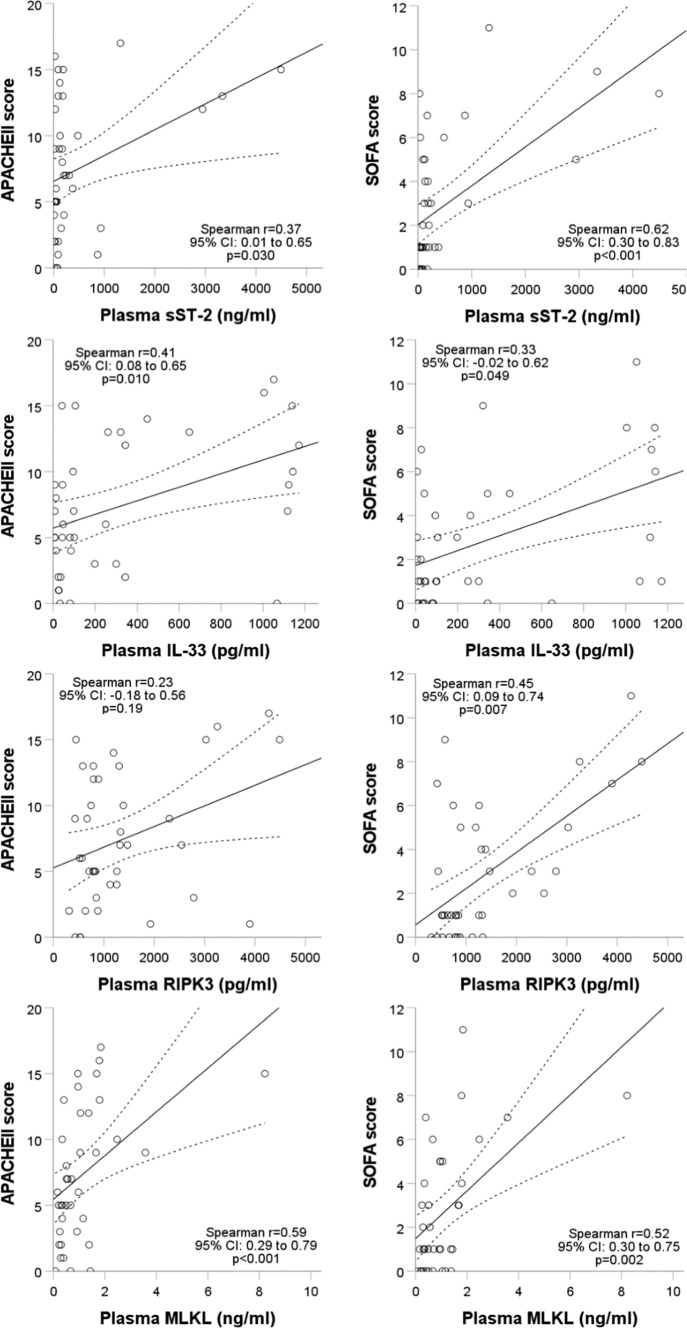
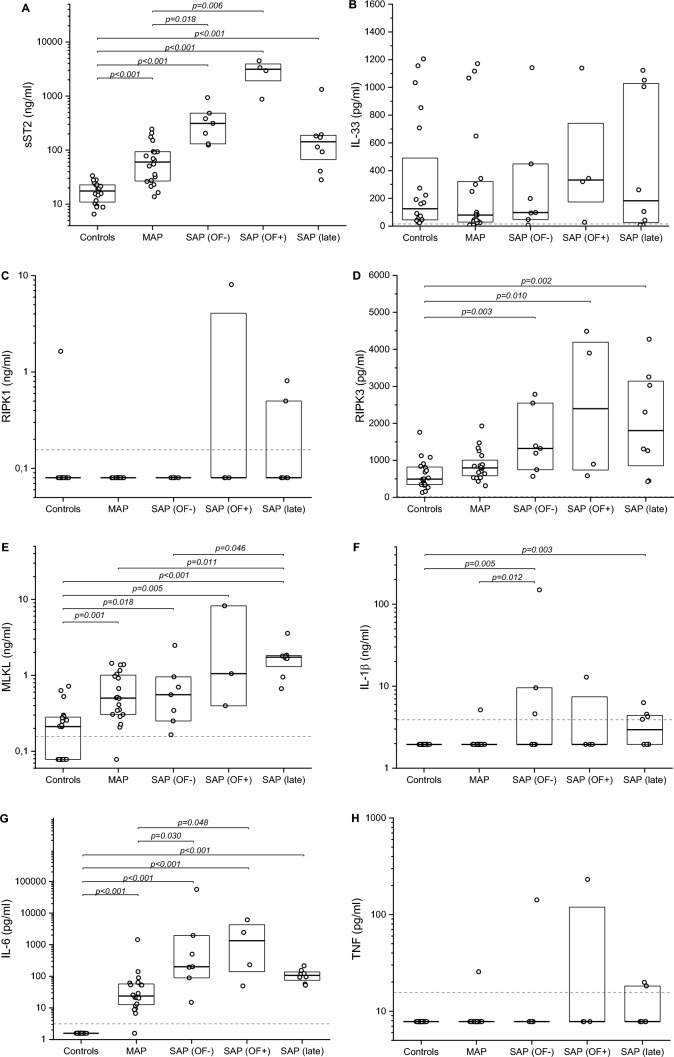
Early sST2 and IL-6 levels predicted the development of SAP and were higher in both MAP and early and late SAP than in HC. RIPK3 levels were higher than in HC in the patients who had or would later have SAP. MLKL levels were associated with the presence of OFs, particularly in the late phase, but were also higher in MAP than in HC.
sST2, RIPK3 and IL-6 levels may have prognostic value in AP. Elevated MLKL levels are associated with OF in AP. Better understanding of necroptosis in AP pathophysiology is needed to evaluate whether inhibiting and targeting necroptosis is a potential therapeutic option in AP.
细胞程序性坏死(坏死性凋亡)参与了急性胰腺炎(AP)的发病机制。我们比较了不同严重程度分类和 AP 不同阶段中白细胞介素(IL)-33(坏死性凋亡时释放)、sST2(IL-33 可溶性受体)、MLKL、RIPK1 和 RIPK3(坏死性凋亡执行蛋白)以及促炎细胞因子 IL-6、TNF 和 IL-1β的水平。
通过 ELISA 法检测了 20 例早期轻度 AP(MAP)(症状发作<72 小时)患者、7 例 SAP 患者(无持续性器官衰竭)和 4 例 SAP 患者(在采样时发生持续性器官衰竭)、8 例晚期 SAP 患者和 20 例健康对照者(HC)的血浆样本。
早期 sST2 和 IL-6 水平预测 SAP 的发生,且在 MAP 及早期和晚期 SAP 患者中均高于 HC。RIPK3 水平在 SAP 患者(无论是否发生)中均高于 HC。MLKL 水平与 OFs 的存在相关,尤其是在晚期阶段,但在 MAP 患者中也高于 HC。
sST2、RIPK3 和 IL-6 水平可能对 AP 具有预后价值。AP 中 MLKL 水平升高与 OF 相关。为了评估抑制和靶向坏死性凋亡是否是 AP 的一种潜在治疗选择,需要更好地了解 AP 病理生理学中的坏死性凋亡。