Rachubinski Angela L, Wallace Elizabeth, Gurnee Emily, Estrada Belinda A Enriquez, Worek Kayleigh R, Smith Keith P, Araya Paula, Waugh Katherine A, Granrath Ross E, Britton Eleanor, Lyford Hannah R, Donovan Micah G, Eduthan Neetha Paul, Hill Amanda A, Martin Barry, Sullivan Kelly D, Patel Lina, Fidler Deborah J, Galbraith Matthew D, Dunnick Cory A, Norris David A, Espinosa Joaquin M
Linda Crnic Institute for Down Syndrome, University of Colorado Anschutz Medical Campus, Aurora, CO, USA.
Department of Pediatrics, Section of Developmental Pediatrics, University of Colorado Anschutz Medical Campus, Aurora, CO, USA.
medRxiv. 2024 Oct 16:2024.06.13.24308783. doi: 10.1101/2024.06.13.24308783.
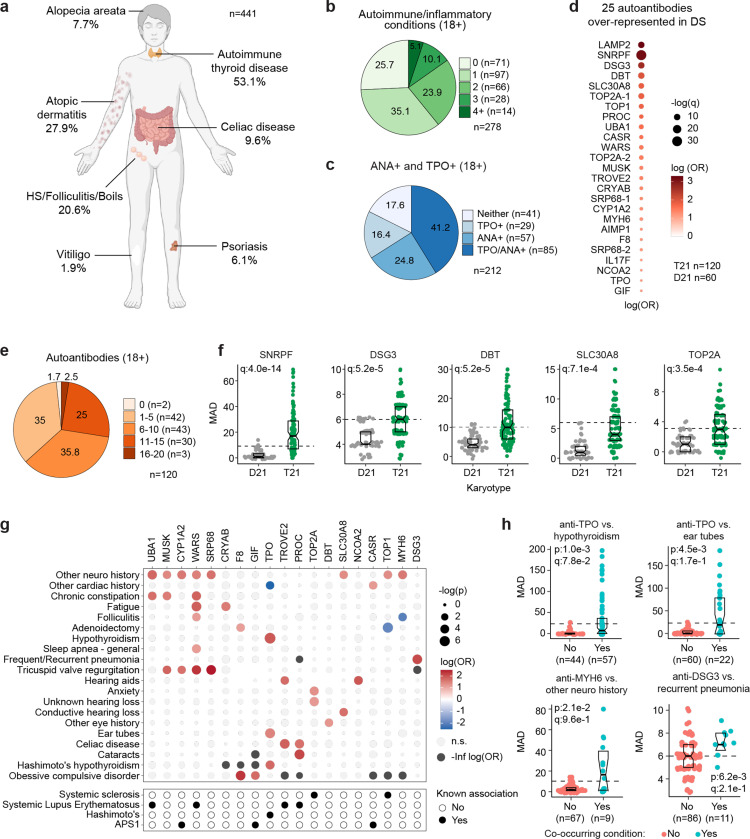
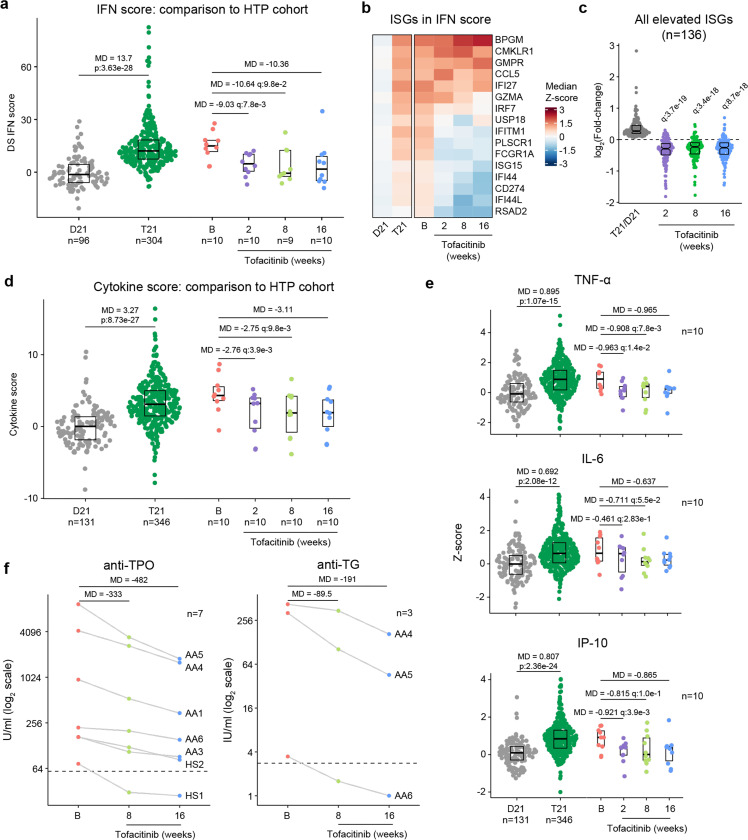
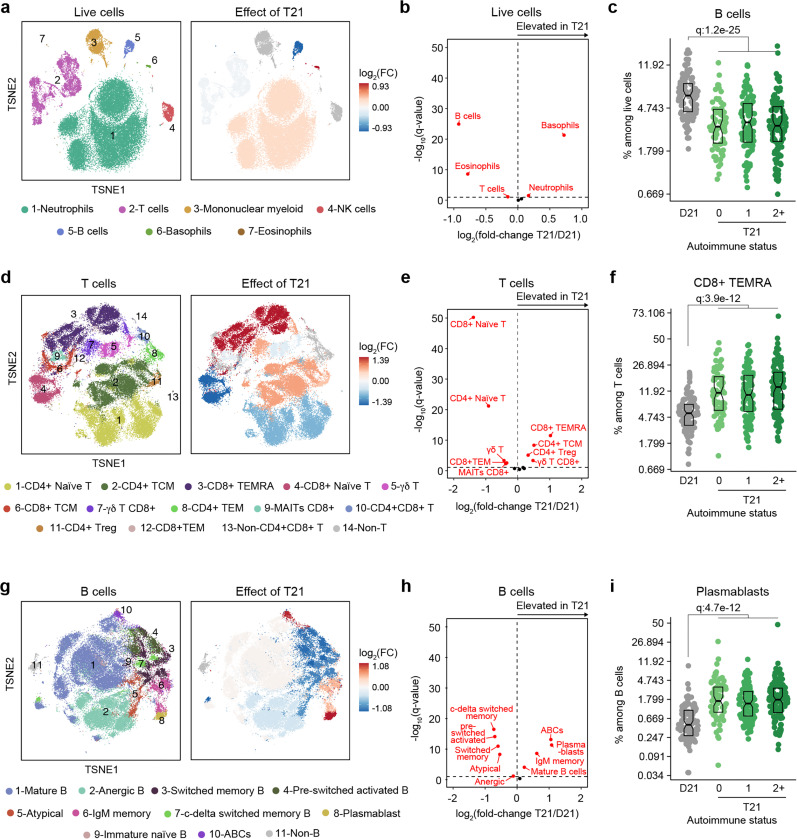
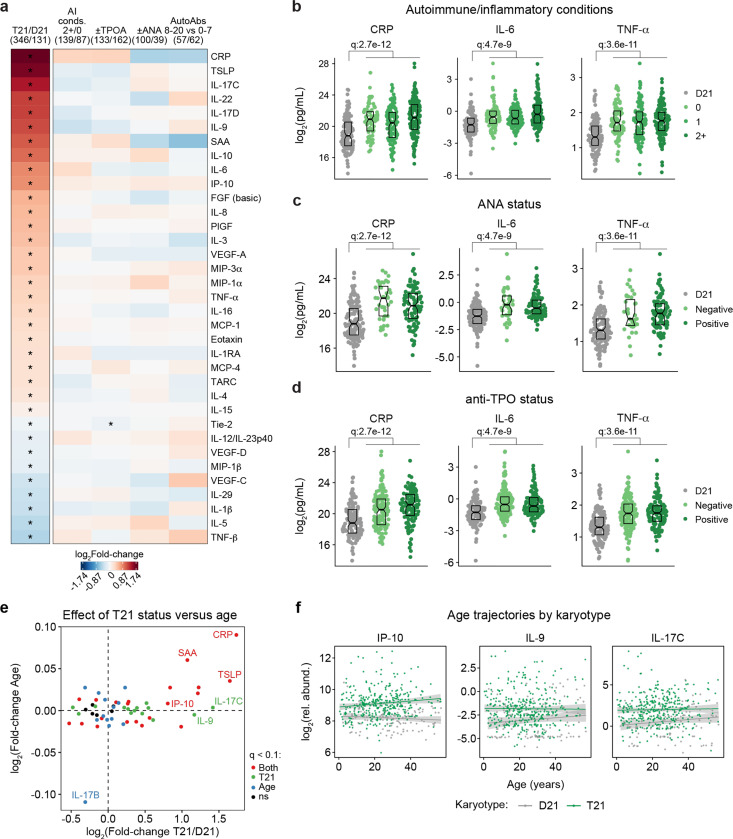
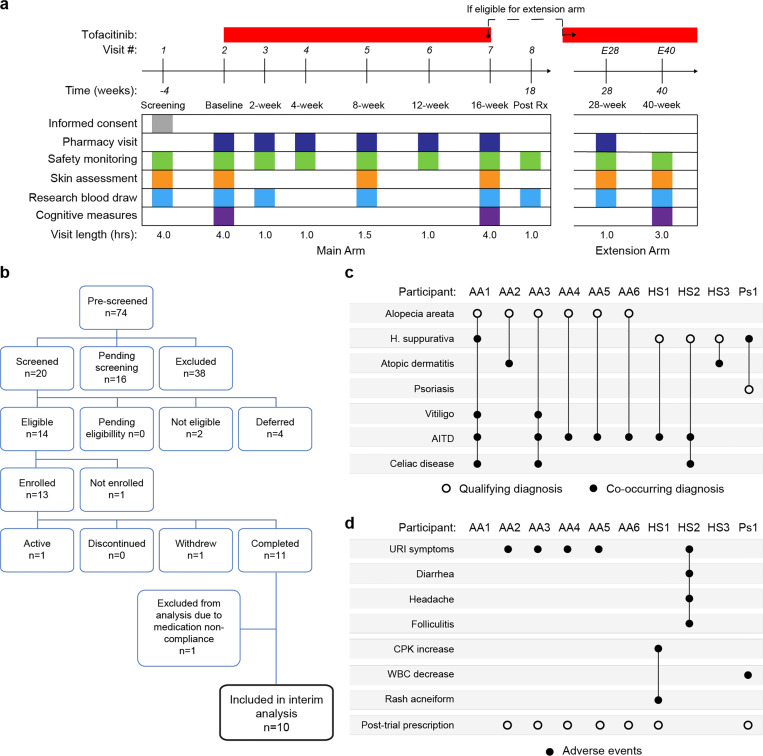
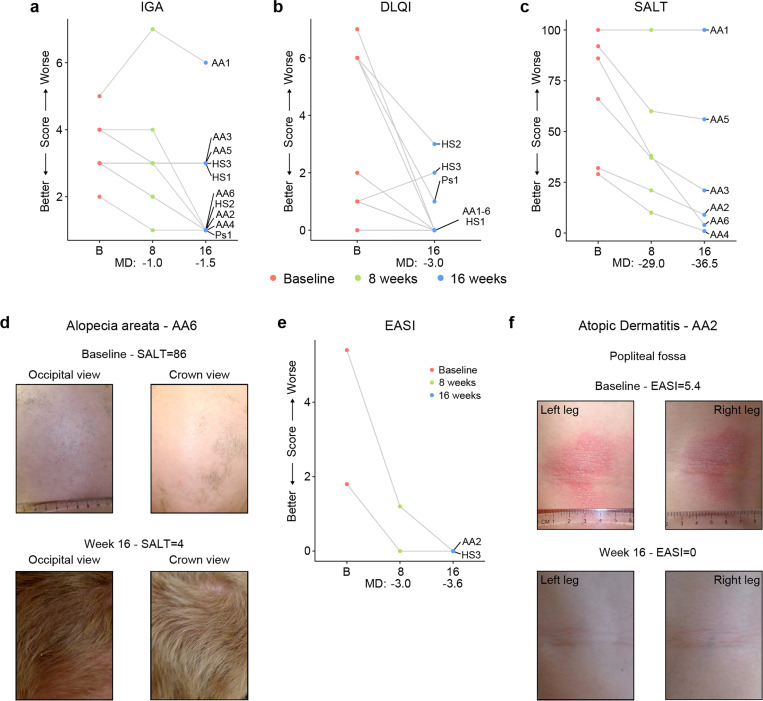
Individuals with Down syndrome (DS), the genetic condition caused by trisomy 21 (T21), display clear signs of immune dysregulation, including high rates of autoimmune disorders and severe complications from infections. Although it is well established that T21 causes increased interferon responses and JAK/STAT signaling, elevated autoantibodies, global immune remodeling, and hypercytokinemia, the interplay between these processes, the clinical manifestations of DS, and potential therapeutic interventions remain ill defined. Here, we report a comprehensive analysis of immune dysregulation at the clinical, cellular, and molecular level in hundreds of individuals with DS. We demonstrate multi-organ autoimmunity of pediatric onset concurrent with unexpected autoantibody-phenotype associations. Importantly, constitutive immune remodeling and hypercytokinemia occur from an early age prior to autoimmune diagnoses or autoantibody production. We then report the interim analysis of a Phase II clinical trial investigating the safety and efficacy of the JAK inhibitor tofacitinib through multiple clinical and molecular endpoints. Analysis of the first 10 participants to complete the 16-week study shows a good safety profile and no serious adverse events. Treatment reduced skin pathology in alopecia areata, psoriasis, and atopic dermatitis, while decreasing interferon scores, cytokine scores, and levels of pathogenic autoantibodies without overt immune suppression. Additional research is needed to define the effects of JAK inhibition on the broader developmental and clinical hallmarks of DS. ClinicalTrials.gov identifier: NCT04246372.
唐氏综合征(DS)患者因21号染色体三体(T21)导致基因异常,表现出明显的免疫失调迹象,包括自身免疫性疾病高发以及感染引发的严重并发症。尽管T21会导致干扰素反应增强、JAK/STAT信号通路激活、自身抗体水平升高、整体免疫重塑和细胞因子血症,但这些过程之间的相互作用、DS的临床表现以及潜在的治疗干预仍不明确。在此,我们报告了对数百名DS患者在临床、细胞和分子水平上免疫失调的综合分析。我们证明了小儿期多器官自身免疫与意外的自身抗体-表型关联同时存在。重要的是,在自身免疫诊断或自身抗体产生之前,从幼年起就发生了持续性免疫重塑和细胞因子血症。然后,我们报告了一项II期临床试验的中期分析,该试验通过多个临床和分子终点研究JAK抑制剂托法替布的安全性和有效性。对完成16周研究的前10名参与者的分析显示,安全性良好,未出现严重不良事件。治疗减轻了斑秃、银屑病和特应性皮炎的皮肤病变,同时降低了干扰素评分、细胞因子评分和致病性自身抗体水平,且没有明显的免疫抑制作用。需要进一步研究来确定JAK抑制对DS更广泛的发育和临床特征的影响。ClinicalTrials.gov标识符:NCT04246372。