
蛋白质组特征揭示了一种假定的共伴侣蛋白Wos2的稳态和适应性氧化反应,以影响隐球菌病中的真菌毒力决定因素。
Proteome signatures reveal homeostatic and adaptive oxidative responses by a putative co-chaperone, Wos2, to influence fungal virulence determinants in cryptococcosis.
作者信息
Ball Brianna, Sukumaran Arjun, Pladwig Samanta, Kazi Samiha, Chan Norris, Honeywell Effie, Modrakova Manuela, Geddes-McAlister Jennifer
机构信息
Department of Molecular and Cellular Biology, University of Guelph, Guelph, Ontario, Canada.
出版信息
Microbiol Spectr. 2024 Aug 6;12(8):e0015224. doi: 10.1128/spectrum.00152-24. Epub 2024 Jul 2.
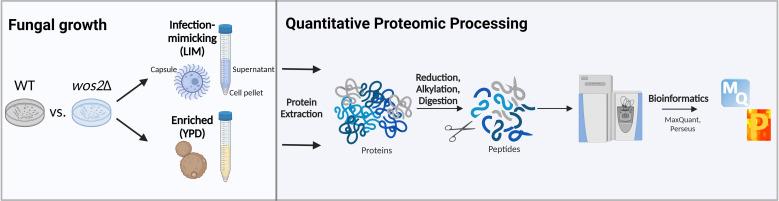
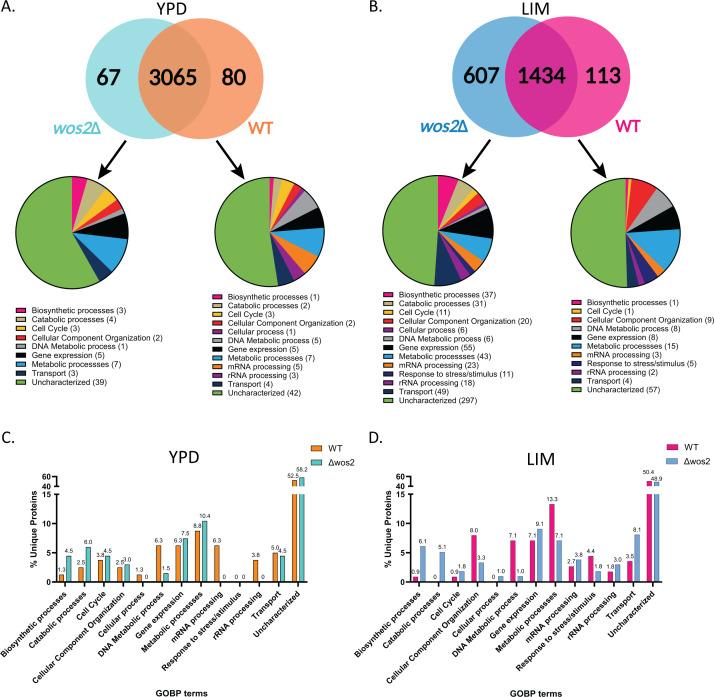
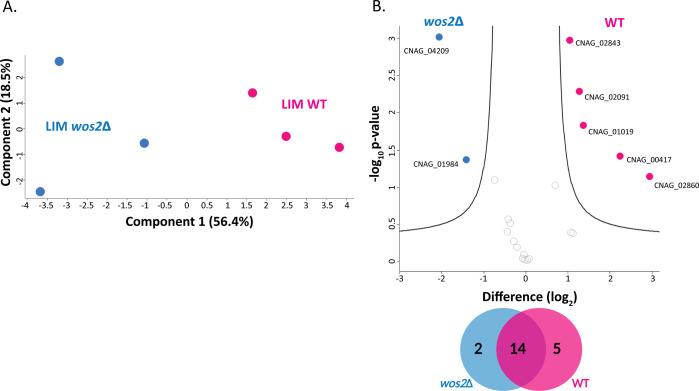
The increasing prevalence of invasive fungal pathogens is dramatically changing the clinical landscape of infectious diseases, posing an imminent threat to public health. Specifically, , the human opportunistic pathogen, expresses elaborate virulence mechanisms and is equipped with sophisticated adaptation strategies to survive in harsh host environments. This study extensively characterizes Wos2, an Hsp90 co-chaperone homolog, featuring bilateral functioning for both cryptococcal adaptation and the resulting virulence response. In this study, we evaluated the proteome and secretome signatures associated with deletion in enriched and infection-mimicking conditions to reveal Wos2-dependent regulation of the oxidative stress response through global translational reprogramming. The Δ strain demonstrates defective intracellular and extracellular antioxidant protection systems, measurable through a decreased abundance of critical antioxidant enzymes and reduced growth in the presence of peroxide stress. Additional Wos2-associated stress phenotypes were observed upon fungal challenge with heat shock, osmotic stress, and cell membrane stressors. We demonstrate the importance of Wos2 for intracellular lifestyle of during macrophage infection and provide evidence for reduced phagosomal replication levels associated with Δ. Accordingly, Δ featured significantly reduced virulence within impacting fungal burden in a murine model of cryptococcosis. Our study highlights a vulnerable point in the fungal chaperone network that offers a therapeutic opportunity to interfere with both fungal virulence and fitness.IMPORTANCEThe global impact of fungal pathogens, both emerging and emerged, is undeniable, and the alarming increase in antifungal resistance rates hampers our ability to protect the global population from deadly infections. For cryptococcal infections, a limited arsenal of antifungals and increasing rates of resistance demand alternative therapeutic strategies, including an anti-virulence approach, which disarms the pathogen of critical virulence factors, empowering the host to remove the pathogens and clear the infection. To this end, we apply state-of-the-art mass spectrometry-based proteomics to evaluate the impact of a recently defined novel co-chaperone, Wos2, toward cryptococcal virulence using and models of infection. We explore global proteome and secretome remodeling driven by the protein and uncover the novel role in modulating the fungal oxidative stress response. Complementation of proteome findings with infectivity assays demonstrated the protective role of Wos2 within the macrophage phagosome, influencing fungal replication and survival. These results underscore differential cryptococcal survivability and weakened patterns of dissemination in the absence of . Overall, our study establishes Wos2 as an important contributor to fungal pathogenesis and warrants further research into critical proteins within global stress response networks as potential druggable targets to reduce fungal virulence and clear infection.
侵袭性真菌病原体的日益流行正在极大地改变传染病的临床格局,对公众健康构成迫在眉睫的威胁。具体而言,人类机会性病原体表达了复杂的毒力机制,并具备在恶劣宿主环境中生存的复杂适应策略。本研究广泛表征了Hsp90共伴侣同源物Wos2,其在隐球菌适应及由此产生的毒力反应中具有双向功能。在本研究中,我们评估了在富集和模拟感染条件下与Wos2缺失相关的蛋白质组和分泌蛋白质组特征,以揭示通过全局翻译重编程对氧化应激反应的Wos2依赖性调节。ΔWos2菌株表现出细胞内和细胞外抗氧化保护系统缺陷,可通过关键抗氧化酶丰度降低以及在过氧化物应激下生长减少来衡量。在用热休克、渗透应激和细胞膜应激源对真菌进行刺激后,观察到了其他与Wos2相关的应激表型。我们证明了Wos2在巨噬细胞感染期间对新型隐球菌细胞内生存方式的重要性,并提供了与ΔWos2相关的吞噬体复制水平降低的证据。因此,在新型隐球菌病小鼠模型中,ΔWos2的毒力显著降低,影响真菌负荷。我们的研究突出了真菌伴侣网络中的一个脆弱点,这为干扰真菌毒力和适应性提供了一个治疗机会。重要性新兴和已出现的真菌病原体的全球影响是不可否认的,抗真菌耐药率的惊人上升阻碍了我们保护全球人口免受致命感染的能力。对于隐球菌感染,有限的抗真菌药物库和不断上升的耐药率需要替代治疗策略,包括抗毒力方法,该方法消除病原体的关键毒力因子,使宿主能够清除病原体并清除感染。为此,我们应用基于质谱的先进蛋白质组学,使用感染模型评估最近定义的新型共伴侣Wos2对新型隐球菌毒力的影响。我们探索了由该蛋白质驱动的全局蛋白质组和分泌蛋白质组重塑,并揭示了其在调节真菌氧化应激反应中的新作用。蛋白质组学研究结果与感染性测定的互补证明了Wos2在巨噬细胞吞噬体内的保护作用,影响真菌复制和存活。这些结果强调了在没有Wos2的情况下新型隐球菌不同的生存能力和减弱的传播模式。总体而言,我们的研究确立了Wos2是真菌发病机制的重要贡献者,并值得进一步研究全局应激反应网络中的关键蛋白质,作为降低真菌毒力和清除感染的潜在可药物化靶点。



 Zotero 插件