University of Liverpool, Liverpool, UK.
London School of Hygiene & Tropical Medicine, London, UK.
BMJ Glob Health. 2024 Jul 4;9(7):e012719. doi: 10.1136/bmjgh-2023-012719.
Equitable inclusion of low-income and middle-income country (LMIC) researchers and women in research authorship is a priority. A review of progress in addressing WHO-identified priorities provided an opportunity to examine the geographical and gender distribution of authorship in herpes simplex virus type-2 (HSV-2) research.
Publications addressing five areas prioritised in a WHO workshop and published between 2000 and 2020 were identified. Data on author country, gender, authorship position and research funding source were collected by manuscript review and internet searches and analysed using IBM SPSS V.26.
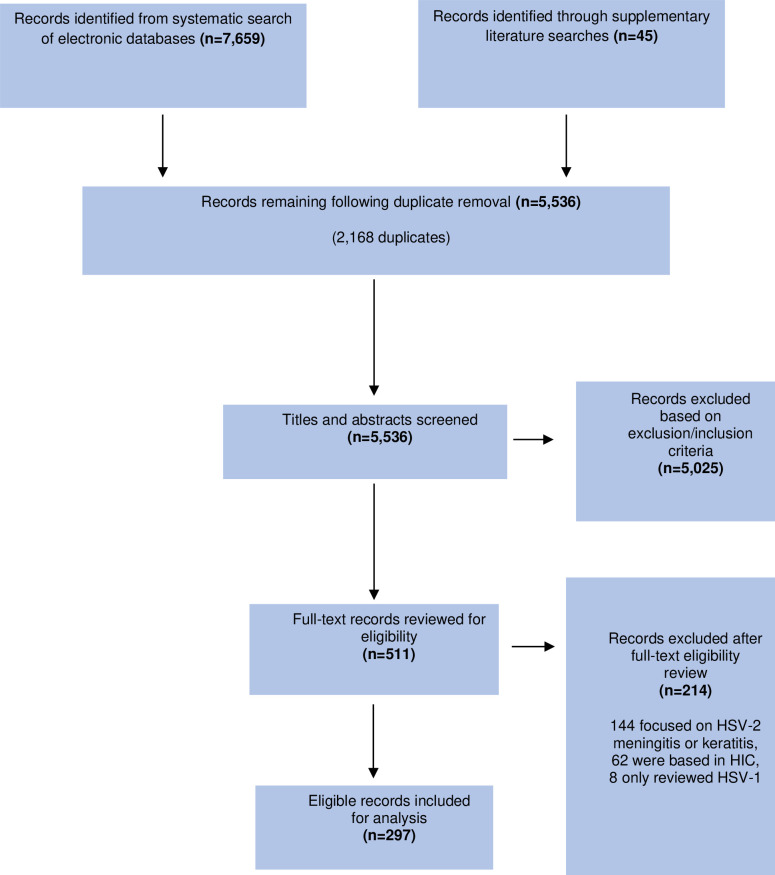
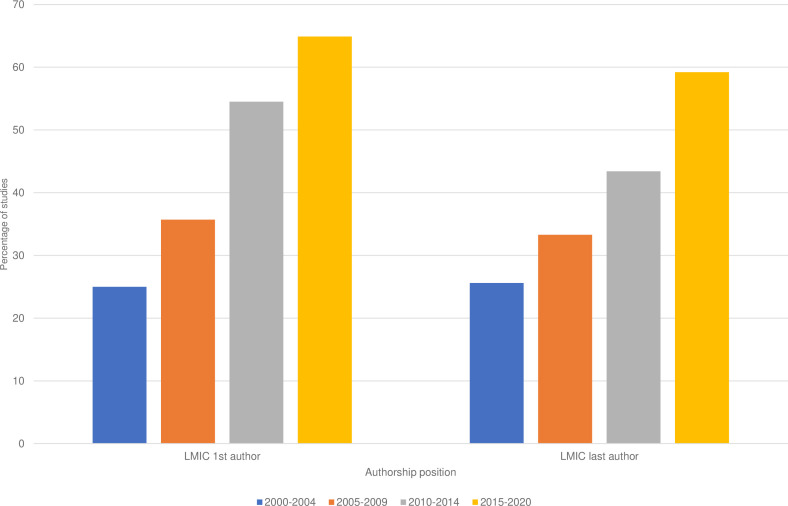
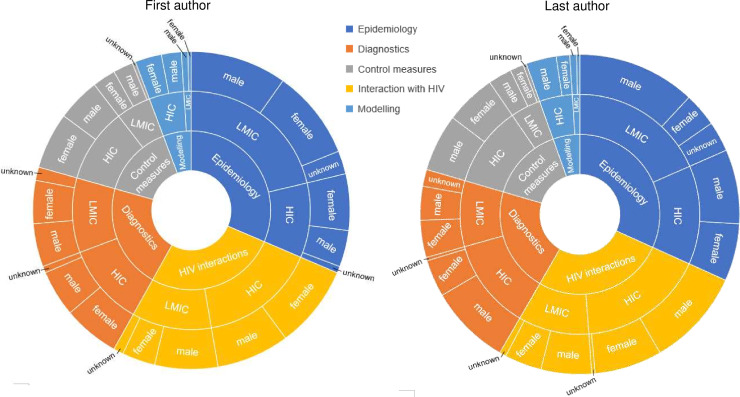
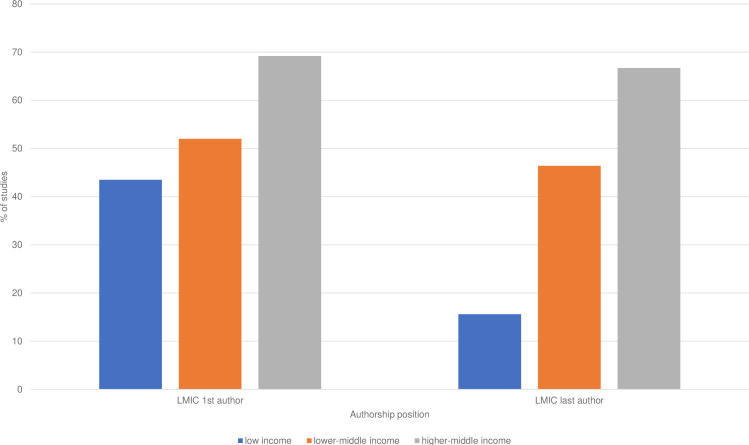
Of, 297 eligible papers identified, (n=294) had multiple authors. Of these, 241 (82%) included at least one LMIC author and 143 (49%) and 122 (41%) had LMIC first and last authors, respectively. LMICs funded studies were more than twice as likely to include an LMIC first or last author as high-income country-funded studies (relative risk 2.36, 95% CI 1.93 to 2.89). Respectively, 129 (46%) and 106 (36%) studies had female first and last authors. LMIC first and last authorship varied widely by HSV-2 research area and increased over time to 65% and 59% by 2015-2020.
Despite location of the research itself in LMIC settings, over the 20-year period, LMIC researchers held only a minority of first and last authorship positions. While LMIC representation in these positions improved over time, important inequities remain in key research areas and for women. Addressing current and historical power disparities in global health research, research infrastructure and how it is funded may be key addressing to addressing these issues.
公平纳入低收入和中等收入国家(LMIC)研究人员和女性参与研究著作者是当务之急。对世界卫生组织确定的优先事项进展情况的审查提供了一个机会,以审查单纯疱疹病毒 2 型(HSV-2)研究中著作者的地域和性别分布。
确定了 2000 年至 2020 年间发表的针对世界卫生组织研讨会确定的五个优先领域的出版物。通过对稿件的审查和互联网搜索收集有关作者国家、性别、作者职位和研究资金来源的数据,并使用 IBM SPSS V.26 进行分析。
在所确定的 297 篇合格论文中,(n=294)有多名作者。其中,241 篇(82%)至少有一位来自 LMIC 的作者,143 篇(49%)和 122 篇(41%)分别有 LMIC 的第一和最后作者。与高收入国家资助的研究相比,LMIC 资助的研究更有可能有 LMIC 的第一或最后作者(相对风险 2.36,95%CI 1.93 至 2.89)。分别有 129 篇(46%)和 106 篇(36%)的研究有女性第一和最后作者。HSV-2 研究领域的 LMIC 第一和最后作者的分布差异很大,并随着时间的推移而增加,到 2015-2020 年分别达到 65%和 59%。
尽管研究本身位于 LMIC 环境中,但在 20 年期间,LMIC 研究人员仅担任少数第一和最后作者职位。虽然随着时间的推移,这些职位的 LMIC 代表人数有所增加,但在关键研究领域和女性中仍然存在重要的不平等现象。解决全球卫生研究、研究基础设施及其资金方式中的当前和历史权力差距问题可能是解决这些问题的关键。