• 文献检索
  • 文档翻译
  • 深度研究
  • 学术资讯
  • Suppr Zotero 插件Zotero 插件
  • 邀请有礼
  • 套餐&价格
  • 历史记录
应用&插件
Suppr Zotero 插件Zotero 插件浏览器插件Mac 客户端Windows 客户端微信小程序
定价
高级版会员购买积分包购买API积分包
服务
文献检索文档翻译深度研究API 文档MCP 服务
关于我们
关于 Suppr公司介绍联系我们用户协议隐私条款
关注我们

Suppr 超能文献

核心技术专利:CN118964589B侵权必究
粤ICP备2023148730 号-1Suppr @ 2026

文献检索

告别复杂PubMed语法,用中文像聊天一样搜索,搜遍4000万医学文献。AI智能推荐,让科研检索更轻松。

立即免费搜索

文件翻译

保留排版,准确专业,支持PDF/Word/PPT等文件格式,支持 12+语言互译。

免费翻译文档

深度研究

AI帮你快速写综述,25分钟生成高质量综述,智能提取关键信息,辅助科研写作。

立即免费体验

可食用咬合力传感器:一种用于生物医学和牙科应用中测量咬合力的新方法。

Edible Bite Force Sensor: A Novel Approach to Measuring Bite Force in Biomedical and Dental Applications.

机构信息

Faculty of Technical Sciences, University of Novi Sad, Novi Sad, Serbia.

NATURALITY Research & Development, Barcelona, Spain.

出版信息

Med Sci Monit. 2024 Jul 7;30:e944050. doi: 10.12659/MSM.944050.

DOI:10.12659/MSM.944050
PMID:38971968
原文链接:https://pmc.ncbi.nlm.nih.gov/articles/PMC11302276/
Abstract

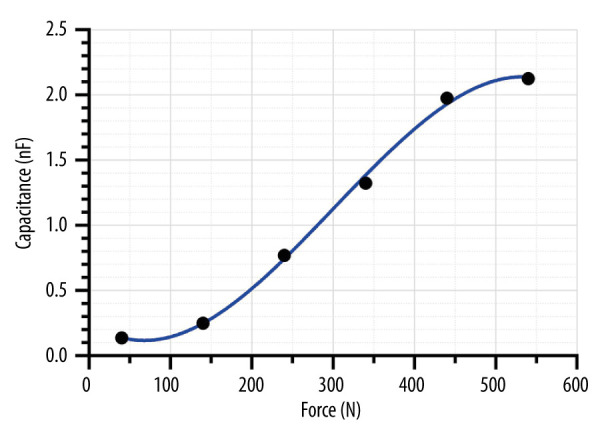
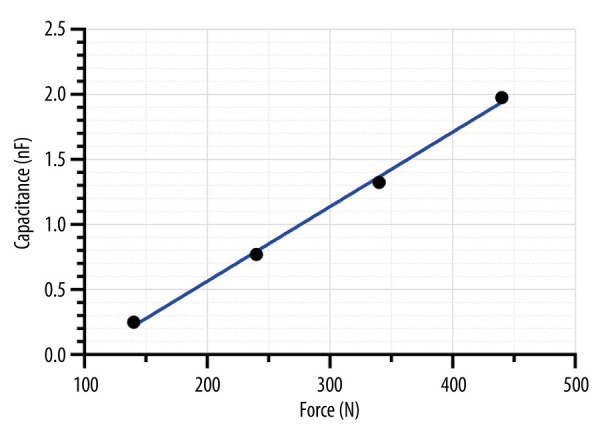
BACKGROUND Measurement of bite force plays a crucial role in assessment of the masticatory system. With a growing interest in detecting occlusal irregularities, bite force sensors have garnered attention in the biomedical field. This study aimed to introduce a hydrogel bite force sensor, based on hydroxyethyl-cellulose-fructose-water (HEC-F-water), for premolar and molar teeth, and to evaluate it using optical profilometry, infrared spectroscopy (FTIR), and Instron Tension testing system, with 2.5 cm (1 inch) margins at top, bottom, right, and left. MATERIAL AND METHODS We fabricated 20 HEC-F-water hydrogel samples sized with surface of 1×1 cm, with 2 different widths - 1 mm and 5 mm. The samples were characterized using optical profilometry and FTIR and their electrical characteristics were determined using an impedance analyzer. Aluminum (Al) electrodes, fabricated using Cutting Plotter, were used to form a HEC-F-water-based transducer, which was used for bite force sensing. The Instron tensile testing system was employed, utilizing 3D printed models of the upper and lower jaw, to simulate biting. Forces in the range between 40 N and 540 N were exerted upon the transducer, and the output change in the electrical signal was measured. RESULTS The study determined the transfer function between bite force and capacitance. The fabricated sensor exhibited a sensitivity of 3.98 pF/N, an input range of 500 N, output range of 2 nF, and accuracy of 95.9%. CONCLUSIONS This study introduces an edible bite force sensor employing an edible hydrogel as a dielectric, presenting a novel avenue in the development of edible sensorics in dentistry.

摘要

背景

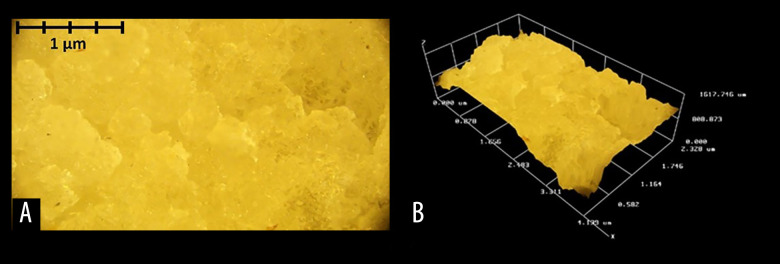
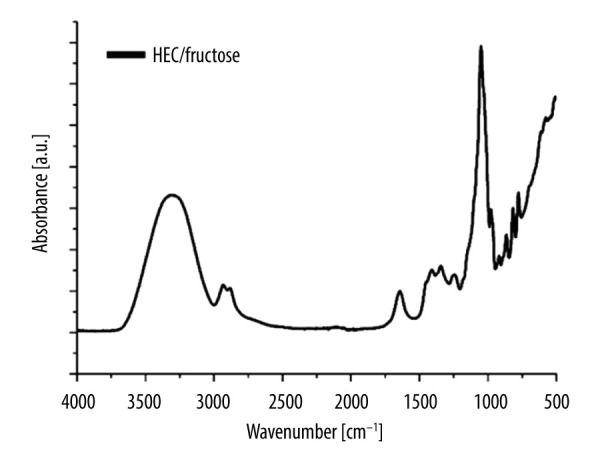
咬合力的测量在咀嚼系统评估中起着至关重要的作用。随着人们对检测咬合不规则性的兴趣日益浓厚,咬合力传感器在生物医学领域引起了关注。本研究旨在介绍一种基于羟乙基纤维素-果糖-水(HEC-F-water)的用于前磨牙和磨牙的水凝胶咬合力传感器,并使用光学轮廓仪、傅里叶变换红外光谱(FTIR)和 Instron 张力测试系统进行评估,在顶部、底部、右侧和左侧留有 2.5 厘米(1 英寸)的余量。

材料和方法

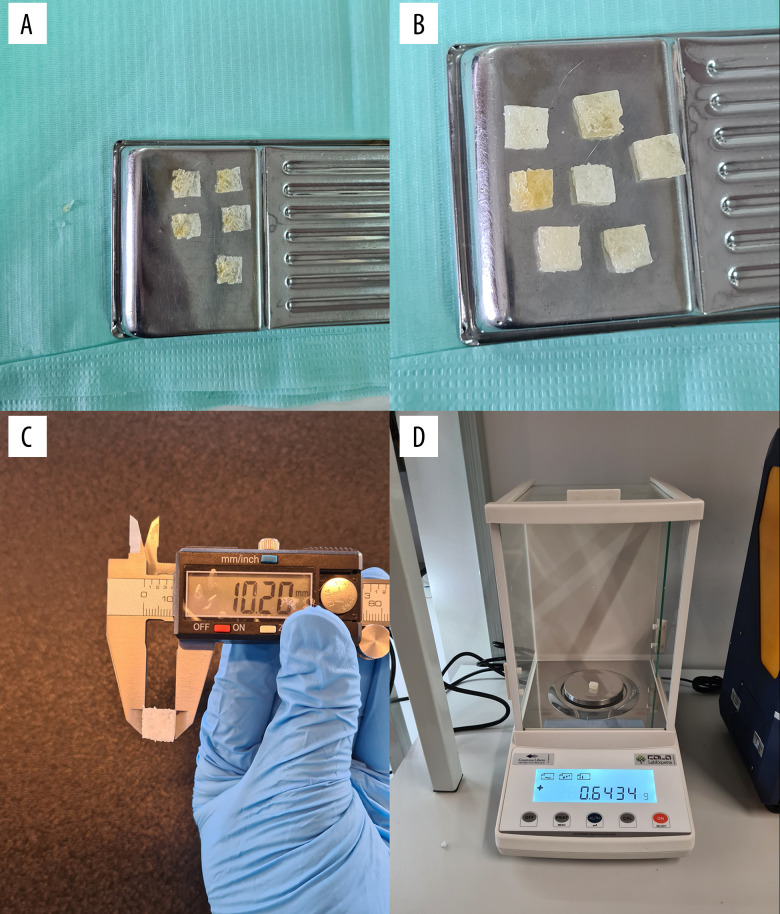
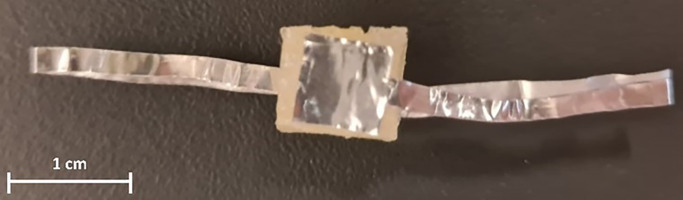
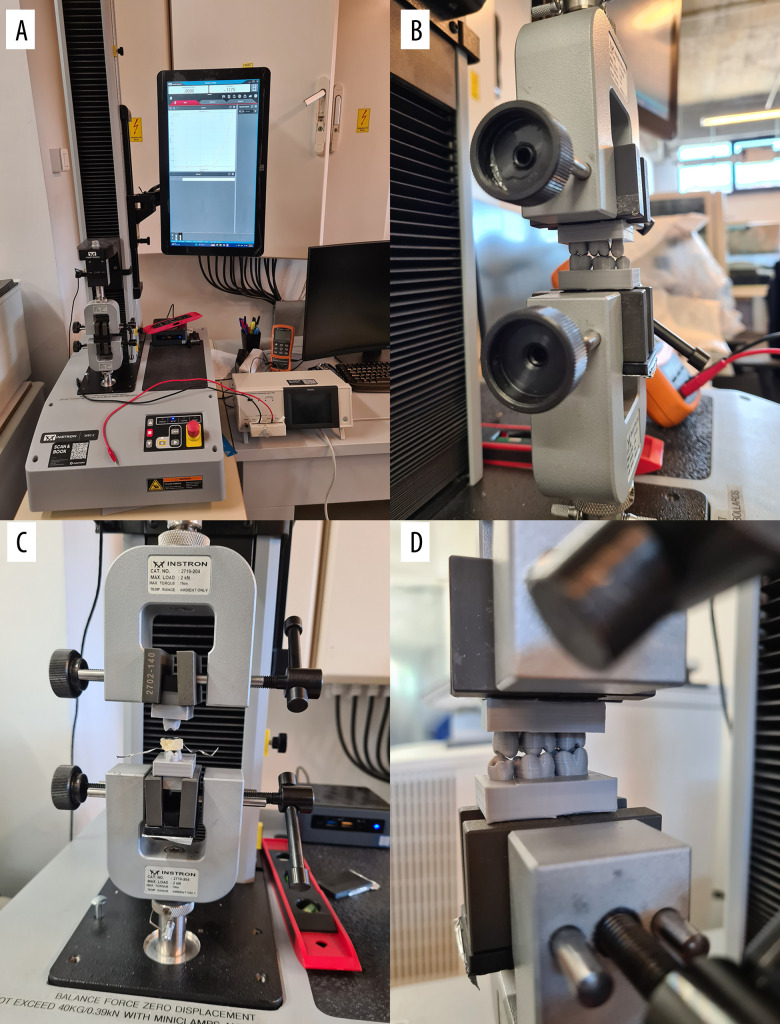
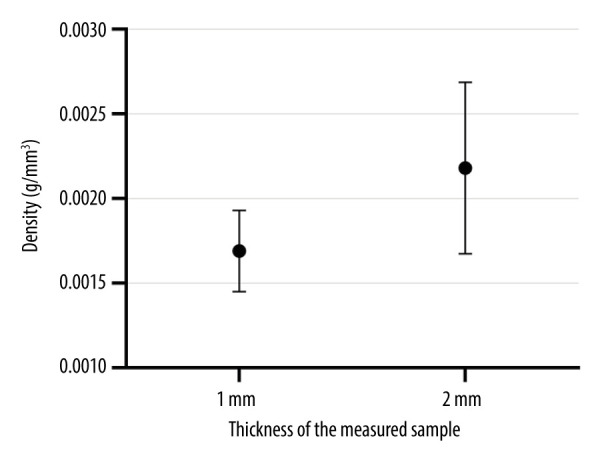
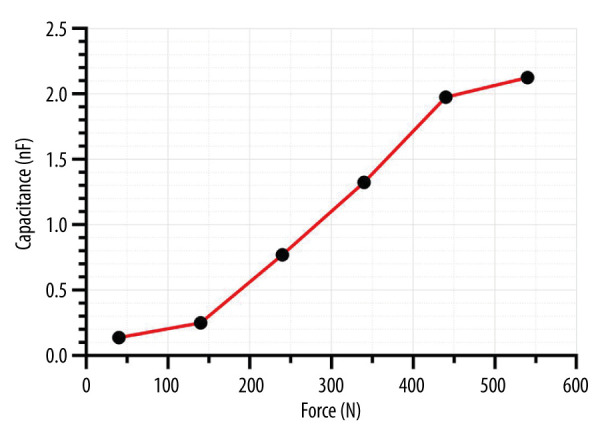
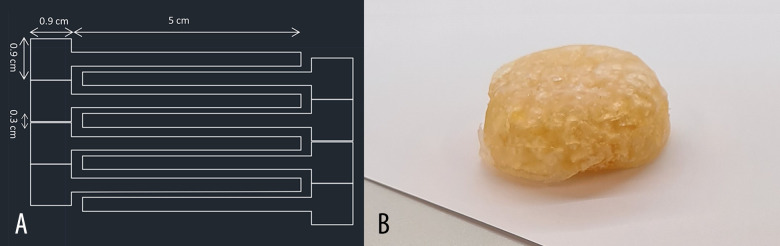
我们制作了 20 个 HEC-F-water 水凝胶样本,表面尺寸为 1×1 厘米,宽度分别为 1 毫米和 5 毫米。使用光学轮廓仪和 FTIR 对样品进行了表征,并使用阻抗分析仪确定了它们的电学特性。使用切割绘图仪制作的铝(Al)电极用于形成基于 HEC-F-water 的换能器,用于咬合力感测。利用上下颌的 3D 打印模型,使用 Instron 拉伸测试系统模拟咬合。在换能器上施加 40 N 至 540 N 之间的力,并测量电信号输出的变化。

结果

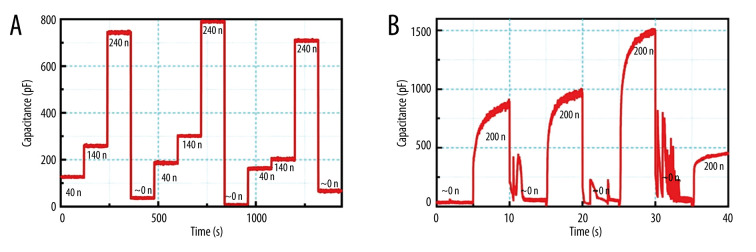
研究确定了咬合力和电容之间的传递函数。所制作的传感器具有 3.98 pF/N 的灵敏度、500 N 的输入范围、2 nF 的输出范围和 95.9%的精度。

结论

本研究介绍了一种使用可食用水凝胶作为电介质的可食用咬合力传感器,为牙科可食用传感器的发展开辟了新途径。
https://cdn.ncbi.nlm.nih.gov/pmc/blobs/98ce/11302276/6e50116b7033/medscimonit-30-e944050-g012.jpg
https://cdn.ncbi.nlm.nih.gov/pmc/blobs/98ce/11302276/c3ef2347129d/medscimonit-30-e944050-g001.jpg
https://cdn.ncbi.nlm.nih.gov/pmc/blobs/98ce/11302276/11cb1710ae2a/medscimonit-30-e944050-g002.jpg
https://cdn.ncbi.nlm.nih.gov/pmc/blobs/98ce/11302276/292696e53827/medscimonit-30-e944050-g003.jpg
https://cdn.ncbi.nlm.nih.gov/pmc/blobs/98ce/11302276/1cc0986b4bf0/medscimonit-30-e944050-g004.jpg
https://cdn.ncbi.nlm.nih.gov/pmc/blobs/98ce/11302276/f69589446dc2/medscimonit-30-e944050-g005.jpg
https://cdn.ncbi.nlm.nih.gov/pmc/blobs/98ce/11302276/ea96a8aa4384/medscimonit-30-e944050-g006.jpg
https://cdn.ncbi.nlm.nih.gov/pmc/blobs/98ce/11302276/aba8d14098fb/medscimonit-30-e944050-g007.jpg
https://cdn.ncbi.nlm.nih.gov/pmc/blobs/98ce/11302276/26d74ef153e4/medscimonit-30-e944050-g008.jpg
https://cdn.ncbi.nlm.nih.gov/pmc/blobs/98ce/11302276/72fe643cd803/medscimonit-30-e944050-g009.jpg
https://cdn.ncbi.nlm.nih.gov/pmc/blobs/98ce/11302276/15426eb880c9/medscimonit-30-e944050-g010.jpg
https://cdn.ncbi.nlm.nih.gov/pmc/blobs/98ce/11302276/169c783f873b/medscimonit-30-e944050-g011.jpg
https://cdn.ncbi.nlm.nih.gov/pmc/blobs/98ce/11302276/6e50116b7033/medscimonit-30-e944050-g012.jpg
https://cdn.ncbi.nlm.nih.gov/pmc/blobs/98ce/11302276/c3ef2347129d/medscimonit-30-e944050-g001.jpg
https://cdn.ncbi.nlm.nih.gov/pmc/blobs/98ce/11302276/11cb1710ae2a/medscimonit-30-e944050-g002.jpg
https://cdn.ncbi.nlm.nih.gov/pmc/blobs/98ce/11302276/292696e53827/medscimonit-30-e944050-g003.jpg
https://cdn.ncbi.nlm.nih.gov/pmc/blobs/98ce/11302276/1cc0986b4bf0/medscimonit-30-e944050-g004.jpg
https://cdn.ncbi.nlm.nih.gov/pmc/blobs/98ce/11302276/f69589446dc2/medscimonit-30-e944050-g005.jpg
https://cdn.ncbi.nlm.nih.gov/pmc/blobs/98ce/11302276/ea96a8aa4384/medscimonit-30-e944050-g006.jpg
https://cdn.ncbi.nlm.nih.gov/pmc/blobs/98ce/11302276/aba8d14098fb/medscimonit-30-e944050-g007.jpg
https://cdn.ncbi.nlm.nih.gov/pmc/blobs/98ce/11302276/26d74ef153e4/medscimonit-30-e944050-g008.jpg
https://cdn.ncbi.nlm.nih.gov/pmc/blobs/98ce/11302276/72fe643cd803/medscimonit-30-e944050-g009.jpg
https://cdn.ncbi.nlm.nih.gov/pmc/blobs/98ce/11302276/15426eb880c9/medscimonit-30-e944050-g010.jpg
https://cdn.ncbi.nlm.nih.gov/pmc/blobs/98ce/11302276/169c783f873b/medscimonit-30-e944050-g011.jpg
https://cdn.ncbi.nlm.nih.gov/pmc/blobs/98ce/11302276/6e50116b7033/medscimonit-30-e944050-g012.jpg

相似文献

1
Edible Bite Force Sensor: A Novel Approach to Measuring Bite Force in Biomedical and Dental Applications.可食用咬合力传感器:一种用于生物医学和牙科应用中测量咬合力的新方法。
Med Sci Monit. 2024 Jul 7;30:e944050. doi: 10.12659/MSM.944050.
2
Bite force measurement based on fiber Bragg grating sensor.基于光纤布拉格光栅传感器的咬合力测量。
J Biomed Opt. 2017 Oct;22(10):1-6. doi: 10.1117/1.JBO.22.10.107002.
3
Fiber Bragg Grating based bite force measurement.基于光纤布拉格光栅的咬合力测量。
J Biomech. 2016 Sep 6;49(13):2877-2881. doi: 10.1016/j.jbiomech.2016.06.036. Epub 2016 Jul 1.
4
[Investigation of posterior teeth displacement under normal bite force by an intraoral scanner].[利用口腔内扫描仪研究正常咬合力下后牙移位情况]
Zhonghua Kou Qiang Yi Xue Za Zhi. 2020 Oct 9;55(10):743-749. doi: 10.3760/cma.j.cn112144-20200513-00264.
5
Relative contributions of occlusion, maximum bite force, and chewing cycle kinematics to masticatory performance.咬合、最大咬合力和咀嚼循环运动学对口颌功能的相对贡献。
Am J Orthod Dentofacial Orthop. 2011 May;139(5):606-13. doi: 10.1016/j.ajodo.2009.07.025.
6
Occlusal loading during biting from an experimental and simulation point of view.从实验和模拟的角度看咬合时的加载情况。
Dent Mater. 2018 Jan;34(1):58-68. doi: 10.1016/j.dental.2017.09.005. Epub 2017 Oct 7.
7
Contribution of each masticatory muscle to the bite force determined by MRI using a novel metal-free bite force gauge and an index of total muscle activity.使用新型无金属咬力计和总肌肉活动指数,通过MRI确定每块咀嚼肌对咬力的贡献。
J Magn Reson Imaging. 2016 Oct;44(4):804-13. doi: 10.1002/jmri.25223. Epub 2016 Mar 11.
8
Effect of implant-supported prosthesis on the bite force and masticatory efficiency in subjects with shortened dental arches.种植体支持式修复体对牙弓缩短患者咬合力及咀嚼效率的影响。
J Oral Rehabil. 2014 Feb;41(2):87-92. doi: 10.1111/joor.12122. Epub 2013 Dec 21.
9
Efficacy of wireless sensors in assessing occlusal and bite forces: A systematic review.无线传感器在评估牙合力和咬合力中的疗效:系统评价。
J Oral Rehabil. 2024 Jul;51(7):1337-1347. doi: 10.1111/joor.13700. Epub 2024 Apr 14.
10
Capacitive-Type Pressure-Mapping Sensor for Measuring Bite Force.用于测量咬合力的电容式压力映射传感器。
Int J Environ Res Public Health. 2022 Jan 24;19(3):1273. doi: 10.3390/ijerph19031273.

本文引用的文献

1
Advances in Electrochemical Biosensors for the Detection of Common Oral Diseases.用于常见口腔疾病检测的电化学生物传感器的进展
Crit Rev Anal Chem. 2025;55(4):775-795. doi: 10.1080/10408347.2024.2315112. Epub 2024 Feb 16.
2
Sustainable Solutions for Oral Health Monitoring: Biowaste-Derived Triboelectric Nanogenerator.可持续的口腔健康监测解决方案:基于生物废弃物的摩擦纳米发电机。
ACS Appl Mater Interfaces. 2023 Aug 2;15(30):36096-36106. doi: 10.1021/acsami.3c04024. Epub 2023 Jul 20.
3
Design and Implement Strategy of Wireless Bite Force Device.
无线咬合力装置的设计与实现策略
Bioengineering (Basel). 2023 Apr 23;10(5):507. doi: 10.3390/bioengineering10050507.
4
Optical profilometry for forensic bloodstain imaging.光学轮廓术在法医血斑成像中的应用。
Microsc Res Tech. 2023 Oct;86(10):1401-1408. doi: 10.1002/jemt.24338. Epub 2023 May 3.
5
Clinical and Technical Validation of Novel Bite Force Measuring Device for Functional Analysis after Mandibular Reconstruction.新型咬合力测量装置在下颌骨重建后功能分析中的临床与技术验证
Diagnostics (Basel). 2023 Feb 5;13(4):586. doi: 10.3390/diagnostics13040586.
6
Performance of Oral Cavity Sensors: A Systematic Review.口腔传感器性能:系统评价。
Sensors (Basel). 2023 Jan 4;23(2):588. doi: 10.3390/s23020588.
7
The Reliability of a New Device for Measuring the Maximum Bite Force.一种新的测量最大咬合力的设备的可靠性。
Biomed Res Int. 2022 Jan 13;2022:3272958. doi: 10.1155/2022/3272958. eCollection 2022.
8
Use of aluminum foil to facilitate open-tray implant impressions.使用铝箔辅助进行开放式托盘种植体印模制取。
J Prosthet Dent. 2023 Jan;129(1):239-240. doi: 10.1016/j.prosdent.2021.06.007. Epub 2021 Jul 1.
9
Bite Force Transducers and Measurement Devices.咬合力传感器与测量装置
Front Bioeng Biotechnol. 2021 Apr 9;9:665081. doi: 10.3389/fbioe.2021.665081. eCollection 2021.
10
Bite force assessment before and after orthognathic surgery in individuals with repaired cleft lip and palate.唇腭裂修复患者正颌手术前后的咬合力评估
J Oral Biol Craniofac Res. 2021 Apr-Jun;11(2):138-142. doi: 10.1016/j.jobcr.2020.12.005. Epub 2020 Dec 25.