Oishi Yasuaki, Asakawa Koji, Ishiwata Yuri, Oka Shota, Terashima Ryota, Sugiyama Makoto, Kizaki Keiichiro, Kawaminami Mitsumori, Kurusu Shiro
Laboratory of Veterinary Physiology, Kitasato University School of Veterinary Medicine, Aomori 034-8628, Japan.
Laboratory of Veterinary Anatomy, Kitasato University School of Veterinary Medicine, Aomori 034-8628, Japan.
J Reprod Dev. 2024 Oct 1;70(5):286-295. doi: 10.1262/jrd.2024-019. Epub 2024 Jul 7.
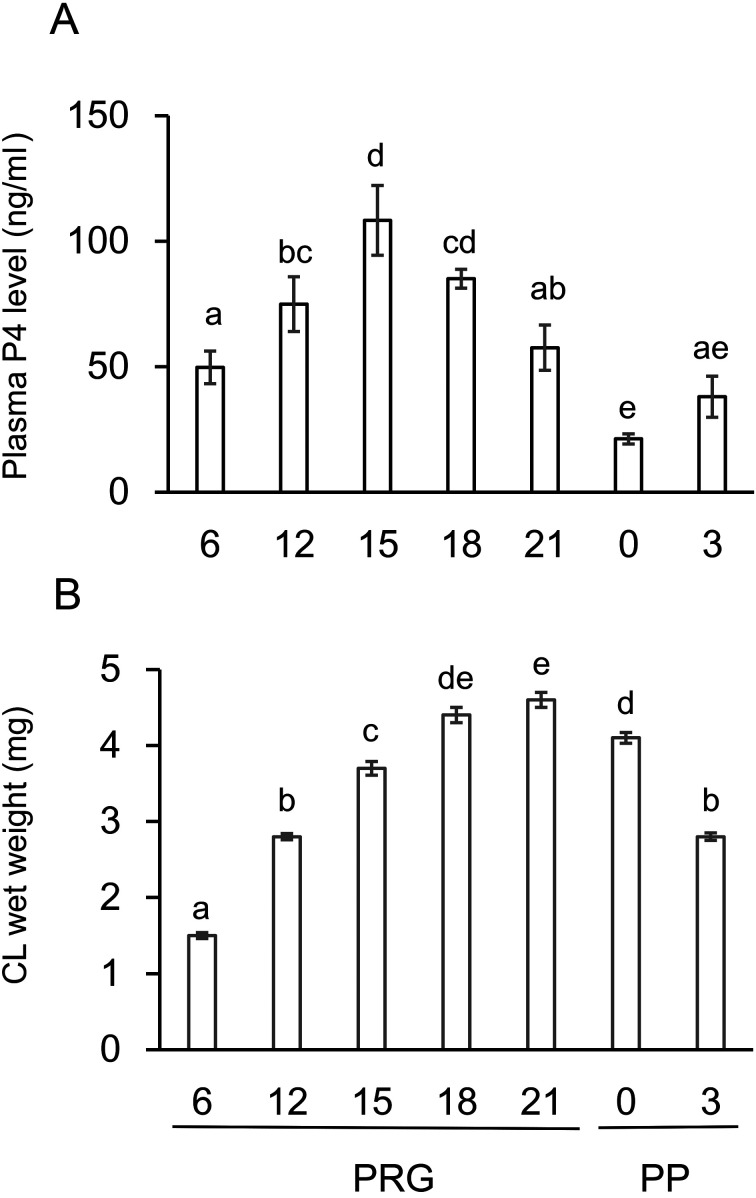
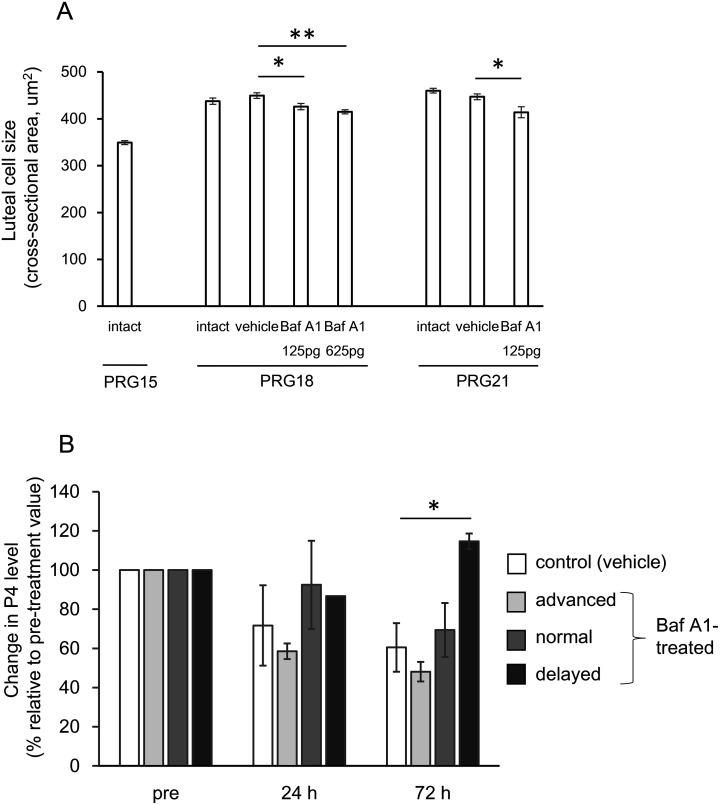
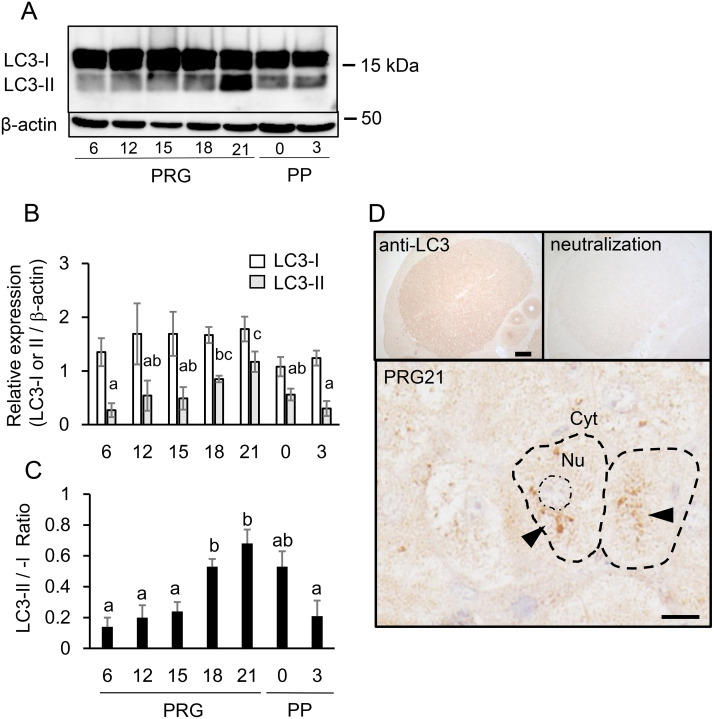
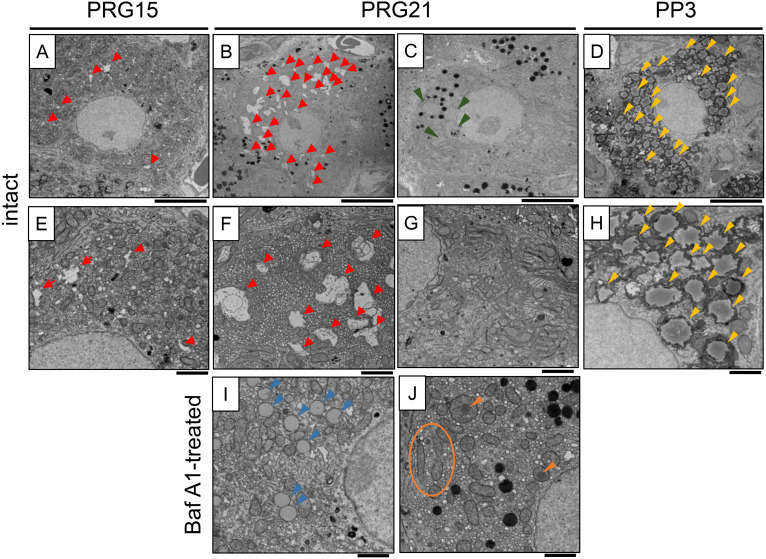
The developmental activation of the corpus luteum (CL) structurally and functionally is critical for the temporally regulated establishment, maintenance, and termination of pregnancy in rats. In this study, we have investigated the possible involvement of autophagy in the regulation of the CL during pregnancy in rats. The expression ratio of microtubule-associated protein light chain 3 (LC3)-II/-I, a widely used indicator of autophagic activity, in the CL remained relatively stable until day 15 of pregnancy. Subsequently, it progressively increased until day 21, and then declined until day 3 postpartum. This fluctuation was closely associated with the tissue weight of the CL rather than progesterone (P4) production activity. Light and electron microscopy revealed the presence of immunoreactive LC3 aggregates and irregularly shaped autolysosome-like microstructures in the cytoplasm of luteal cells during late pregnancy. Notably, a bolus intrabursal injection of the autophagy inhibitor bafilomycin A1 on day 15 of pregnancy resulted in a significant reduction in luteal cell size and disrupted the normal alteration of circulating P4 levels. Consequently, treatment with this inhibitor increased the likelihood of the varied timing (both advanced and delayed) of delivery and led to reduced body weight in neonates when compared with the vehicle-treated control group. Our findings suggest that autophagy in the rat CL contributes to luteal tissue growth, influences P4 production, and thereby fine-tunes the regulation of gestation length in rats.
黄体(CL)的发育激活在结构和功能上对于大鼠妊娠的时间调控建立、维持和终止至关重要。在本研究中,我们调查了自噬在大鼠妊娠期间对CL调控中的可能作用。微管相关蛋白轻链3(LC3)-II/-I的表达比率是广泛使用的自噬活性指标,在CL中直到妊娠第15天保持相对稳定。随后,它逐渐增加直到第21天,然后下降直到产后第3天。这种波动与CL的组织重量密切相关,而非与孕酮(P4)产生活性相关。光镜和电镜显示在妊娠后期黄体细胞的细胞质中存在免疫反应性LC3聚集体和不规则形状的自噬体样微观结构。值得注意的是,在妊娠第15天向囊内一次性注射自噬抑制剂巴弗洛霉素A1导致黄体细胞大小显著减小,并扰乱了循环P4水平的正常变化。因此,与载体处理的对照组相比,用该抑制剂处理增加了分娩时间变化(提前和延迟)的可能性,并导致新生仔鼠体重减轻。我们的研究结果表明,大鼠CL中的自噬有助于黄体组织生长,影响P4产生,从而微调大鼠妊娠长度的调控。