Gonzalez-Ibarra Fernando, Cruz-Ruiz Mauricio, Murillo Llanes Joel, Achem Sami R, Fass Ronnie
Cleveland Clinic, Critical Care Medicine Department, Cleveland, OH, USA.
Department of Research, Sinaloa Health Services, Women's Hospital, Sinaloa, Mexico.
J Neurogastroenterol Motil. 2024 Jul 30;30(3):272-280. doi: 10.5056/jnm23166.
BACKGROUND/AIMS: Noncardiac chest pain (NCCP) of esophageal origin is a challenging clinical problem of diverse etiology that affects more than 80 million Americans yearly. We assess the prevalence and impact of psychological disorders on NCCP of esophageal origin, describe possible mechanisms associated with this condition, and review psychological therapy options.
Online search using PubMed and Medline from January 1, 1966, to April 30, 2023.
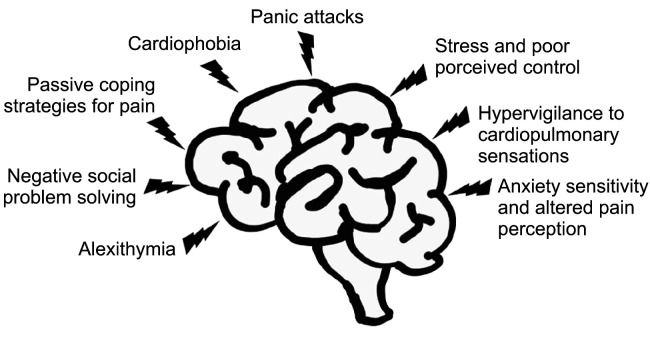
Psychological disorders have been reported in up to 79% of patients with NCCP of esophageal origin. Several psychological disturbances have been identified with this condition, including depression, anxiety, panic disorder, phobias, and obsessive-compulsive and somatoform disorders. It is unclear whether the psychological disorders trigger the chest pain or vice versa. Multiple psychological mechanisms have been linked to chest pain and may contribute to its pathogenesis and severity. These mechanisms include cardiophobia, poor coping strategies, negative social problem solving, stress and perceived control, hypervigilance to cardiopulmonary sensations, altered pain perception, and alexithymia. Psychological therapies for NCCP of esophageal origin include cognitive behavioral therapy, hypnotherapy, physical and relaxation training, breathing retraining, and alternative medicine. Among the therapeutic options, cognitive behavioral therapy has been shown to be an effective treatment for NCCP of esophageal origin.
This review raises awareness about the high prevalence of psychological disorders in NCCP of esophageal origin and highlights the need for clinical trials and trained therapists to address the management of this taxing clinical problem.
背景/目的:食管源性非心源性胸痛(NCCP)是一个具有挑战性的临床问题,病因多样,每年影响超过8000万美国人。我们评估心理障碍对食管源性NCCP的患病率和影响,描述与此病症相关的可能机制,并综述心理治疗方案。
使用PubMed和Medline进行在线检索,检索时间为1966年1月1日至2023年4月30日。
据报道,高达79%的食管源性NCCP患者存在心理障碍。已确定与该病症相关的几种心理障碍,包括抑郁症、焦虑症、恐慌症、恐惧症、强迫症和躯体形式障碍。尚不清楚是心理障碍引发胸痛,还是反之亦然。多种心理机制与胸痛相关,可能导致其发病机制和严重程度。这些机制包括心脏病恐怖症、不良应对策略、消极的社会问题解决方式、压力和感知控制、对心肺感觉的过度警觉、疼痛感知改变和述情障碍。食管源性NCCP的心理治疗包括认知行为疗法、催眠疗法、身体和放松训练、呼吸再训练以及替代医学。在这些治疗选择中,认知行为疗法已被证明是治疗食管源性NCCP的有效方法。
本综述提高了对食管源性NCCP中心理障碍高患病率的认识,并强调需要进行临床试验和有训练有素的治疗师来处理这一棘手的临床问题。