Wang Dongyun, Li Yue, Li Guiying, Liu Mengyu, Zhou Zihui, Wu Ming, Song Shan, Bian Yawei, Dong Jiajia, Li Xinran, Du Yunxia, Zhang Tao, Shi Yonghong
Department of Pathology, Hebei Medical University, Shijiazhuang, 050017, China.
Hebei Key Laboratory of Kidney Disease, Shijiazhuang, 050017, China.
Cell Death Discov. 2024 Jul 7;10(1):314. doi: 10.1038/s41420-024-02087-z.
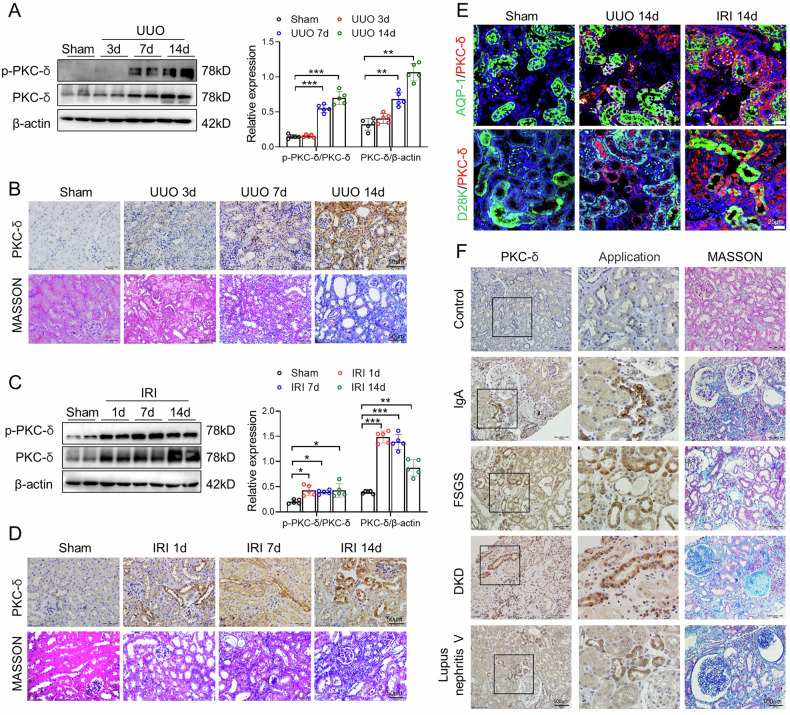
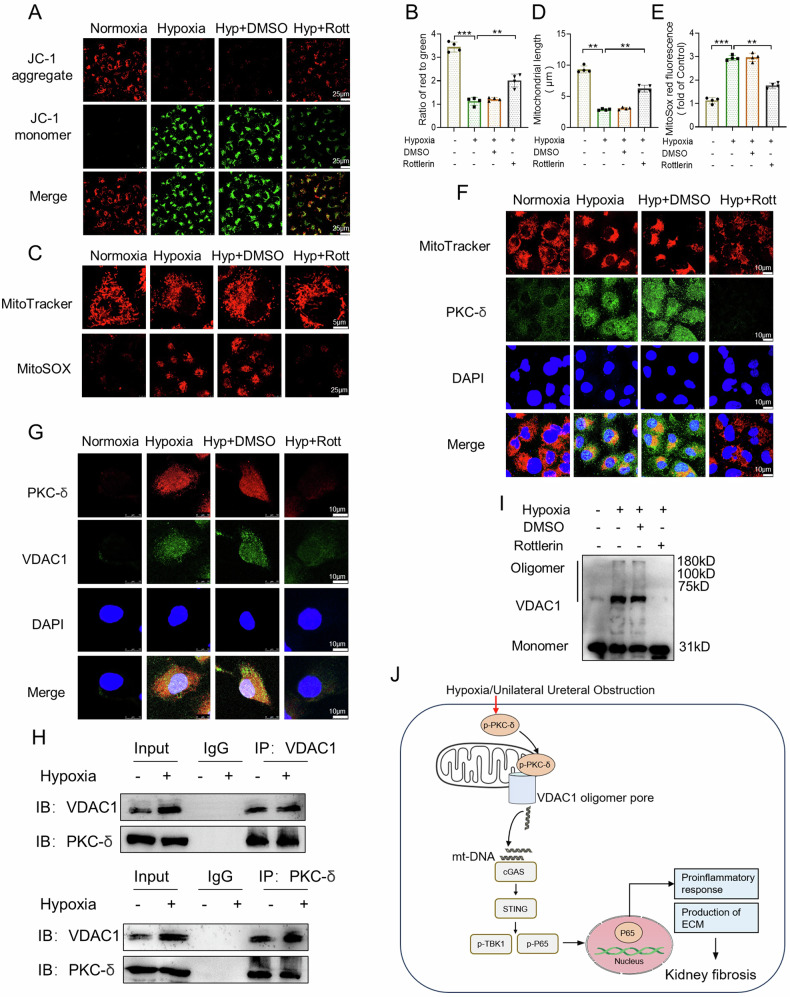
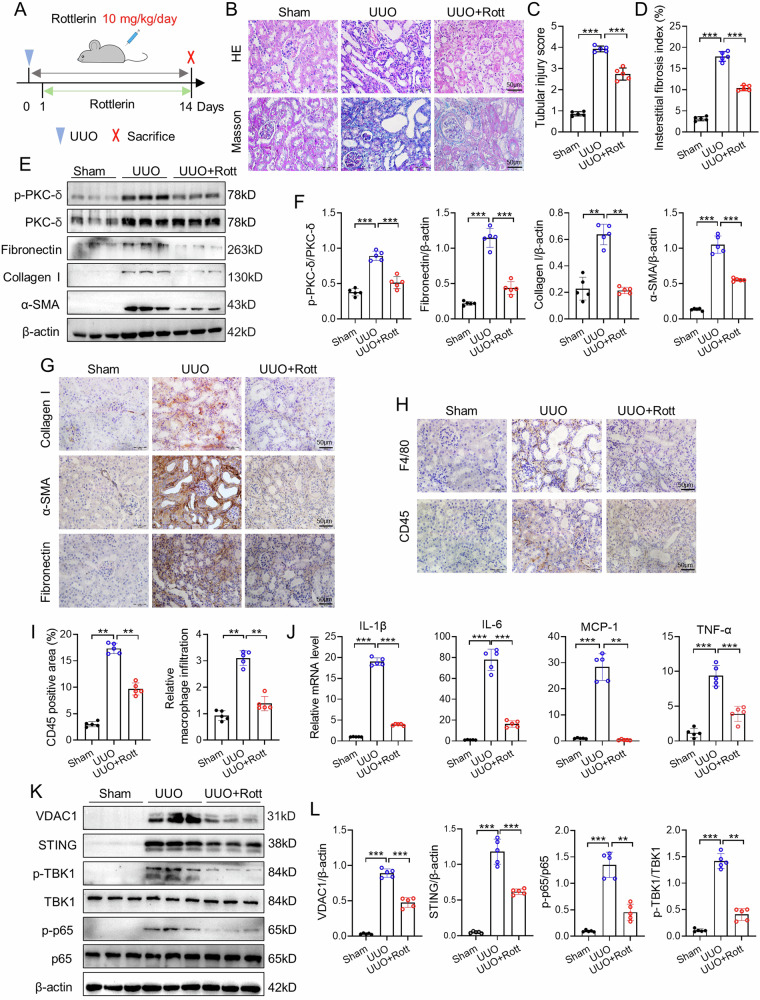
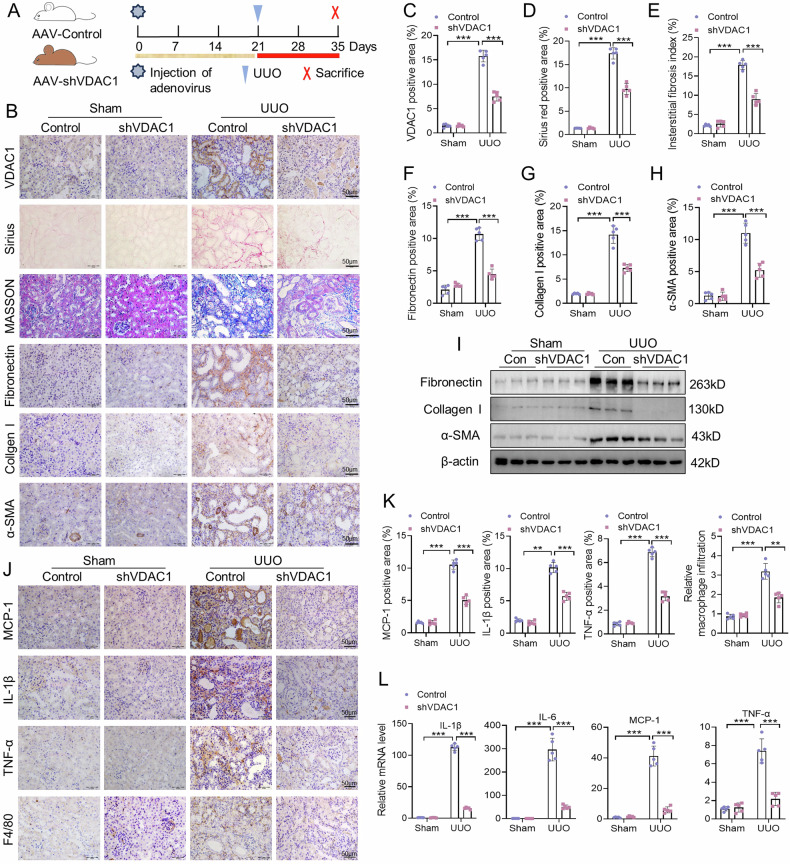
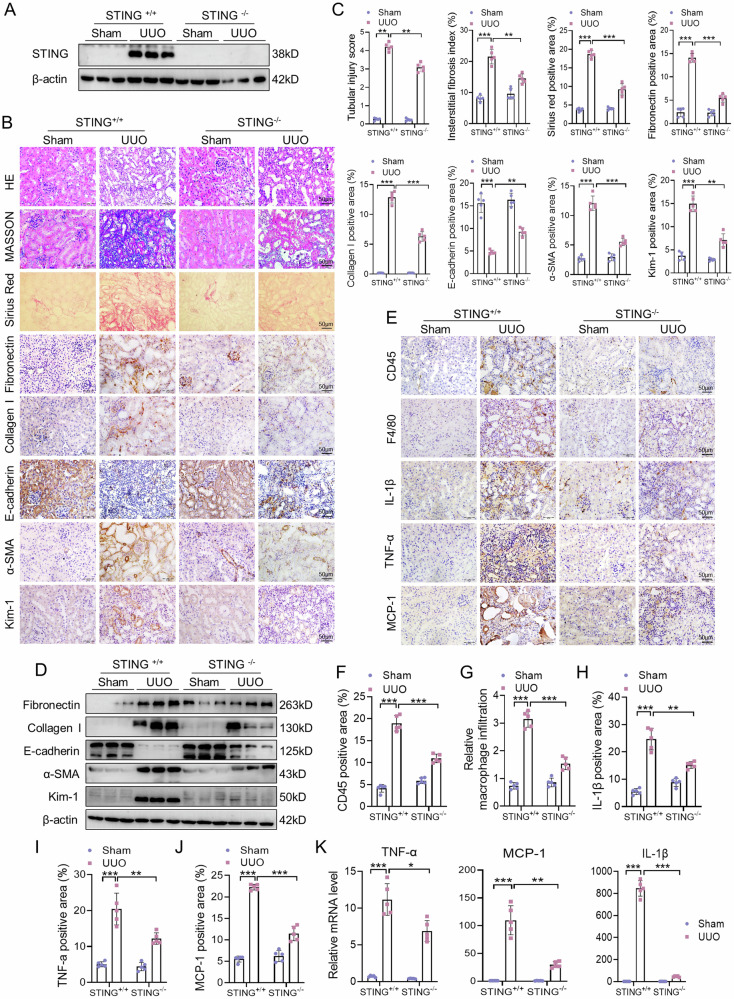
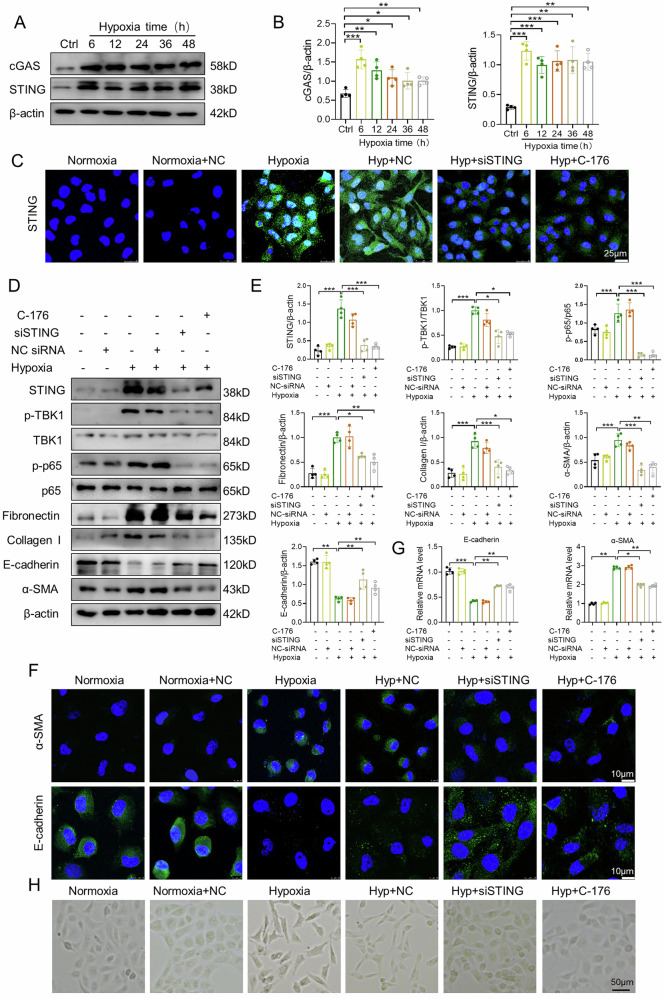
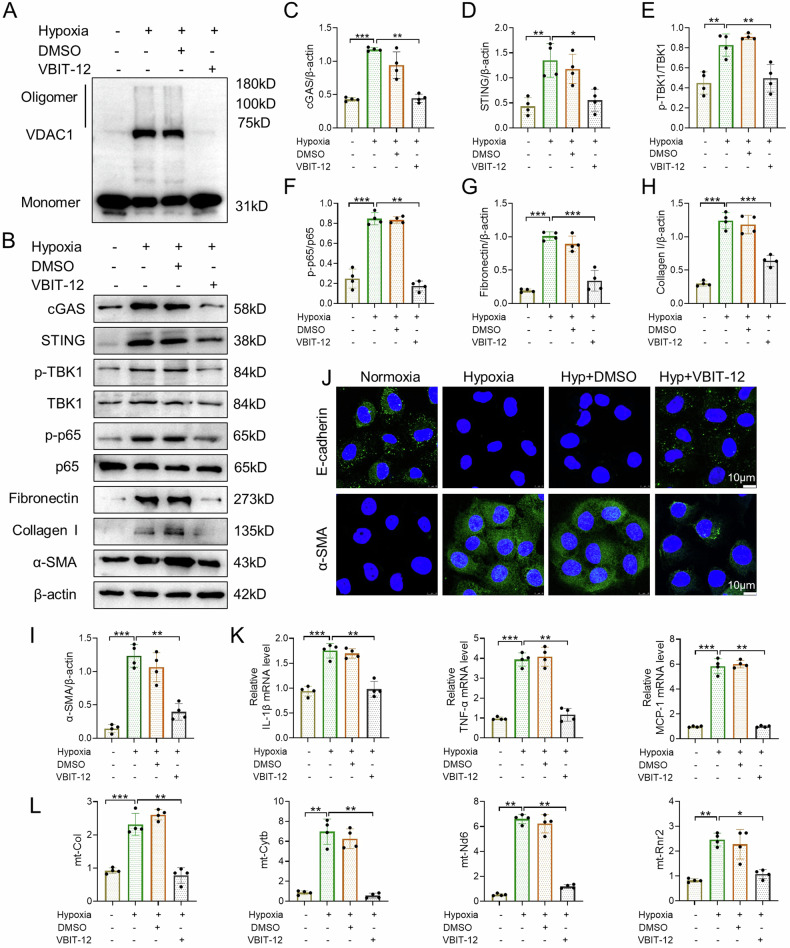
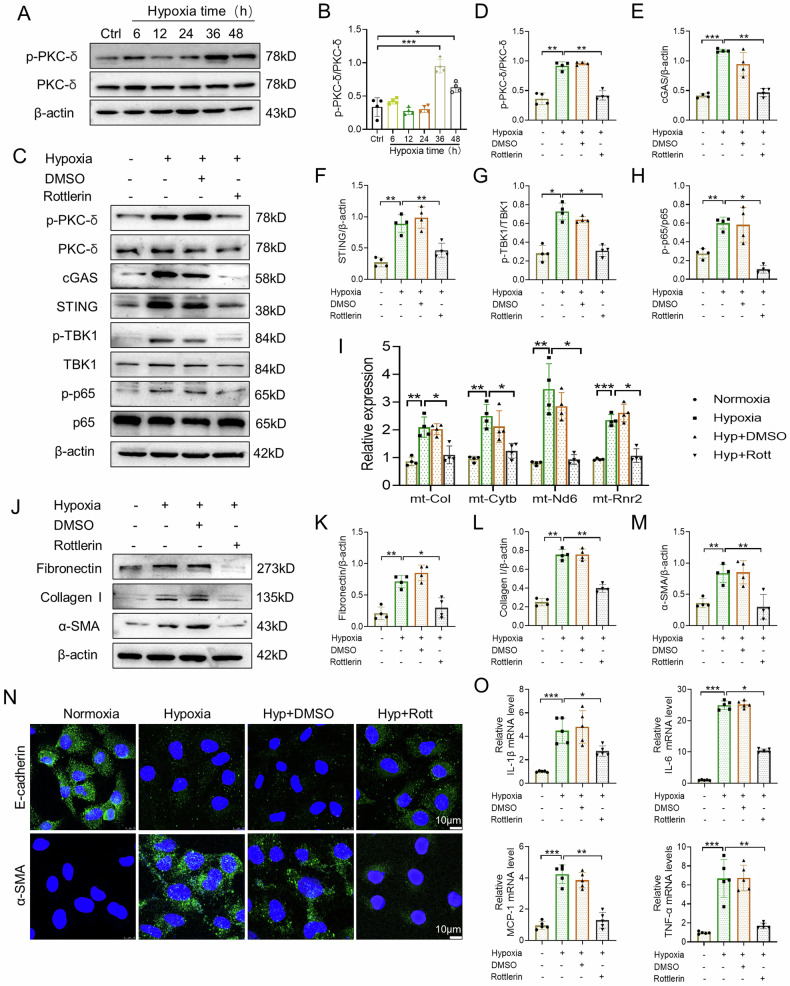
Kidney fibrosis is considered to be the ultimate aggregation pathway of chronic kidney disease (CKD), but its underlying mechanism remains elusive. Protein kinase C-delta (PKC-δ) plays critical roles in the control of growth, differentiation, and apoptosis. In this study, we found that PKC-δ was highly upregulated in human biopsy samples and mouse kidneys with fibrosis. Rottlerin, a PKC-δ inhibitor, alleviated unilateral ureteral ligation (UUO)-induced kidney fibrosis, inflammation, VDAC1 expression, and cGAS-STING signaling pathway activation. Adeno-associated virus 9 (AAV9)-mediated VDAC1 silencing or VBIT-12, a VDAC1 inhibitor, attenuated renal injury, inflammation, and activation of cGAS-STING signaling pathway in UUO mouse model. Genetic and pharmacologic inhibition of STING relieved renal fibrosis and inflammation in UUO mice. In vitro, hypoxia resulted in PKC-δ phosphorylation, VDAC1 oligomerization, and activation of cGAS-STING signaling pathway in HK-2 cells. Inhibition of PKC-δ, VDAC1 or STING alleviated hypoxia-induced fibrotic and inflammatory responses in HK-2 cells, respectively. Mechanistically, PKC-δ activation induced mitochondrial membrane VDAC1 oligomerization via direct binding VDAC1, followed by the mitochondrial DNA (mtDNA) release into the cytoplasm, and subsequent activated cGAS-STING signaling pathway, which contributed to the inflammation leading to fibrosis. In conclusion, this study has indicated for the first time that PKC-δ is an important regulator in kidney fibrosis by promoting cGAS-STING signaling pathway which mediated by VDAC1. PKC-δ may be useful for treating renal fibrosis and subsequent CKD.
肾纤维化被认为是慢性肾脏病(CKD)的最终聚集途径,但其潜在机制仍不清楚。蛋白激酶C-δ(PKC-δ)在生长、分化和细胞凋亡的控制中起关键作用。在本研究中,我们发现PKC-δ在人类活检样本和纤维化小鼠肾脏中高度上调。PKC-δ抑制剂rottlerin减轻了单侧输尿管结扎(UUO)诱导的肾纤维化、炎症、VDAC1表达和cGAS-STING信号通路激活。腺相关病毒9(AAV9)介导的VDAC1沉默或VDAC1抑制剂VBIT-12减轻了UUO小鼠模型中的肾损伤、炎症和cGAS-STING信号通路激活。对STING的基因和药理学抑制减轻了UUO小鼠的肾纤维化和炎症。在体外,缺氧导致HK-2细胞中PKC-δ磷酸化、VDAC1寡聚化和cGAS-STING信号通路激活。抑制PKC-δ、VDAC1或STING分别减轻了HK-2细胞中缺氧诱导的纤维化和炎症反应。机制上,PKC-δ激活通过直接结合VDAC1诱导线粒体膜VDAC1寡聚化,随后线粒体DNA(mtDNA)释放到细胞质中,随后激活cGAS-STING信号通路,这导致了导致纤维化的炎症。总之,本研究首次表明PKC-δ是肾纤维化的重要调节因子,通过促进由VDAC1介导的cGAS-STING信号通路。PKC-δ可能对治疗肾纤维化及随后的CKD有用。