Pediatric Institute of Southern Switzerland, Ente Ospedaliero Cantonale, Bellinzona, Switzerland.
Faculty of Biomedical Sciences, Università Della Svizzera Italiana, Lugano, Switzerland.
Eur J Pediatr. 2024 Oct;183(10):4205-4214. doi: 10.1007/s00431-024-05676-3. Epub 2024 Jul 10.
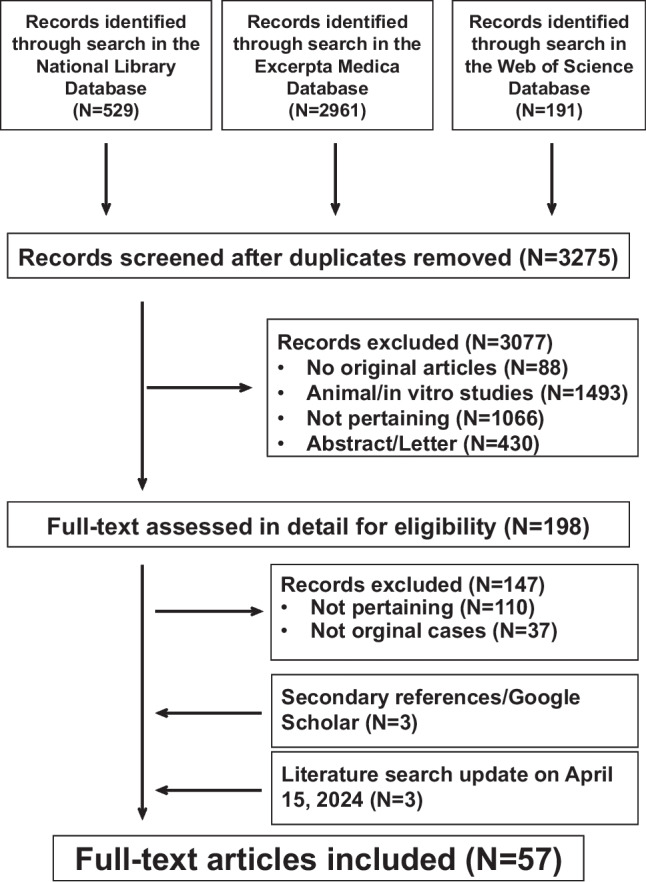
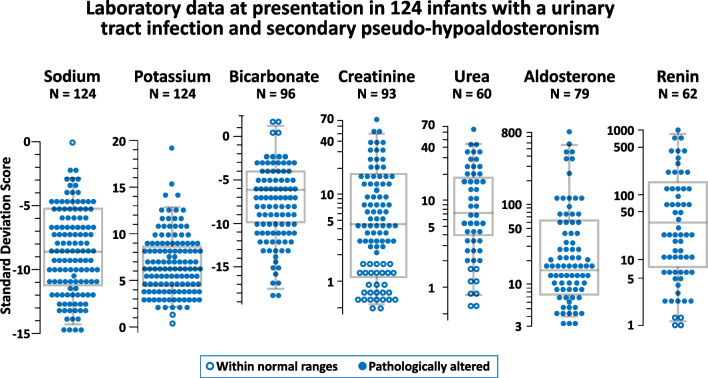
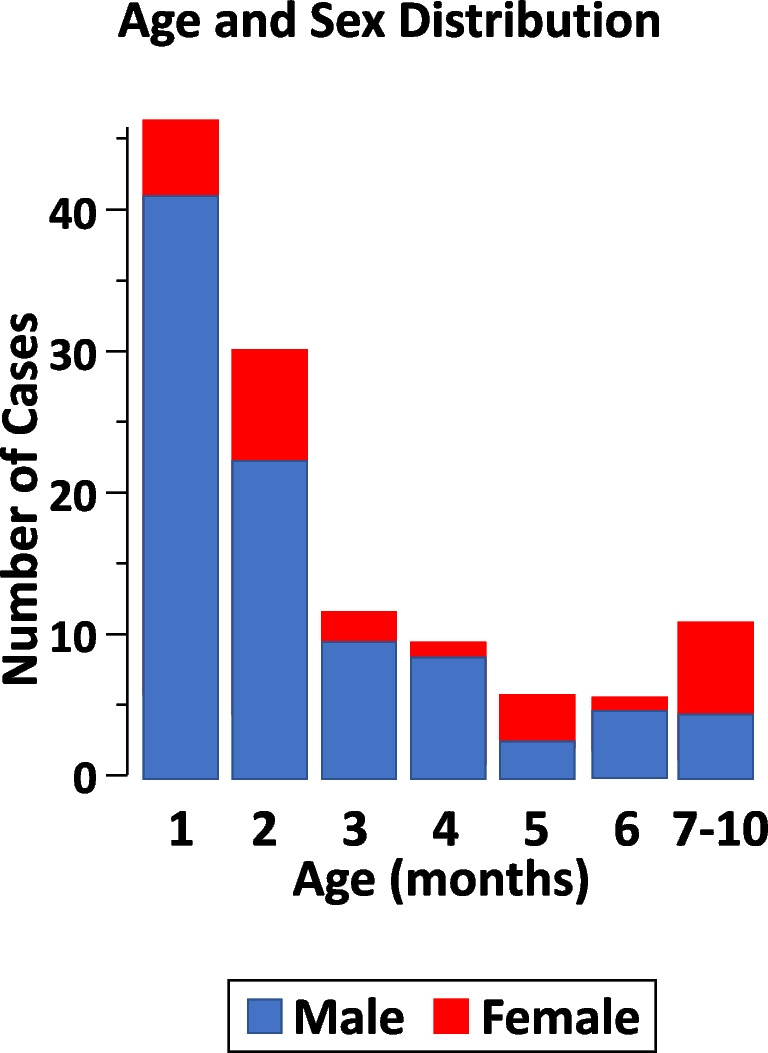
Infants with a congenital anomaly of the kidney and urinary tract sometimes present with hyponatremia, hyperkalemia, and metabolic acidosis due to under-responsiveness to aldosterone, hereafter referred to as secondary pseudo-hypoaldosteronism. The purpose of this report is to investigate pseudo-hypoaldosteronism in infant urinary tract infection. A systematic review was conducted following PRISMA guidelines after PROSPERO (CRD42022364210) registration. The National Library of Medicine, Excerpta Medica, Web of Science, and Google Scholar without limitations were used. Inclusion criteria involved pediatric cases with documented overt pseudo-hypoaldosteronism linked to urinary tract infection. Data extraction included demographics, clinical features, laboratory parameters, management, and course. Fifty-seven reports were selected, detailing 124 cases: 95 boys and 29 girls, 10 months or less of age (80% of cases were 4 months or less of age). The cases exhibited hyponatremia, hyperkalemia, acidosis, and activated renin-angiotensin II-aldosterone system. An impaired kidney function was found in approximately every third case. Management included antibiotics, fluids, and, occasionally, emergency treatment of hyperkalemia, hyponatremia, or acidosis. The recovery time averaged 1 week for electrolyte, acid-base imbalance, and kidney function. Notably, anomalies of the kidney and urinary tract were identified in 105 (85%) cases.
This review expands the understanding of overt transient pseudo-hypoaldosteronism complicating urinary tract infection. Management involves antimicrobials, fluid replacement, and consideration of electrolyte imbalances. Raising awareness of this condition within pediatric hospitalists is desirable.
• Infants affected by a congenital anomaly of the kidney and urinary tract may present with clinical and laboratory features resembling primary pseudo-hypoaldosteronism. • Identical features occasionally occur in infant urinary tract infection.
• Most cases of secondary pseudo-hypoaldosteronism associated with a urinary tract infection are concurrently affected by a congenital anomaly of the kidney and urinary tract. • Treatment with antibiotics and parenteral fluids typically results in the normalization of sodium, potassium, bicarbonate, and creatinine within approximately 1 week.
患有肾和尿路先天性异常的婴儿有时会因醛固酮不敏感而出现低钠血症、高钾血症和代谢性酸中毒,以下称为继发性假性醛固酮症。本报告旨在探讨婴儿尿路感染中的假性醛固酮症。方法:按照 PRISMA 指南进行系统评价,并在 PROSPERO(CRD42022364210)注册后进行。使用了美国国立医学图书馆、荷兰医学文摘、科学引文索引和谷歌学术,没有限制。纳入标准包括有明确的显性假性醛固酮症与尿路感染相关的儿科病例。数据提取包括人口统计学、临床特征、实验室参数、管理和病程。选择了 57 份报告,详细描述了 124 例病例:95 例男孩和 29 例女孩,年龄在 10 个月或以下(80%的病例年龄在 4 个月或以下)。这些病例表现为低钠血症、高钾血症、酸中毒和激活的肾素-血管紧张素 II-醛固酮系统。大约每三例中就有一例发现肾功能受损。治疗包括抗生素、液体,偶尔还需要紧急处理高钾血症、低钠血症或酸中毒。电解质、酸碱平衡和肾功能的恢复时间平均为 1 周。值得注意的是,在 105 例(85%)病例中发现了肾脏和尿路的异常。
本综述扩展了对尿路感染并发显性短暂性假性醛固酮症的认识。治疗包括抗生素、液体补充和电解质失衡的考虑。儿科住院医师应提高对这种疾病的认识。
患有肾和尿路先天性异常的婴儿可能会出现类似于原发性假性醛固酮症的临床和实验室特征。在婴儿尿路感染中偶尔会出现相同的特征。
大多数与尿路感染相关的继发性假性醛固酮症病例同时伴有肾和尿路的先天性异常。使用抗生素和肠外补液治疗通常可使钠、钾、碳酸氢盐和肌酐在大约 1 周内恢复正常。