School of Neurobiology, Biochemistry and Biophysics, The George S. Wise Faculty of Life Sciences, Tel Aviv University, Tel Aviv, Israel.
Sagol School of Neuroscience, Tel Aviv University, Tel Aviv, Israel.
Mol Biol Evol. 2024 Jul 3;41(7). doi: 10.1093/molbev/msae141.
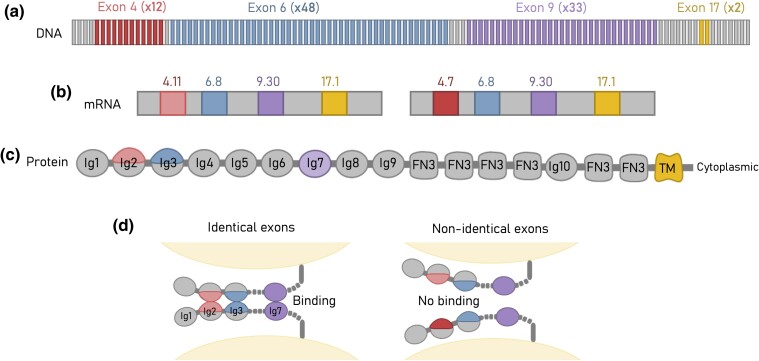
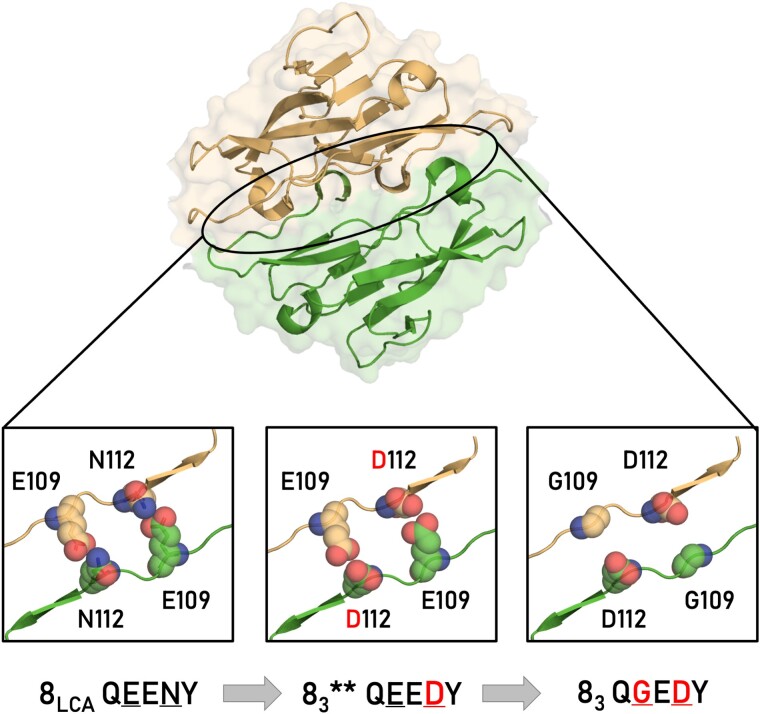
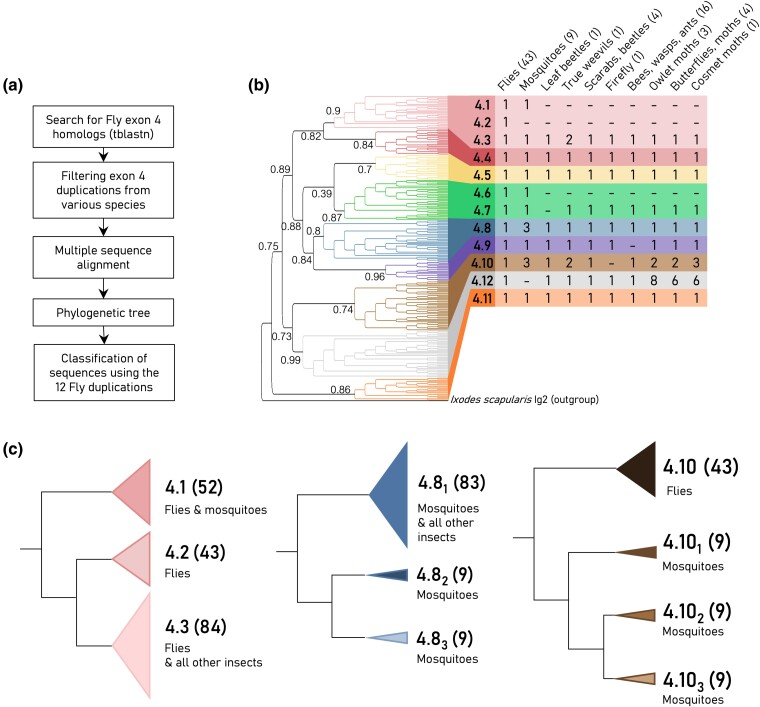
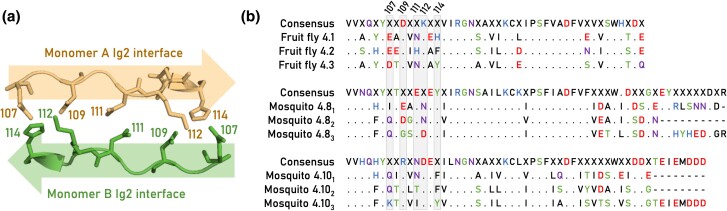
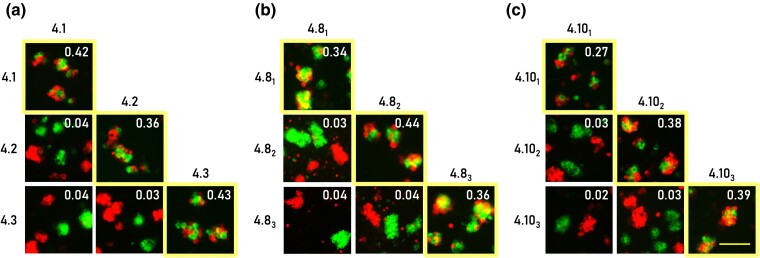
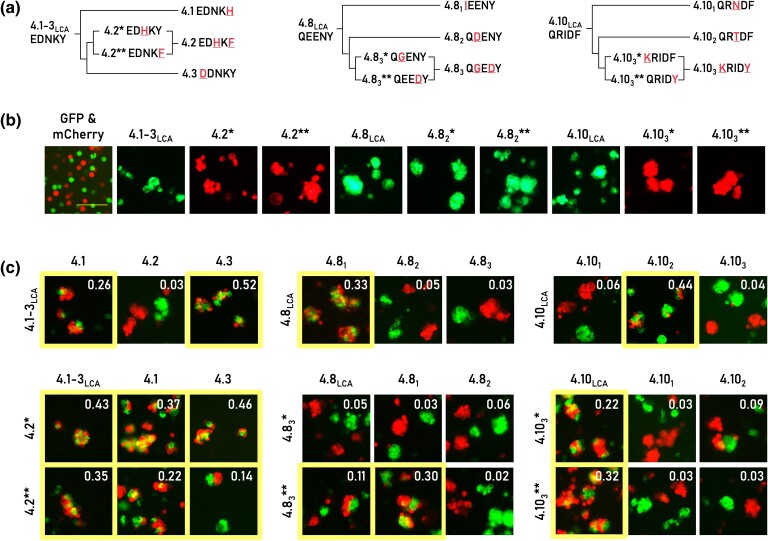
Many adhesion proteins, evolutionarily related through gene duplication, exhibit distinct and precise interaction preferences and affinities crucial for cell patterning. Yet, the evolutionary paths by which these proteins acquire new specificities and prevent cross-interactions within their family members remain unknown. To bridge this gap, this study focuses on Drosophila Down syndrome cell adhesion molecule-1 (Dscam1) proteins, which are cell adhesion proteins that have undergone extensive gene duplication. Dscam1 evolved under strong selective pressure to achieve strict homophilic recognition, essential for neuronal self-avoidance and patterning. Through a combination of phylogenetic analyses, ancestral sequence reconstruction, and cell aggregation assays, we studied the evolutionary trajectory of Dscam1 exon 4 across various insect lineages. We demonstrated that recent Dscam1 duplications in the mosquito lineage bind with strict homophilic specificities without any cross-interactions. We found that ancestral and intermediate Dscam1 isoforms maintained their homophilic binding capabilities, with some intermediate isoforms also engaging in promiscuous interactions with other paralogs. Our results highlight the robust selective pressure for homophilic specificity integral to the Dscam1 function within the process of neuronal self-avoidance. Importantly, our study suggests that the path to achieving such selective specificity does not introduce disruptive mutations that prevent self-binding but includes evolutionary intermediates that demonstrate promiscuous heterophilic interactions. Overall, these results offer insights into evolutionary strategies that underlie adhesion protein interaction specificities.
许多黏附蛋白通过基因复制在进化上相关,表现出独特而精确的相互作用偏好和亲和力,这对细胞模式形成至关重要。然而,这些蛋白质获得新的特异性并防止家族成员之间交叉相互作用的进化途径仍然未知。为了弥补这一空白,本研究专注于果蝇唐氏综合征细胞黏附分子 1(Dscam1)蛋白,这些蛋白是经历了广泛基因复制的细胞黏附蛋白。Dscam1 在强烈的选择压力下进化,以实现严格的同亲识别,这对神经元自我回避和模式形成至关重要。通过系统发育分析、祖先序列重建和细胞聚集实验的结合,我们研究了 Dscam1 外显子 4 在各种昆虫谱系中的进化轨迹。我们证明,蚊子谱系中的最近 Dscam1 复制具有严格的同亲特异性,没有任何交叉相互作用。我们发现,祖先和中间 Dscam1 同工型保持其同亲结合能力,一些中间同工型也与其他同源物发生混杂相互作用。我们的研究结果强调了在神经元自我回避过程中,同亲特异性是 Dscam1 功能的强大选择压力。重要的是,我们的研究表明,实现这种选择性特异性的途径并没有引入阻止自我结合的破坏性突变,而是包括表现出混杂异亲相互作用的进化中间体。总体而言,这些结果为黏附蛋白相互作用特异性的进化策略提供了新的见解。