Fabricant Scott A, Abramson Erika L, Hutchings Kayla, Vien Alexis, Scherer Matthew, Kapadia Shashi N
Department of Medicine, New York-Presbyterian, New York, New York, USA.
Department of Pediatrics, Weill Cornell Medicine, New York, New York, USA.
Open Forum Infect Dis. 2024 Jun 27;11(7):ofae364. doi: 10.1093/ofid/ofae364. eCollection 2024 Jul.
Serious injection-related infections (SIRIs) in people who inject drugs often lead to prolonged hospitalizations or premature discharges. This may be in part due to provider reluctance to place peripherally inserted central catheters (PICCs) for outpatient parenteral antibiotic therapy in this population. Because internal medicine (IM) residents are often frontline providers in academic centers, understanding their perspectives on SIRI care is important to improve outcomes.
We surveyed IM residents in a large urban multicenter hospital system about SIRI care with a novel case-based survey that elicited preferences, comfort, experience, and stigma. The survey was developed using expert review, cognitive interviewing, and pilot testing. Results are reported with descriptive statistics and linear regression.
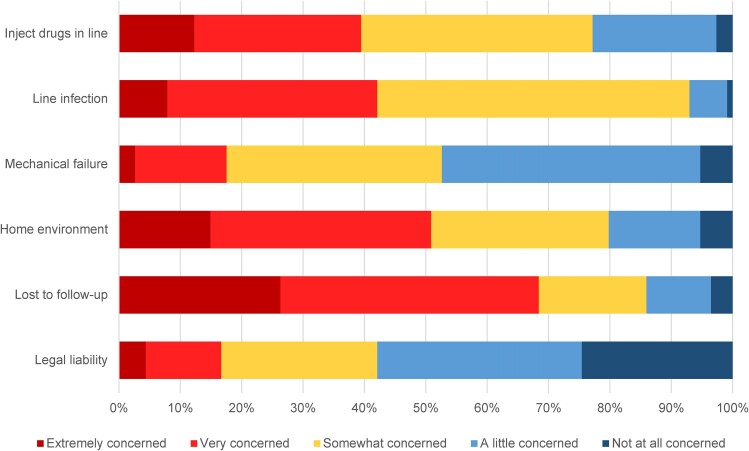
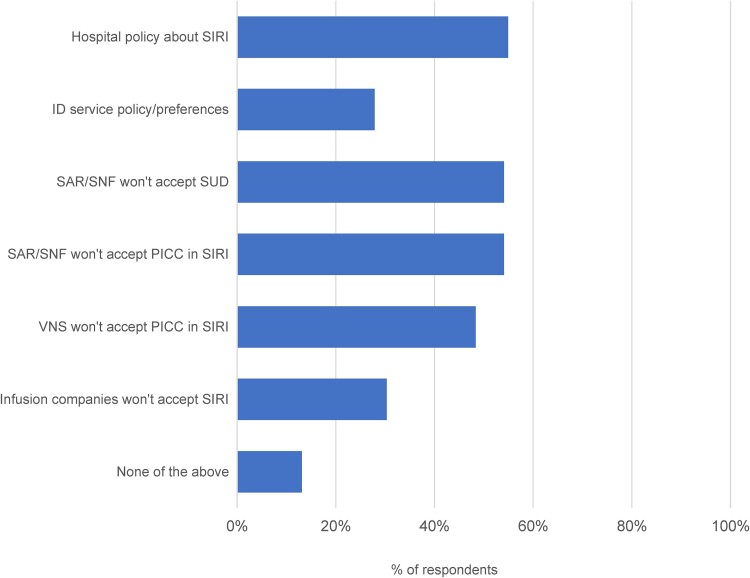
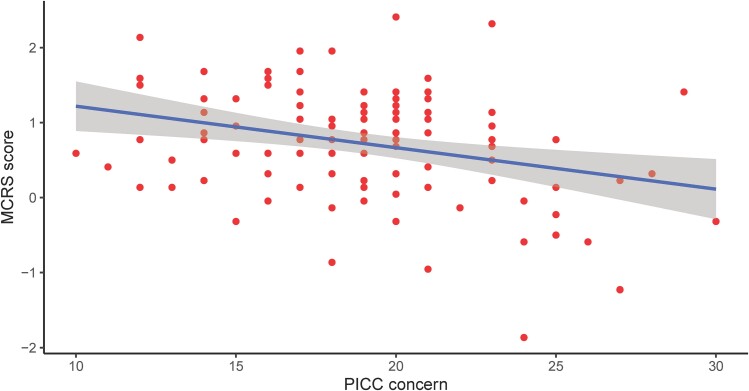
Of 116 respondents (response rate 34%), most (73%) were uncomfortable discharging a patient with active substance use home with a PICC, but comfortable (87%) with discharge to postacute facilities. Many (∼40%) endorsed high levels of concern for PICC misuse or secondary line infections, but larger numbers cited concerns about home environment (50%) or loss to follow-up (68%). While overall rates were low, higher stigma was associated with more concerns around PICC use ( = -0.3, = .002). A majority (58%) believed hospital policies against PICC use in SIRI may act as a barrier to discharge, and 74% felt initiation of medications for opioid use disorder (MOUD) would increase their comfort discharging with a PICC.
Most IM residents endorsed high levels of concern about PICC use for SIRI, related to patient outcomes and perceived institutional barriers, but identified MOUD as a mitigating factor.
注射吸毒者发生的严重注射相关感染(SIRI)常导致住院时间延长或过早出院。这可能部分归因于医疗服务提供者不愿为该人群的门诊肠外抗生素治疗置入经外周静脉穿刺中心静脉导管(PICC)。由于内科住院医师通常是学术中心的一线医疗服务提供者,了解他们对SIRI护理的看法对于改善治疗结果很重要。
我们在一个大型城市多中心医院系统中,对内科住院医师进行了一项关于SIRI护理的调查,采用了一种基于病例的新型调查方法,以了解他们的偏好、舒适度、经验和耻辱感。该调查通过专家评审、认知访谈和预试验进行开发。结果采用描述性统计和线性回归进行报告。
在116名受访者中(回复率34%),大多数(73%)对让有活跃物质使用问题的患者携带PICC出院感到不舒服,但对出院到急性后护理机构感到舒服(87%)。许多人(约40%)对PICC滥用或二线感染高度关注,但更多人提到对家庭环境(50%)或失访(68%)的担忧。虽然总体发生率较低,但耻辱感越高,对PICC使用的担忧就越多(β = -0.3,P = .002)。大多数(58%)认为医院禁止在SIRI中使用PICC的政策可能成为出院的障碍,74%的人认为启动阿片类物质使用障碍(MOUD)药物治疗会增加他们对携带PICC出院的舒适度。
大多数内科住院医师对在SIRI中使用PICC高度关注,这与患者预后和感知到的制度障碍有关,但认为MOUD是一个缓解因素。