Sousa José Mário, Barbosa Ana, Araújo Daniela, Castro Joana, Azevedo Nuno Filipe, Cerqueira Laura, Almeida Carina
CEB-Centre of Biological Engineering, LIBRO-Laboratory of Research in Biofilms Rosário Oliveira, Campus de Gualtar, University of Minho, 4710-057 Braga, Portugal.
LEPABE-Laboratory for Process Engineering, Environment, Biotechnology and Energy, Faculty of Engineering, University of Porto, Rua Dr. Roberto Frias, 4200-465 Porto, Portugal.
Foods. 2024 Jul 1;13(13):2095. doi: 10.3390/foods13132095.
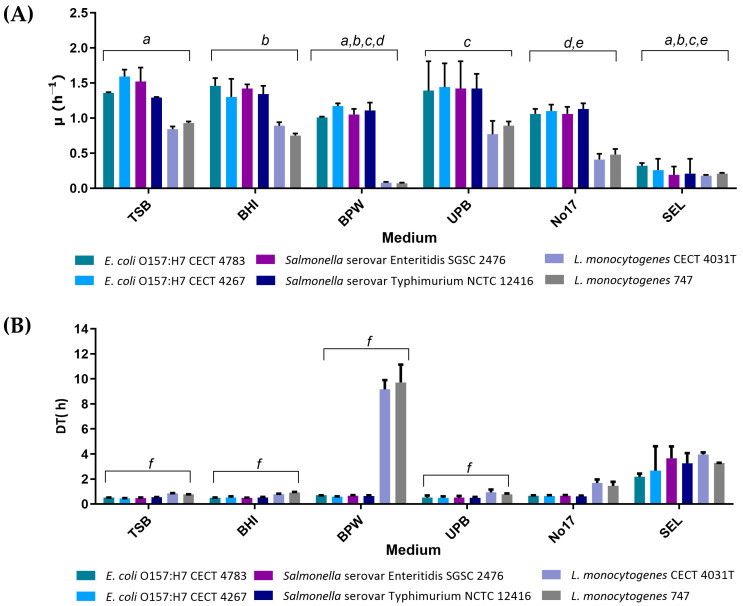
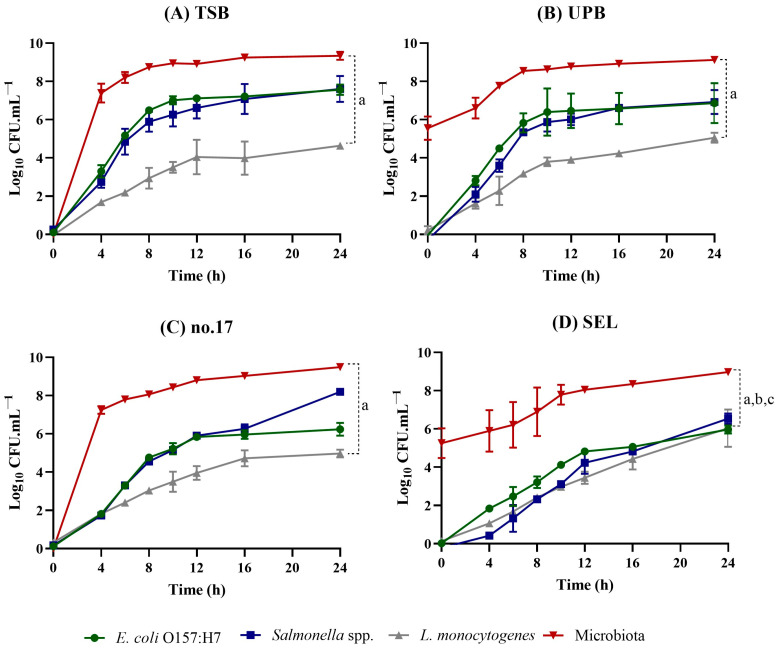
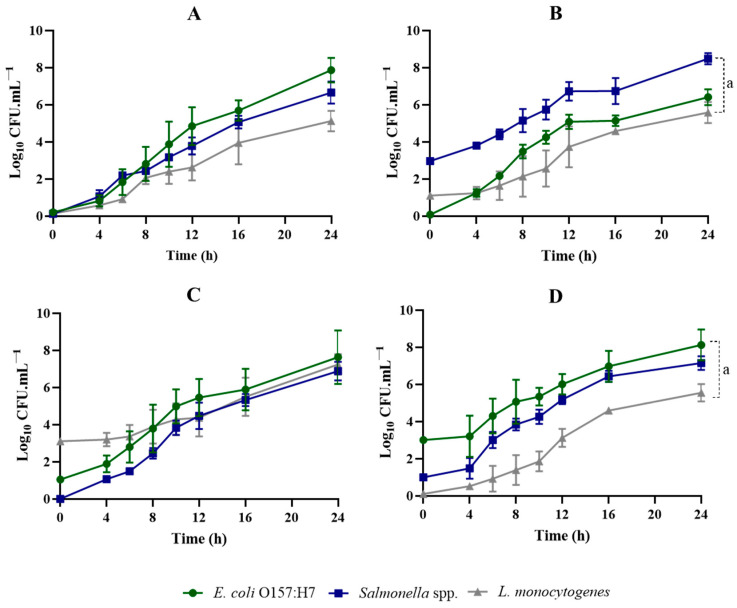
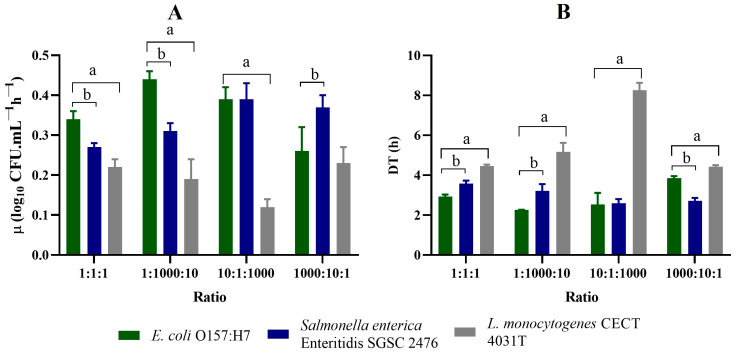
Several multiplex approaches for the simultaneous detection of pathogens in food have been developed in recent years, but the use of a single enrichment medium remains a problem. In this study, six enrichment broths (five non-selective media, tryptic soy broth (TSB), brain heart infusion broth (BHI), buffered peptone water (BPW), universal pre-enrichment broth (UPB), no. 17 broth, and a selective, broth (SEL)), were studied for the simultaneous detection of O157:H7, spp., and , to validate the suitable enrichment broth to be used for the detection methods. Different ratios of O157:H7, spp., and were used. Almost all non-selective broths evaluated in this study showed similar growth parameters and profiles among each other. The only selective enrichment broth under analysis (SEL) showed distinct growth features compared to the non-selective media, allowing for a slower but balanced growth of the three pathogens, which could be beneficial in preventing the overgrowth of fast-growing bacteria. In addition, when tested in ground beef samples, SEL broth seems to be the most distinctive medium with a balanced growth pattern observed for the three pathogens. Overall, this study is intended to provide the basis for the selection of suitable enrichment broths according to the technology detection to be used, the desired time of enrichment, and the expected balanced concentration of pathogens.
近年来已开发出几种用于同时检测食品中病原体的多重检测方法,但使用单一富集培养基仍然是一个问题。在本研究中,对六种富集肉汤(五种非选择性培养基,胰蛋白胨大豆肉汤(TSB)、脑心浸液肉汤(BHI)、缓冲蛋白胨水(BPW)、通用预富集肉汤(UPB)、17号肉汤,以及一种选择性肉汤(SEL))进行了研究,以同时检测O157:H7、 spp.和 ,从而验证适用于检测方法的富集肉汤。使用了不同比例的O157:H7、 spp.和 。本研究中评估的几乎所有非选择性肉汤彼此之间都显示出相似的生长参数和生长曲线。唯一正在分析的选择性富集肉汤(SEL)与非选择性培养基相比显示出明显不同的生长特征,使三种病原体能够缓慢但均衡地生长,这可能有利于防止快速生长细菌的过度生长。此外,在碎牛肉样品中进行测试时,SEL肉汤似乎是最具特色的培养基,三种病原体均呈现出均衡的生长模式。总体而言,本研究旨在根据所使用的技术检测、所需的富集时间以及病原体的预期均衡浓度,为选择合适的富集肉汤提供依据。