James Alison H, Dimond Rebecca, Jones Aled, Watkins Dianne, Kelly Daniel
School of Healthcare Sciences, Cardiff University, Wales, UK.
School of Nursing and Midwifery, Plymouth University, Plymouth, UK.
J Adv Nurs. 2025 Mar;81(3):1463-1475. doi: 10.1111/jan.16329. Epub 2024 Jul 14.
To explore the challenges experienced by Executive Nurse Directors during the COVID-19 pandemic, and to inform future nursing leadership strategies.
A qualitative research project involving interviews with 21 Executive Nurse Directors from England and Wales.
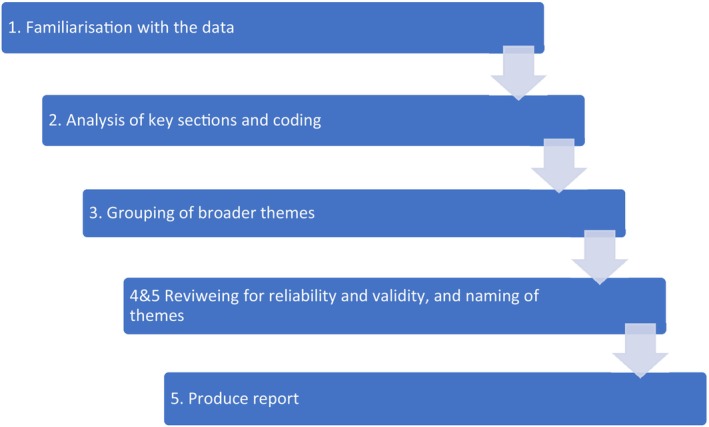
Participants were purposively sampled and recruited through Chief Nursing Officers and nursing leadership networks. Semi-structured interviews were conducted and recorded online via Teams. Braun and Clarke's approach to thematic reflexive analysis was applied to data analysis.
Executive Nurse Directors played a critical role during the COVID-19 pandemic. Six themes are explored: tensions, and adaptive response to personal leadership styles; uncertainty and support at the board level; responding to national political decision-making; the personal and emotional impact of the role and the sources of effective support; the voice and public profile of nursing; lessons learnt and strategies for future leadership development. Enablers of decision-making included effective multidisciplinary working, freedom from normal organizational constraints, support for innovation, and the development of stronger bonds with colleagues. Barriers to decision-making included limited knowledge of the virus and its impact and lack of guidance, particularly at a national level. Priorities, strategies and actions for recovery include recognizing the emotional impact of being in a high-level decision-making role, protecting staff from burnout and understanding the long-term implications of pandemic work for nurse leaders.
Future strategies for nursing leadership during public health, national and global emergencies are recommended.
This study contributes to the literature exploring the Executive Nurse Director role and their experiences of leading through the COVID-19 pandemic, and identifies priorities, strategies and actions for recovery and learning for the future of senior leadership.
The study adhered to the Consolidated Criteria for Reporting Qualitative Research.
No patient or public contribution.
探讨新冠疫情期间执行护士长所面临的挑战,并为未来的护理领导策略提供参考。
一项定性研究项目,对来自英格兰和威尔士的21位执行护士长进行访谈。
通过首席护理官和护理领导网络进行目的抽样和招募。采用半结构式访谈,并通过Teams在线录制。数据分析采用布劳恩和克拉克的主题反思分析法。
执行护士长在新冠疫情期间发挥了关键作用。探讨了六个主题:紧张关系以及对个人领导风格的适应性反应;董事会层面的不确定性与支持;应对国家政治决策;该角色的个人和情感影响以及有效支持的来源;护理的声音和公众形象;经验教训以及未来领导力发展的策略。决策的促成因素包括有效的多学科协作、摆脱正常组织限制、对创新的支持以及与同事建立更紧密的联系。决策的障碍包括对病毒及其影响的了解有限以及缺乏指导,尤其是在国家层面。复苏的优先事项、策略和行动包括认识到担任高级决策角色的情感影响、保护员工避免倦怠以及理解疫情工作对护士领导者的长期影响。
建议制定未来公共卫生、国家和全球紧急情况下护理领导的策略。
本研究为探索执行护士长角色及其在新冠疫情期间的领导经验的文献做出了贡献,并确定了高级领导未来复苏和学习的优先事项、策略和行动。
本研究遵循了定性研究报告的综合标准。
无患者或公众参与。