Raynor William Y, Sozio Stephen J, Kempf Jeffrey S
Department of Radiology, Rutgers Robert Wood Johnson Medical School, 1 Robert Wood Johnson Place, MEB #404, New Brunswick, NJ, 08901, USA.
EJNMMI Rep. 2024 Jul 15;8(1):21. doi: 10.1186/s41824-024-00209-5.
Altered F-fluorodeoxyglucose (FDG) biodistribution due to patient factors such as exercise and inadequate fasting are well established causes of limited diagnostic efficacy. In addition, medications such as G-CSF are known to affect uptake of FDG by bone marrow and spleen. In this study, we present a case of increased white adipose uptake in a pediatric lymphoma patient who recently received high dose dexamethasone and review the relevant literature regarding this rare and poorly understood pattern of altered FDG biodistribution.
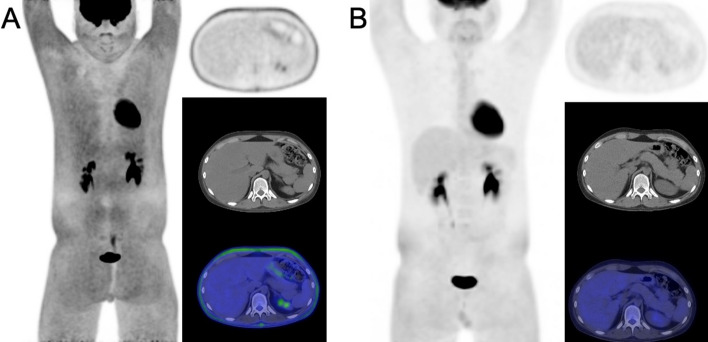
A 14-year-old male patient diagnosed with B-cell lymphoblastic lymphoma underwent FDG-PET/CT for restaging shortly after completing an induction chemotherapy regimen. Images revealed diffuse FDG uptake localizing to white adipose tissue, attributed to the 29-day course of dexamethasone which was completed two days prior. A diagnostically adequate study with relative normalization of FDG biodistribution was obtained seven days later.
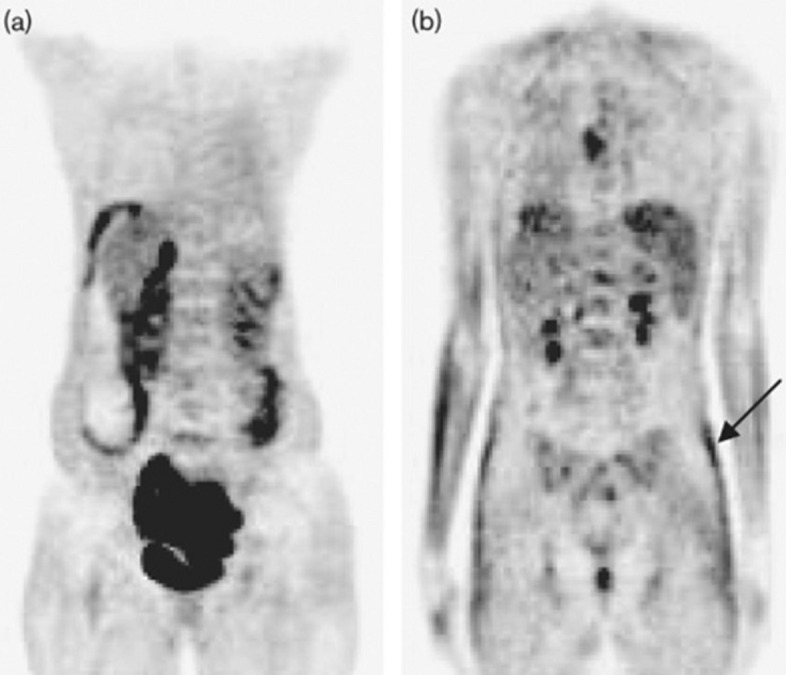
In our review of the literature, diffuse FDG uptake by white fat is a rare occurrence and has only been reported by a few case reports and early observational studies. In addition to patients receiving corticosteroids, other cases of medication-induced adipose remodeling such as patients receiving highly active antiretroviral therapy have been documented with similar patterns of increased white adipose tissue activity.
Corticosteroid-induced white fat uptake of FDG is a rare phenomenon that can limit diagnostic accuracy of FDG-PET/CT and necessitate repeat imaging. Current evidence suggests that a wait period of at least one week after discontinuation of corticosteroids is sufficient to allow for decreased white fat uptake and increased diagnostic accuracy.
由于运动和禁食不充分等患者因素导致的¹⁸F-氟脱氧葡萄糖(FDG)生物分布改变是诊断效能受限的公认原因。此外,已知粒细胞集落刺激因子(G-CSF)等药物会影响骨髓和脾脏对FDG的摄取。在本研究中,我们报告了一例近期接受高剂量地塞米松治疗的小儿淋巴瘤患者白色脂肪摄取增加的病例,并回顾了关于这种罕见且了解甚少的FDG生物分布改变模式的相关文献。
一名14岁男性患者被诊断为B细胞淋巴母细胞淋巴瘤,在完成诱导化疗方案后不久接受了¹⁸F-FDG PET/CT重新分期检查。图像显示FDG弥漫性摄取定位于白色脂肪组织,这归因于两天前完成的为期29天的地塞米松疗程。七天后获得了一项诊断充分且FDG生物分布相对正常化的检查。
在我们对文献的回顾中,白色脂肪的FDG弥漫性摄取是一种罕见现象,仅有少数病例报告和早期观察性研究报道过。除了接受皮质类固醇治疗的患者外,其他药物诱导的脂肪重塑病例,如接受高效抗逆转录病毒治疗的患者,也有类似的白色脂肪组织活性增加模式的记录。
皮质类固醇诱导的白色脂肪摄取FDG是一种罕见现象,可限制¹⁸F-FDG PET/CT的诊断准确性,并需要重复成像。目前的证据表明,停用皮质类固醇后至少等待一周足以使白色脂肪摄取减少并提高诊断准确性。