Haddad Natalie S, Morrison-Porter Andrea, Quehl Hannah, Capric Violeta, Lamothe Pedro A, Anam Fabliha, Runnstrom Martin C, Truong Alex D, Dixit Adviteeya N, Woodruff Matthew C, Chen Anting, Park Jiwon, Nguyen Doan C, Hentenaar Ian, Kim Caroline Y, Kyu Shuya, Stewart Brandon, Wagman Elizabeth, Geoffroy Hannah, Sanz Daniel, Cashman Kevin S, Ramonell Richard P, Cabrera-Mora Monica, Alter David N, Roback John D, Horwath Michael C, O'Keefe James B, Dretler Alexandra W, Gripaldo Ria, Yeligar Samantha M, Natoli Ted, Betin Viktoria, Patel Rahulkumar, Vela Kennedy, Hernandez Mindy Rodriguez, Usman Sabeena, Varghese John, Jalal Anum, Lee Saeyun, Le Sang N, Amoss R Toby, Daiss John L, Sanz Ignacio, Lee F Eun-Hyung
Division of Pulmonary, Allergy, Critical Care & Sleep Medicine, Department of Medicine, Emory University, Atlanta, GA, 30322, USA.
MicroB-plex Inc, Atlanta, GA, 30332, USA.
medRxiv. 2024 Jul 7:2024.07.05.24310017. doi: 10.1101/2024.07.05.24310017.
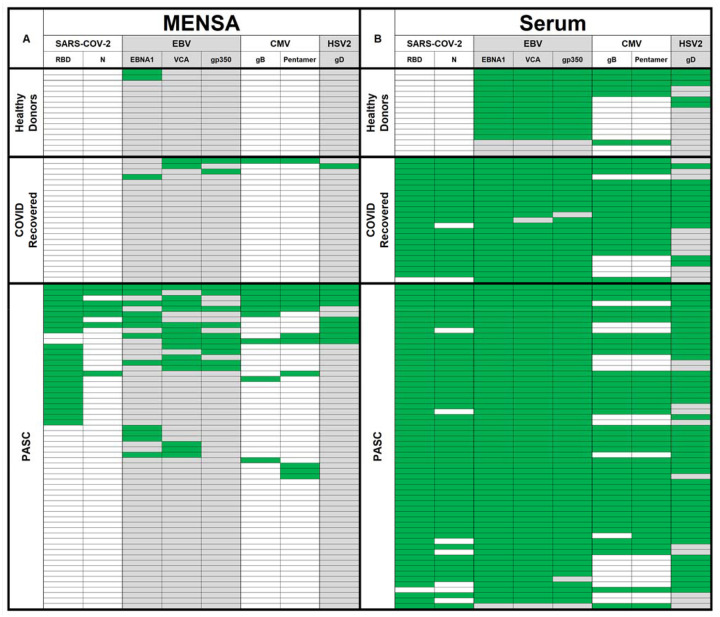
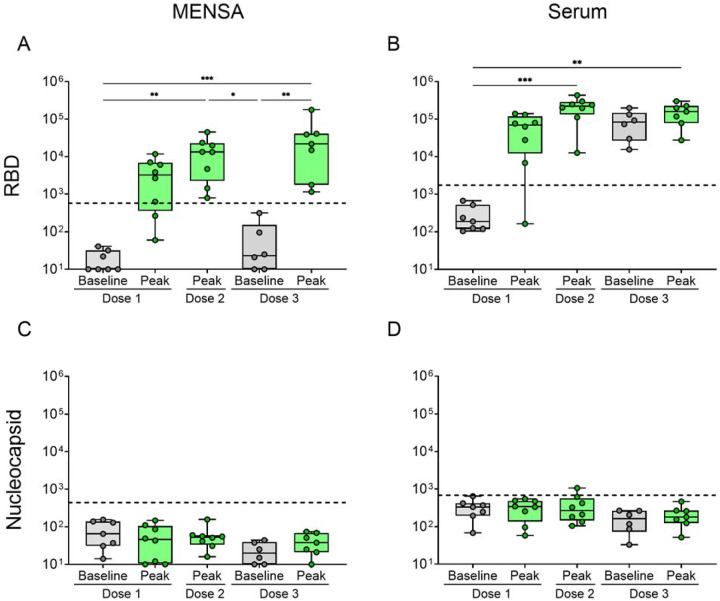
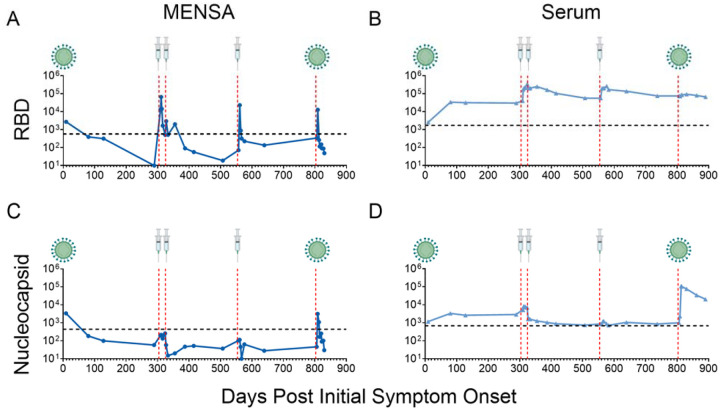
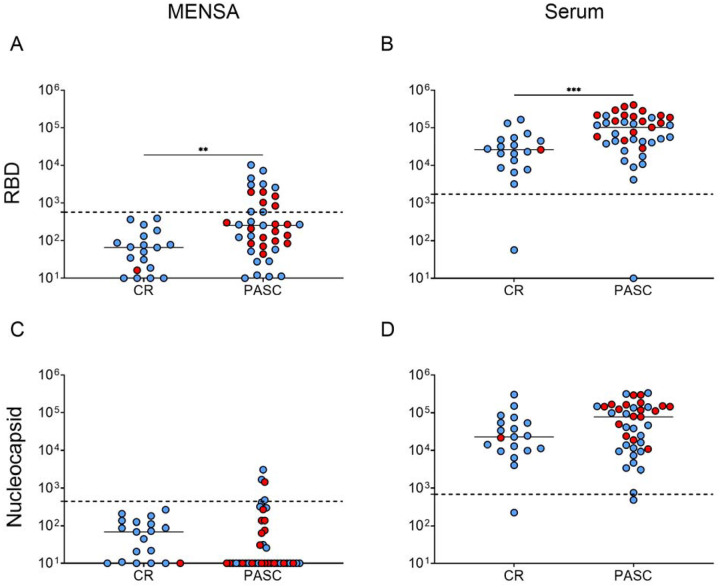
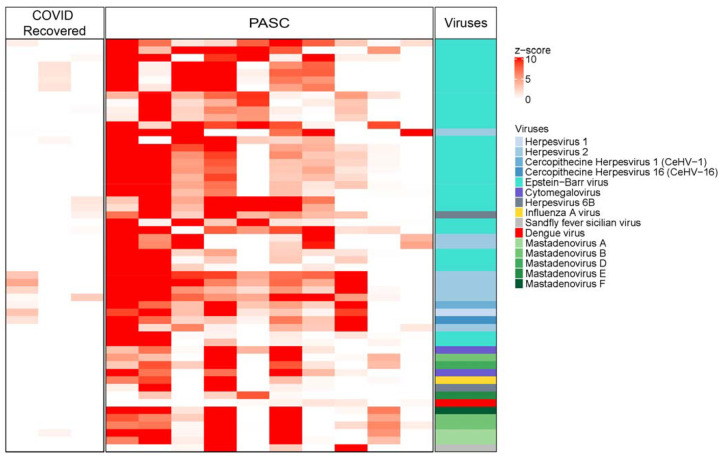
Post-acute sequelae of SARS-CoV-2 (SARS2) infection (PASC) is a heterogeneous condition, but the main viral drivers are unknown. Here, we use MENSA, Media Enriched with Newly Synthesized Antibodies, secreted exclusively from circulating human plasmablasts, to provide an immune snapshot that defines the underlying viral triggers. We provide proof-of-concept testing that the MENSA technology can capture the new host immune response to accurately diagnose acute primary and breakthrough infections when known SARS2 virus or proteins are present. It is also positive after vaccination when spike proteins elicit an acute immune response. Applying the same principles for long-COVID patients, MENSA is positive for SARS2 in 40% of PASC vs none of the COVID recovered (CR) patients without any sequelae demonstrating ongoing SARS2 viral inflammation only in PASC. Additionally, in PASC patients, MENSAs are also positive for Epstein-Barr Virus (EBV) in 37%, Human Cytomegalovirus (CMV) in 23%, and herpes simplex virus 2 (HSV2) in 15% compared to 17%, 4%, and 4% in CR controls respectively. Combined, a total of 60% of PASC patients have a positive MENSA for SARS2, EBV, CMV, and/or HSV2. MENSA offers a unique antibody snapshot to reveal the underlying viral drivers in long-COVID thus demonstrating the persistence of SARS2 and reactivation of viral herpes in 60% of PASC patients.
新型冠状病毒2(SARS-CoV-2,简称SARS2)感染的急性后遗症(PASC)是一种异质性疾病,但其主要病毒驱动因素尚不清楚。在此,我们使用富含新合成抗体的介质(MENSA),该介质仅由循环中的人类浆母细胞分泌,以提供一个免疫快照,从而确定潜在的病毒触发因素。我们提供了概念验证测试,表明当存在已知的SARS2病毒或蛋白质时,MENSA技术可以捕捉新的宿主免疫反应,以准确诊断急性原发性感染和突破性感染。在接种疫苗后,当刺突蛋白引发急性免疫反应时,MENSA检测结果也呈阳性。将同样的原理应用于长期新冠患者,40%的PASC患者的MENSA检测结果为SARS2阳性,而无任何后遗症的新冠康复(CR)患者的检测结果均为阴性,这表明仅在PASC患者中存在持续的SARS2病毒炎症。此外,在PASC患者中,37%的患者的MENSA检测结果为EB病毒(EBV)阳性,23%为人类巨细胞病毒(CMV)阳性,15%为单纯疱疹病毒2(HSV2)阳性,而在CR对照组中,相应的比例分别为17%、4%和4%。综合来看,共有60%的PASC患者的MENSA检测结果为SARS2、EBV、CMV和/或HSV2阳性。MENSA提供了一个独特的抗体快照,以揭示长期新冠患者潜在的病毒驱动因素,从而证明60%的PASC患者中存在SARS2持续性感染和病毒性疱疹再激活。