German Center for Neurodegenerative Diseases, Tatzberg 41, 01307, Dresden, Germany.
EMBO J. 2024 Aug;43(16):3312-3326. doi: 10.1038/s44318-024-00148-8. Epub 2024 Jul 15.
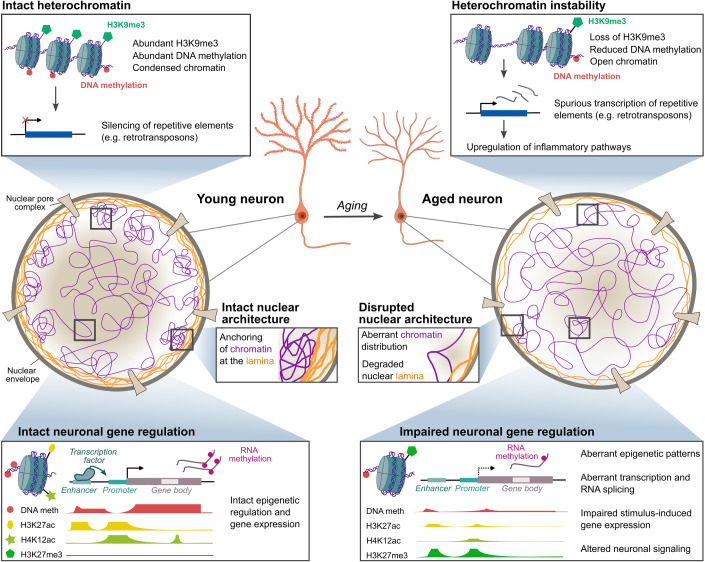
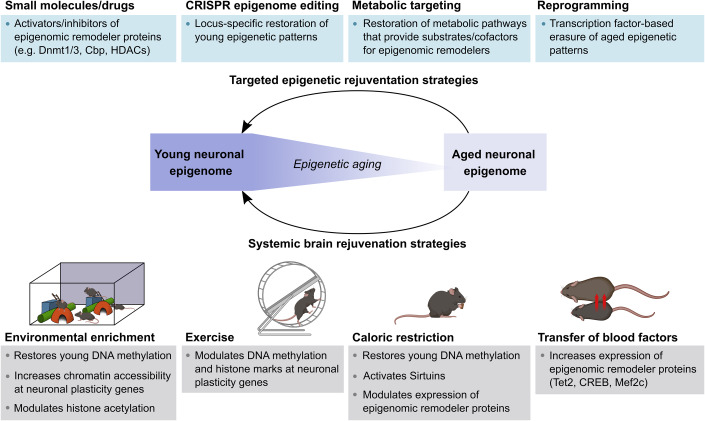
Aging is associated with a progressive decline of brain function, and the underlying causes and possible interventions to prevent this cognitive decline have been the focus of intense investigation. The maintenance of neuronal function over the lifespan requires proper epigenetic regulation, and accumulating evidence suggests that the deterioration of the neuronal epigenetic landscape contributes to brain dysfunction during aging. Epigenetic aging of neurons may, however, be malleable. Recent reports have shown age-related epigenetic changes in neurons to be reversible and targetable by rejuvenation strategies that can restore brain function during aging. This review discusses the current evidence that identifies neuronal epigenetic aging as a driver of cognitive decline and a promising target of brain rejuvenation strategies, and it highlights potential approaches for the specific manipulation of the aging neuronal epigenome to restore a youthful epigenetic state in the brain.
衰老是与大脑功能的逐渐衰退相关的,而探究其潜在原因和可能的干预措施一直是研究的重点。为了维持整个生命周期内神经元的功能,需要适当的表观遗传调控,越来越多的证据表明,神经元表观遗传景观的恶化导致了衰老过程中的大脑功能障碍。然而,神经元的表观遗传衰老可能是可塑的。最近的报告显示,神经元的年龄相关表观遗传变化是可逆的,并且可以通过恢复衰老过程中大脑功能的年轻化策略来靶向。这篇综述讨论了目前的证据,即确定神经元的表观遗传衰老为认知能力下降的驱动因素和大脑年轻化策略的有前途的靶点,并强调了特定于衰老神经元表观基因组的潜在方法,以恢复大脑中的年轻表观遗传状态。