Department of Biological Engineering, Massachusetts Institute of Technology, Cambridge, MA, USA.
Antimicrobial Resistance Interdisciplinary Research Group, Singapore-MIT Alliance for Research and Technology, Singapore, Singapore.
Commun Biol. 2024 Jul 16;7(1):866. doi: 10.1038/s42003-024-06562-2.
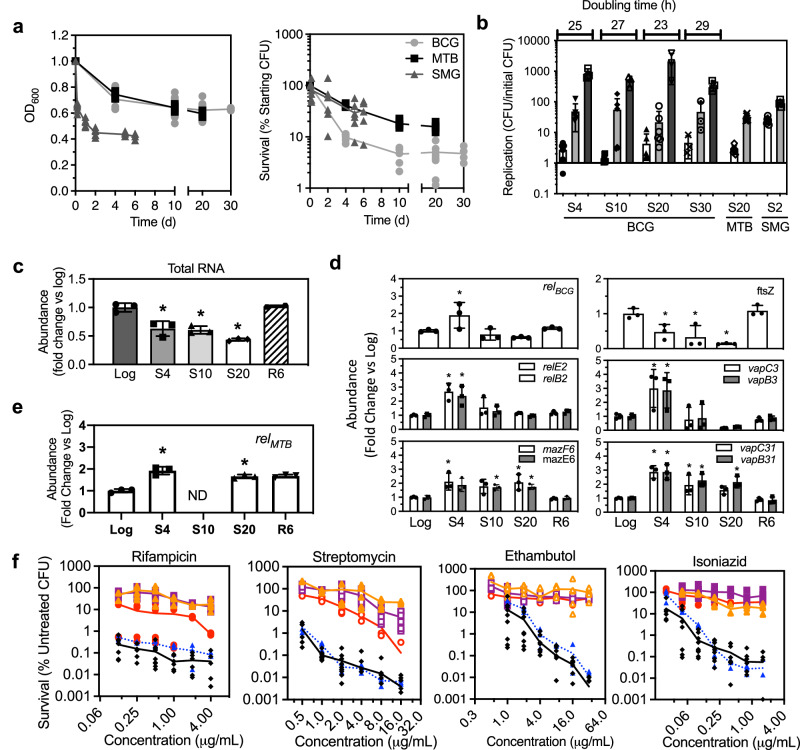
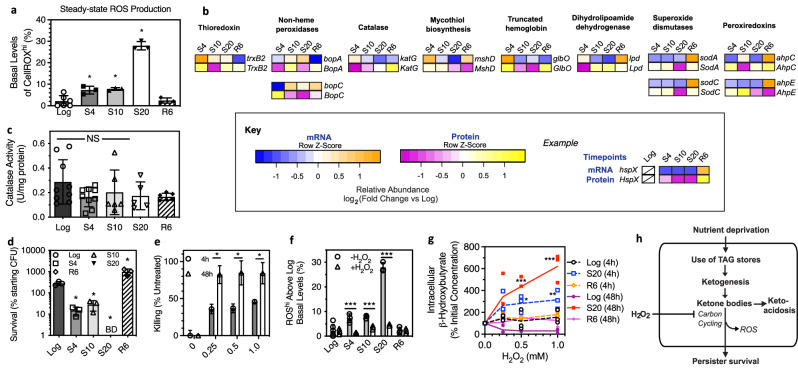
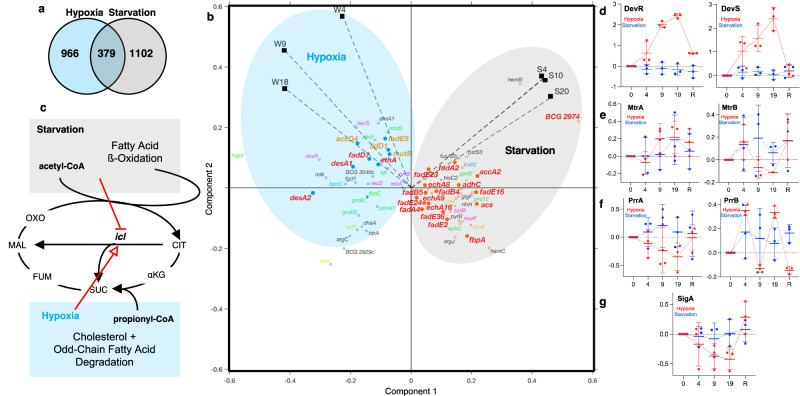
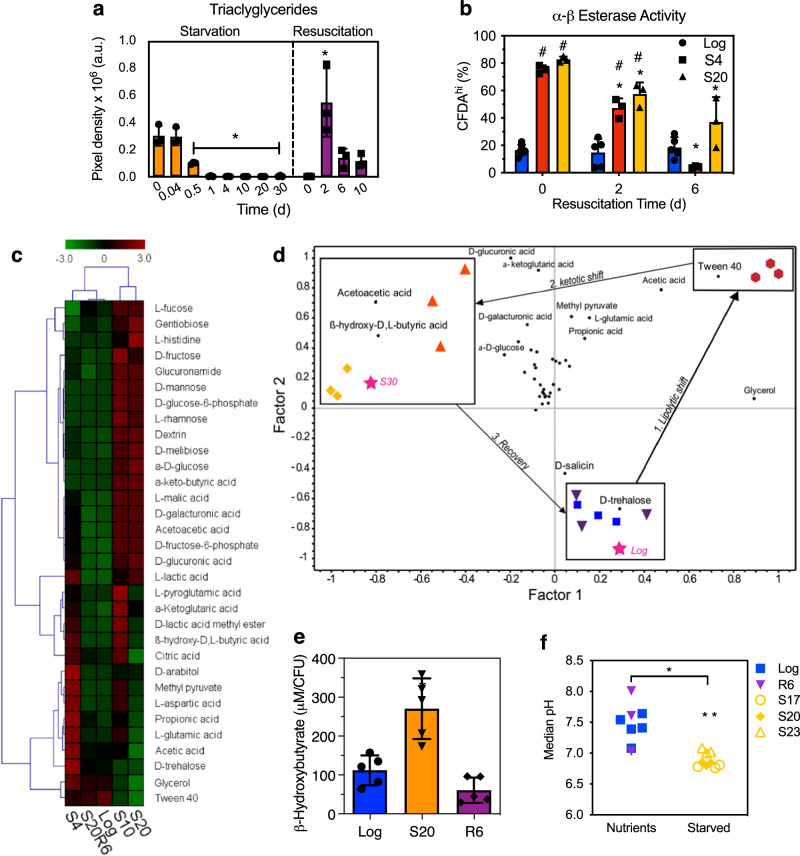
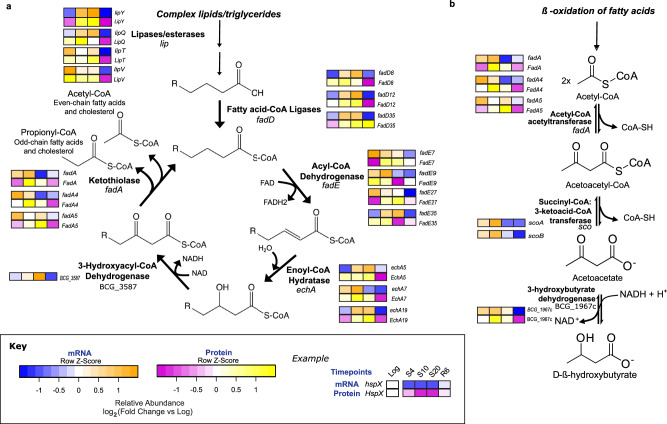
Mycobacteria adapt to infection stresses by entering a reversible non-replicating persistence (NRP) with slow or no cell growth and broad antimicrobial tolerance. Hypoxia and nutrient deprivation are two well-studied stresses commonly used to model the NRP, yet little is known about the molecular differences in mycobacterial adaptation to these distinct stresses that lead to a comparable NRP phenotype. Here we performed a multisystem interrogation of the Mycobacterium bovis BCG (BCG) starvation response, which revealed a coordinated metabolic shift away from the glycolysis of nutrient-replete growth to depletion of lipid stores, lipolysis, and fatty acid ß-oxidation in NRP. This contrasts with BCG's NRP hypoxia response involving a shift to cholesterol metabolism and triglyceride storage. Our analysis reveals cryptic metabolic vulnerabilities of the starvation-induced NRP state, such as their newfound hypersensitivity to HO. These observations pave the way for developing precision therapeutics against these otherwise drug refractory pathogens.
分枝杆菌通过进入一种可逆转的非复制性持久状态(NRP)来适应感染压力,这种状态下细胞生长缓慢或停止,并且对广泛的抗菌药物具有耐受性。缺氧和营养剥夺是两种常用于模拟 NRP 的研究较为充分的应激源,但对于导致类似 NRP 表型的分枝杆菌适应这些不同应激源的分子差异知之甚少。在这里,我们对牛分枝杆菌卡介苗(BCG)的饥饿反应进行了多系统研究,结果显示,在 NRP 中,细胞从营养丰富生长时的糖酵解协调地转向脂质储存的消耗、脂肪分解和脂肪酸β-氧化。这与 BCG 的 NRP 缺氧反应形成对比,后者涉及胆固醇代谢和甘油三酯储存的转变。我们的分析揭示了饥饿诱导的 NRP 状态下隐藏的代谢脆弱性,例如它们对 HO 的新发现的敏感性增加。这些观察结果为针对这些其他药物难治性病原体开发精准治疗方法铺平了道路。