Xu Chunyan, Luo Chengjia, Du Jun, Liu Lang, Wang Jingjing, Yuan Chenhong, Guo Junjiang
School of Materials and Environment, Guangxi Minzu University, Nanning, 530006, Guangxi, China.
Guangxi Colleges and Universities Key Laboratory of Environmental-Friendly Materials and Ecological Remediation, Nanning, 530006, Guangxi, China.
Sci Rep. 2024 Jul 15;14(1):16320. doi: 10.1038/s41598-024-67378-y.
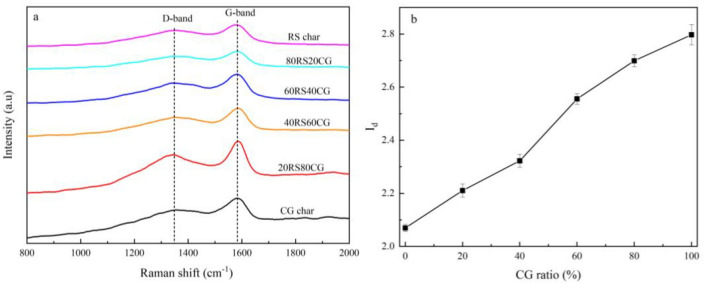
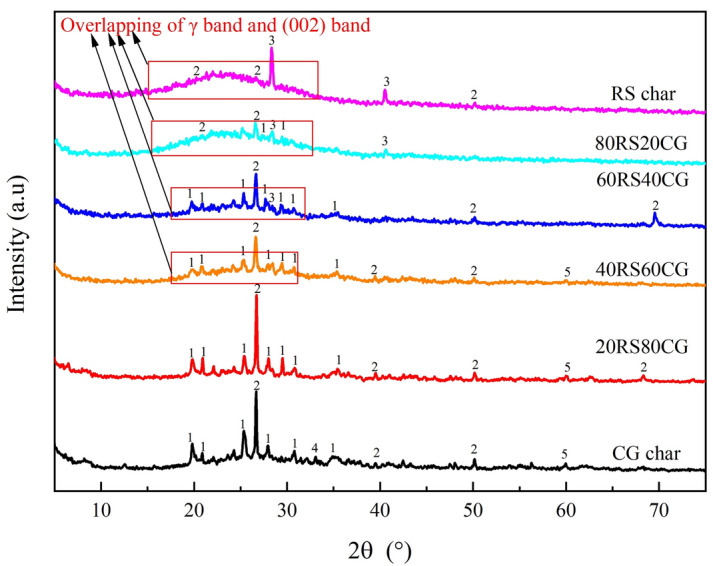
Co-combustion is a technology that enables the simultaneous and efficient utilization of biomass and coal gangue (CG). Nevertheless, the factors that affect the combustibility of co-pyrolytic char, which represents the rate-determining step of the entire co-combustion process, remain unclear. This study investigates the impact of the physicochemical properties of co-pyrolytic char, including pore structure, carbon structure, and alkali metals, on the combustion characteristics. The TGA analysis indicates that the ignition and burnout temperatures of the co-pyrolytic char increase as the CG mixing ratio increases, resulting in a prolonged combustion. This is due to the fact that the carbon structure of the co-pyrolytic char becomes increasingly aromatic, accompanied by a reduction in aliphatic hydrocarbons and oxygen-containing groups as the CG mixing ratio increases. Furthermore, the high ash content of the CG is another significant factor contributing to the observed reduction in combustibility. The reaction between mullite, quartz in CG, and alkali metals in biomass results in the formation of aluminosilicate, which reduces the catalytic ability of alkali metals. Furthermore, the char combustion kinetics are analyzed by the KAS method, and the results indicate that the introduction of CG increases the activation energy of the entire char combustion process. The activation energy of the 80RS20CG is within the range of 102.22-164.99 kJ/mol, while the RS char is within the range of 89.87-144.67 kJ/mol.
共燃烧是一种能够同时高效利用生物质和煤矸石(CG)的技术。然而,影响共热解焦炭可燃性的因素仍不明确,而共热解焦炭的燃烧是整个共燃烧过程的速率决定步骤。本研究考察了共热解焦炭的物理化学性质(包括孔隙结构、碳结构和碱金属)对燃烧特性的影响。热重分析(TGA)表明,随着煤矸石混合比例的增加,共热解焦炭的着火温度和 burnout 温度升高,导致燃烧时间延长。这是因为随着煤矸石混合比例的增加,共热解焦炭的碳结构变得越来越芳香化,同时脂肪烃和含氧基团减少。此外,煤矸石的高灰分含量是导致观察到的可燃性降低的另一个重要因素。煤矸石中的莫来石、石英与生物质中的碱金属之间的反应导致形成铝硅酸盐,从而降低了碱金属的催化能力。此外,采用 Kissinger-Akahira-Sunose(KAS)方法分析了焦炭燃烧动力学,结果表明煤矸石的引入增加了整个焦炭燃烧过程的活化能。80%生物质与20%煤矸石混合的共热解焦炭的活化能在102.22 - 164.99 kJ/mol范围内,而生物质焦炭的活化能在89.87 - 144.67 kJ/mol范围内。