Zhang Rui, Hänggi Daniel, Köskemeier Pia, Muhammad Sajjad
Department of Neurosurgery, Medical Faculty, Heinrich-Heine-University, Dusseldorf, Germany.
Department of Neurosurgery, King Edward Medical University, Lahore, Pakistan.
Front Surg. 2024 Jul 1;11:1411396. doi: 10.3389/fsurg.2024.1411396. eCollection 2024.
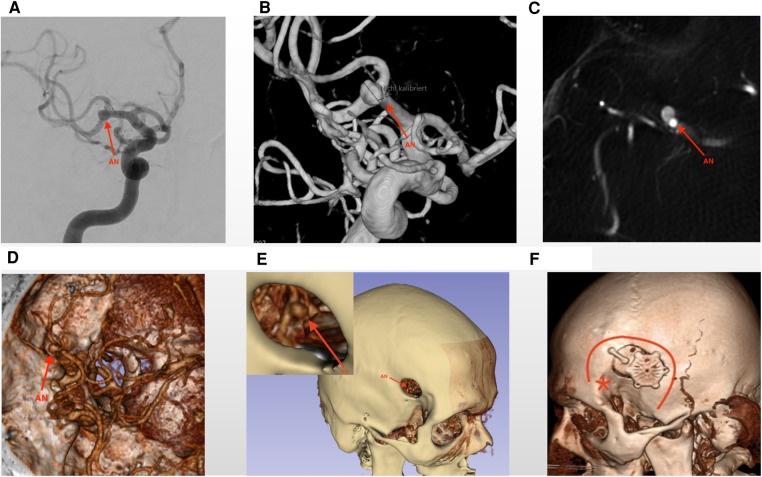
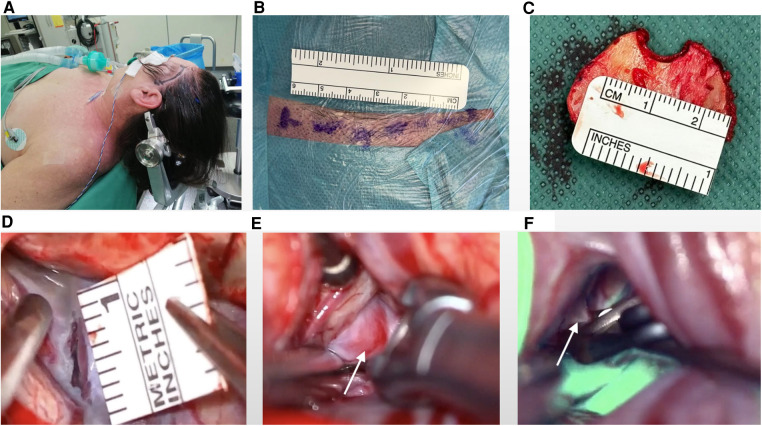
The increasing prevalence of unruptured intracranial aneurysms, detected through advanced brain imaging, necessitates a cautious approach to surgical intervention, with a focus on minimizing associated risks. This retrospective study explores the safety and better aesthetic outcomes of a Virtual Reality (VR) guided Focused Sylvian Approach (FSA) in comparison to the standard Pterional Surgical Approach (SPA) for the clipping of unruptured small-medium-size (<10 mm) Middle Cerebral Artery (MCA) aneurysms.
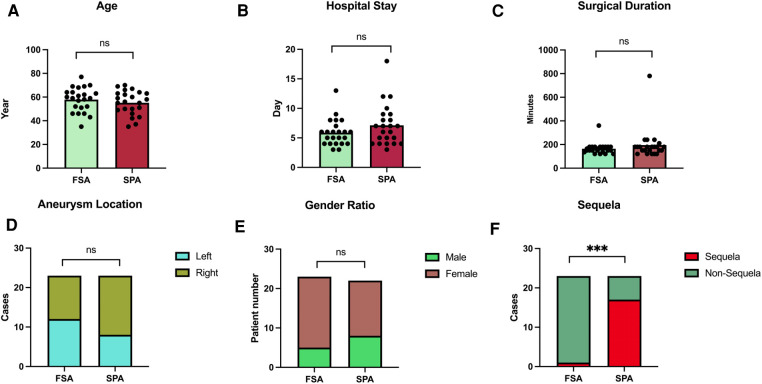
23 patients with 23 unruptured MCA aneurysms underwent the VR-guided FSA from June 2020 to September 2023, while 22 patients with 23 unruptured MCA aneurysms who underwent SPA were retrospectively recruited from the medical records database from January 2017 to May 2020. The comparative analysis involved surgical duration, postoperative complications, hospital stay, and a three-month follow-up patient's sequela survey.
All aneurysms were effectively treated. The FSA procedure demonstrated a shorter surgical duration compared to the SPA group (164 ± 48 min vs. 196 ± 133 min, = 0.2974). Despite a slightly higher median age in the FSA group (59 vs. 56 years), the median hospital stay was shorter in the FSA group (6 days) compared to the SPA group (7 days). The SPA group exhibited a higher incidence of complications (17/23) including cephalalgia, scar irritation, scar numbness, and temporal muscle dysfunction, compared to the FSA group (1/23), with a statistical significance of < 0.05. Although FSA cannot demonstrate significant surgical efficiency in surgical duration and hospitalization, its superior aesthetics and preservation of temporalis muscle function compared to the SPA group.
The VR-guided FSA offers improved aesthetics and preservation of muscle function compared to the SPA. Our retrospective study underscores the potential benefits of VR-guided, personalized, focused Sylvian approaches for managing unruptured small-medium-size MCA aneurysms.
通过先进的脑部成像检测到的未破裂颅内动脉瘤患病率不断上升,因此需要谨慎对待手术干预,重点是将相关风险降至最低。本回顾性研究探讨了虚拟现实(VR)引导下的侧裂聚焦入路(FSA)与标准翼点手术入路(SPA)相比,在夹闭未破裂的中小型(<10 mm)大脑中动脉(MCA)动脉瘤时的安全性和更好的美学效果。
2020年6月至2023年9月,23例患有23个未破裂MCA动脉瘤的患者接受了VR引导下的FSA,而2017年1月至2020年5月从病历数据库中回顾性招募了22例患有23个未破裂MCA动脉瘤且接受了SPA的患者。比较分析包括手术时长、术后并发症、住院时间以及三个月随访患者的后遗症调查。
所有动脉瘤均得到有效治疗。与SPA组相比,FSA手术的手术时长更短(164±48 分钟对196±133 分钟,=0.2974)。尽管FSA组的中位年龄略高(59岁对56岁),但FSA组的中位住院时间(6天)比SPA组(7天)更短。与FSA组(1/23)相比,SPA组的并发症发生率更高(17/23),包括头痛、瘢痕刺激、瘢痕麻木和颞肌功能障碍,差异有统计学意义<0.05。虽然FSA在手术时长和住院方面未显示出显著的手术效率优势,但其与SPA组相比具有更好的美学效果和颞肌功能保留。
与SPA相比,VR引导下的FSA具有更好的美学效果和肌肉功能保留。我们的回顾性研究强调了VR引导下的个性化、聚焦侧裂入路在处理未破裂的中小型MCA动脉瘤方面的潜在益处。