Hosur Vishnu, Erhardt Valerie, Hartig Elli, Lorenzo Kristian, Megathlin Hannah, Tarchini Basile
The Jackson Laboratory for Mammalian Genetics.
Jackson Laboratory.
Res Sq. 2024 Jul 3:rs.3.rs-4595968. doi: 10.21203/rs.3.rs-4595968/v1.
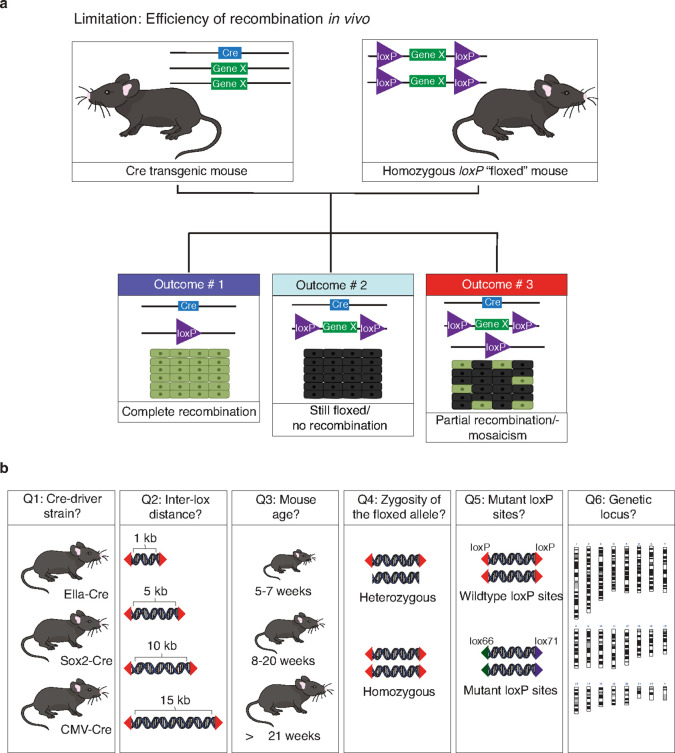
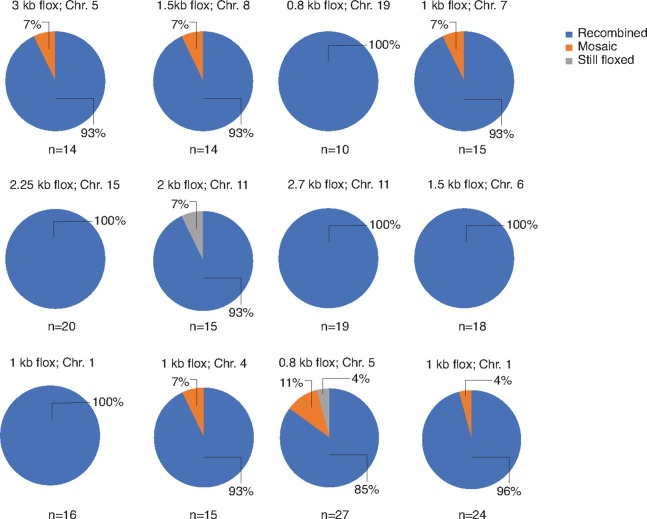
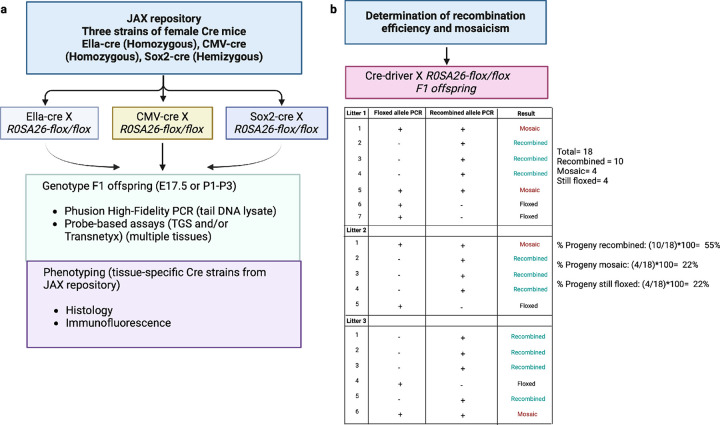
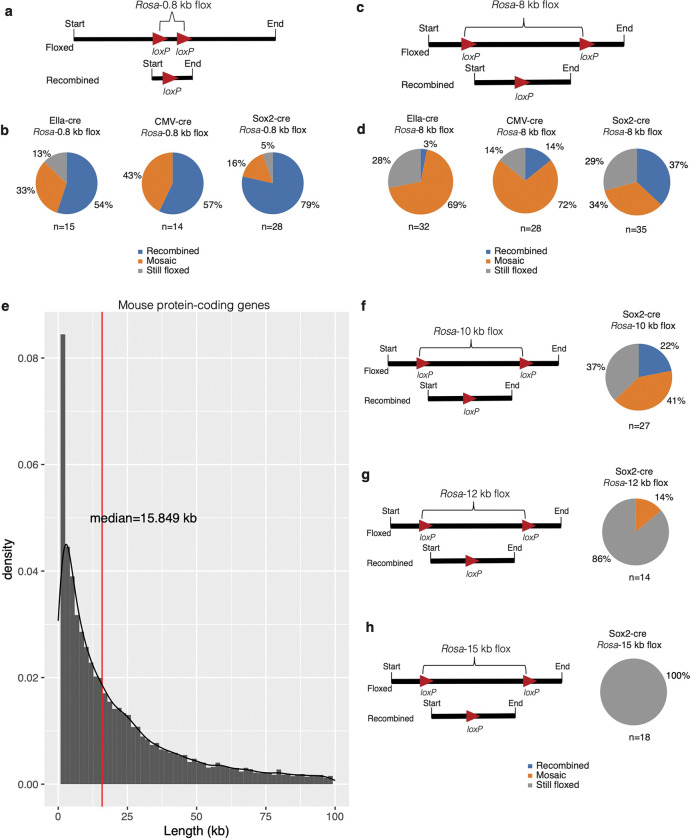
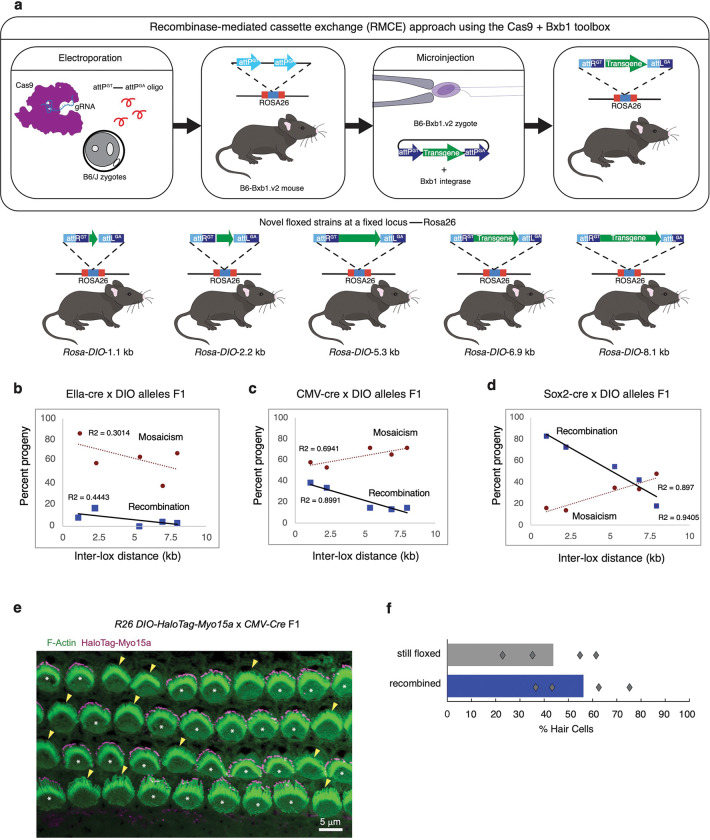
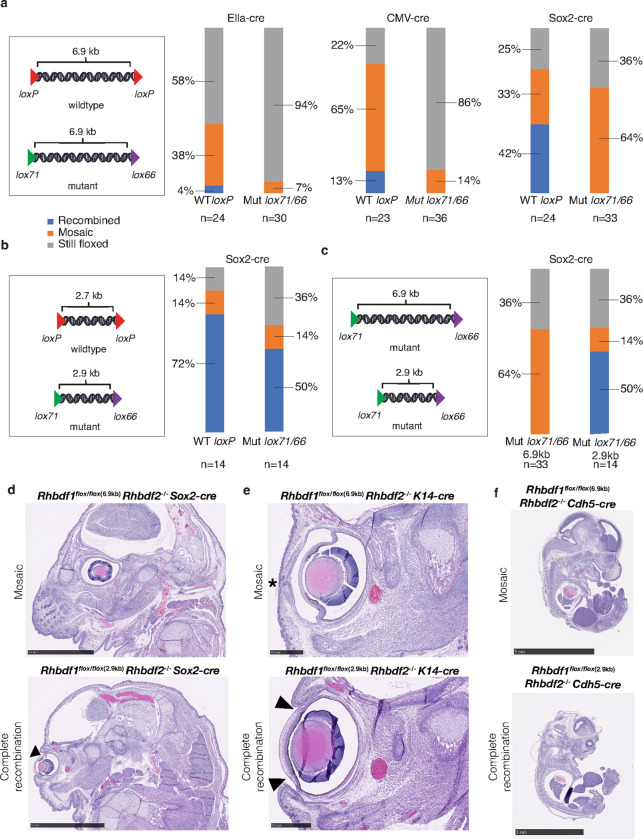
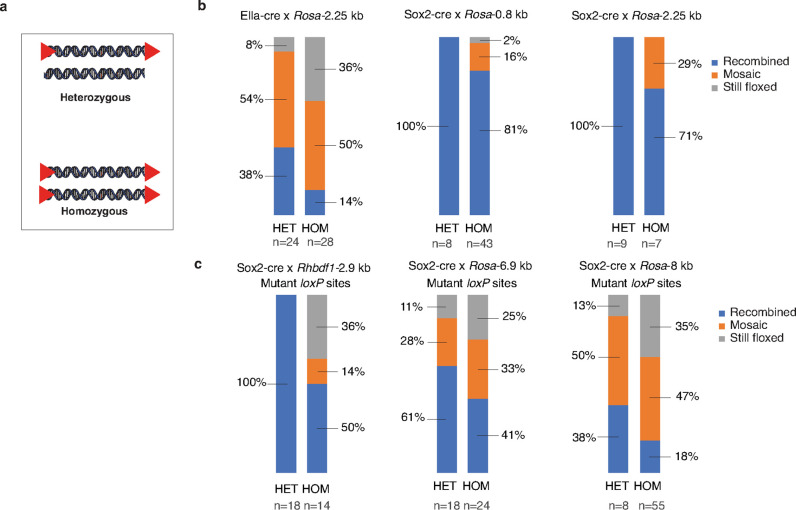
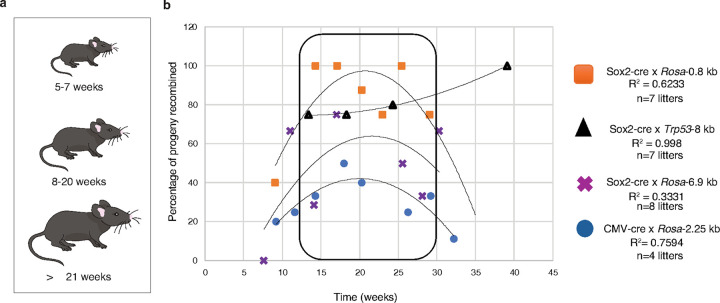
The Cre-Lox recombination system is a powerful tool in mouse genetics, offering spatial-temporal control over gene expression and facilitating the large-scale generation of conditional knockout mice. Its versatility also extends to other research models, such as rats, pigs, and zebrafish. However, the Cre-Lox technology presents a set of challenges that includes high costs, a time-intensive process, and the occurrence of unpredictable recombination events, which can lead to unexpected phenotypic outcomes. To better understand factors affecting recombination, we embarked on a systematic and genome-wide analysis of Cre-mediated recombination in mice. To ensure uniformity and reproducibility, we generated 11 novel strains with conditional alleles at the locus, utilizing a single inbred mouse strain background, C57BL/6J. We examined several factors influencing Cre-recombination, including the inter- distance, mutant sites, the zygosity of the conditional alleles, chromosomal location, and the age of the breeders. We discovered that the selection of the Cre-driver strain profoundly impacts recombination efficiency. We also found that successful and complete recombination is best achieved when sites are spaced between 1 to 4 kb apart, with mutant sites facilitating recombination at distances of 1 to 3 kb. Furthermore, we demonstrate that complete recombination does not occur at an inter- distance of ≥ 15 kb with wildtype sites, nor at a distance of ≥ 7 kb with mutant sites. Interestingly, the age of the Cre-driver mouse at the time of breeding emerged as a critical factor in recombination efficiency, with best results observed between 8 and 20 weeks old. Moreover, crossing heterozygous floxed alleles with the Cre-driver strain resulted in more efficient recombination than using homozygous floxed alleles. Lastly, maintaining an inter- distance of 4 kb or less ensures efficient recombination of the conditional allele, regardless of the chromosomal location. While CRISPR/Cas has revolutionized genome editing in mice, Cre-Lox technology remains a cornerstone for the generation of sophisticated alleles and for precise control of gene expression in mice. The knowledge gained here will enable investigators to select a Cre-Lox approach that is most efficient for their desired outcome in the generation of both germline and non-germline mouse models of human disease, thereby reducing time and cost of Cre-Lox technology-mediated genome modification.
Cre-Lox重组系统是小鼠遗传学中的一种强大工具,可对基因表达进行时空控制,并有助于大规模生成条件性敲除小鼠。其通用性还扩展到其他研究模型,如大鼠、猪和斑马鱼。然而,Cre-Lox技术带来了一系列挑战,包括成本高、过程耗时以及不可预测的重组事件的发生,这可能导致意外的表型结果。为了更好地理解影响重组的因素,我们对小鼠中Cre介导的重组进行了系统的全基因组分析。为确保一致性和可重复性,我们利用单一近交小鼠品系背景C57BL/6J,在该位点产生了11个带有条件等位基因的新型品系。我们研究了影响Cre重组的几个因素,包括间隔距离、突变位点、条件等位基因的纯合度、染色体位置以及繁殖者的年龄。我们发现Cre驱动品系的选择对重组效率有深远影响。我们还发现,当位点间隔在1至4 kb之间时,成功且完全的重组效果最佳,突变位点在1至3 kb的距离处促进重组。此外,我们证明,野生型位点间隔≥15 kb时不会发生完全重组,突变位点间隔≥7 kb时也不会发生完全重组。有趣的是,繁殖时Cre驱动小鼠的年龄成为重组效率的关键因素,在8至20周龄时观察到最佳结果。此外,将杂合的floxed等位基因与Cre驱动品系杂交比使用纯合的floxed等位基因产生更有效的重组。最后,无论染色体位置如何,保持4 kb或更小的间隔距离可确保条件等位基因的有效重组。虽然CRISPR/Cas彻底改变了小鼠基因组编辑,但Cre-Lox技术仍然是生成复杂等位基因以及精确控制小鼠基因表达的基石。这里获得的知识将使研究人员能够选择一种Cre-Lox方法,该方法对于他们在生成人类疾病的种系和非种系小鼠模型中实现期望结果最为有效,从而减少Cre-Lox技术介导的基因组修饰的时间和成本。