Debette Stephanie, Caro Ilana, Western Daniel, Namba Shinichi, Sun Na, Kawaguchi Shuji, He Yunye, Fujita Masashi, Roshchupkin Gennady, D'Aoust Tim, Duperron Marie-Gabrielle, Sargurupremraj Murali, Tsuchida Ami, Koido Masaru, Ahmadi Marziehsadat, Yang Chengran, Timsina Jigyasha, Ibanez Laura, Matsuda Koichi, Suzuki Yutaka, Oda Yoshiya, Kanai Akinori, Jandaghi Pouria, Munter Hans Markus, Auld Dan, Astafeva Iana, Puerta Raquel, Rotter Jerome, Psaty Bruce, Bis Joshua, Longstreth Will, Couffinhal Thierry, Garcia-Gonzalez Pablo, Pytel Vanesa, Marquié Marta, Cano Amanda, Boada Mercè, Joliot Marc, Lathrop Mark, Le Grand Quentin, Launer Lenore, Wardlaw Joanna, Heiman Myriam, Ruiz Agustin, Matthews Paul, Seshadri Sudha, Fornage Myriam, Adams Hieab, Mishra Aniket, Trégouët David-Alexandre, Okada Yukinori, Kellis Manolis, De Jager Philip, Tzourio Christophe, Kamatani Yoichiro, Matsuda Fumihiko, Cruchaga Carlos
University of Bordeaux.
Department of Psychiatry, Washington University School of Medicine, St. Louis, MO, USA.
Res Sq. 2024 Jul 2:rs.3.rs-4535534. doi: 10.21203/rs.3.rs-4535534/v1.
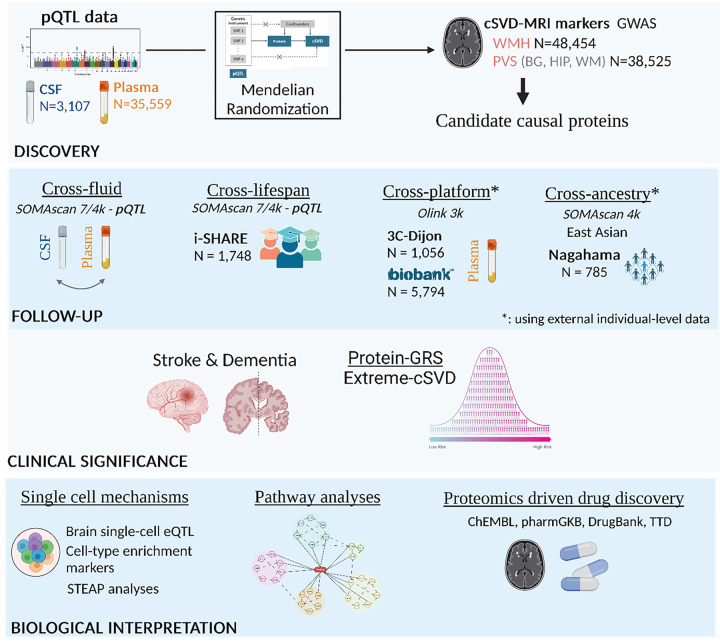
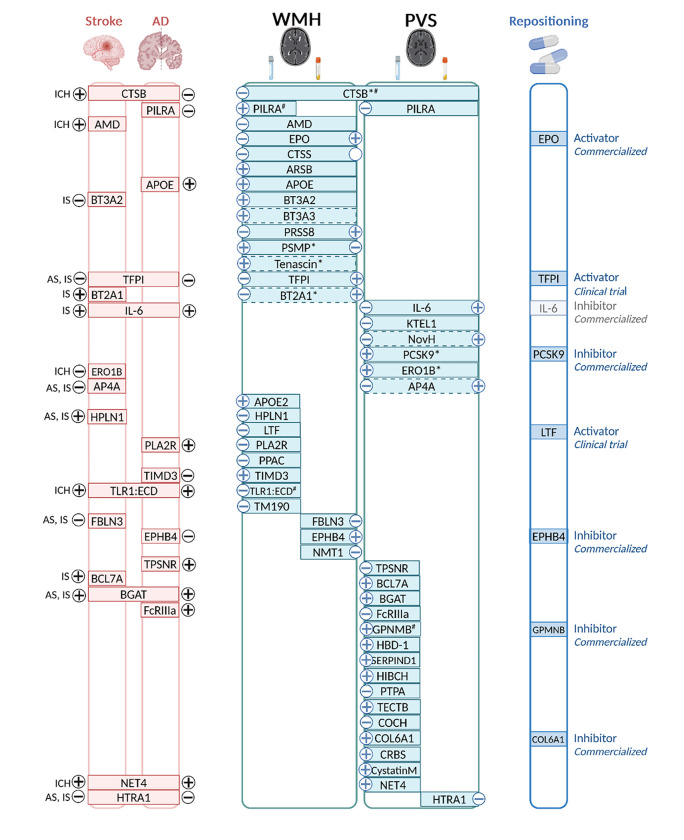
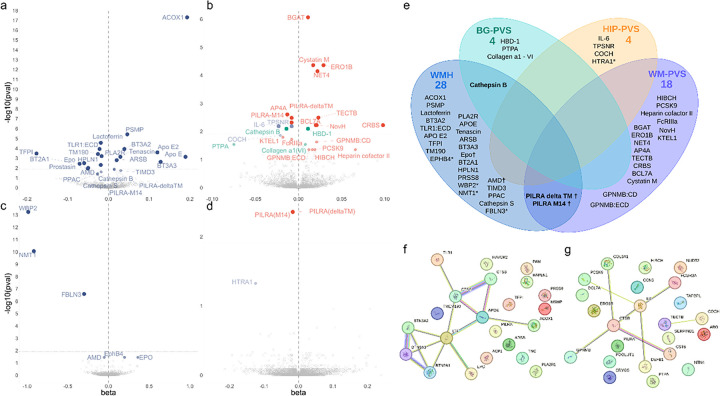
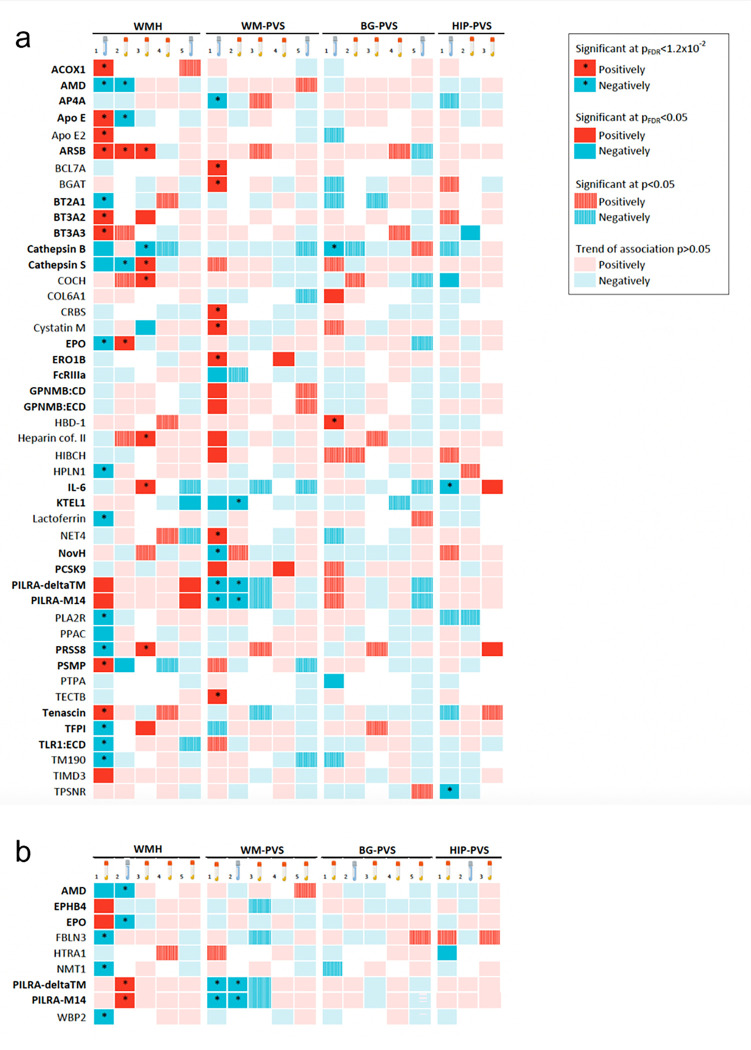
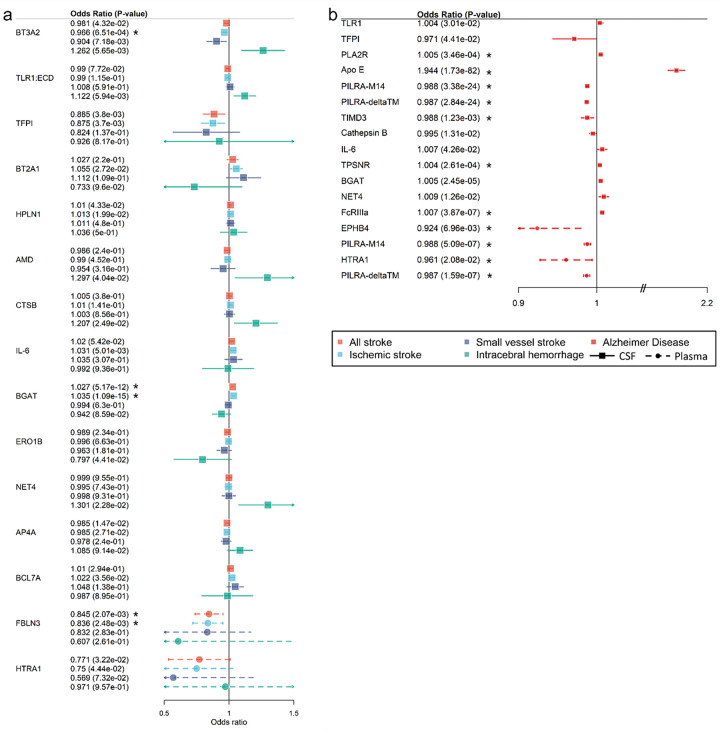
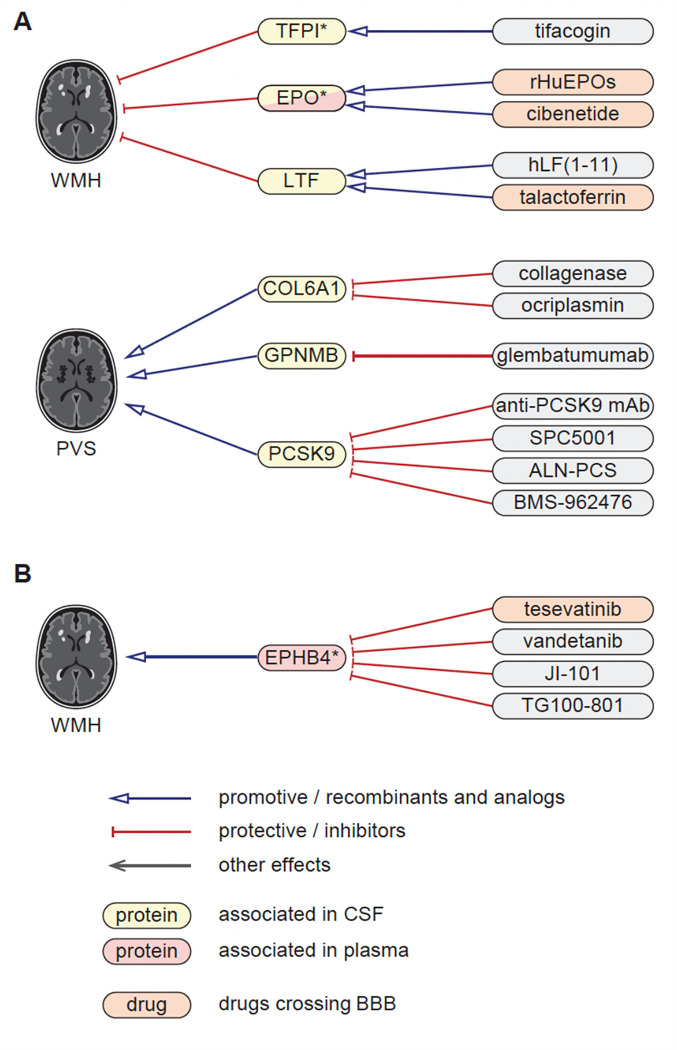
Cerebral small vessel disease (cSVD) is a leading cause of stroke and dementia with no specific mechanism-based treatment. We used Mendelian randomization to combine a unique cerebrospinal fluid (CSF) and plasma pQTL resource with the latest European-ancestry GWAS of MRI-markers of cSVD (white matter hyperintensities, perivascular spaces). We describe a new biological fingerprint of 49 protein-cSVD associations, predominantly in the CSF. We implemented a multipronged follow-up, across fluids, platforms, and ancestries (Europeans and East-Asian), including testing associations of direct plasma protein measurements with MRI-cSVD. We highlight 16 proteins robustly associated in both CSF and plasma, with 24/4 proteins identified in CSF/plasma only. cSVD-proteins were enriched in extracellular matrix and immune response pathways, and in genes enriched in microglia and specific microglial states (integration with single-nucleus RNA sequencing). Immune-related proteins were associated with MRI-cSVD already at age twenty. Half of cSVD-proteins were associated with stroke, dementia, or both, and seven cSVD-proteins are targets for known drugs (used for other indications in directions compatible with beneficial therapeutic effects. This first cSVD proteogenomic signature opens new avenues for biomarker and therapeutic developments.
脑小血管病(cSVD)是导致中风和痴呆的主要原因,目前尚无基于特定机制的治疗方法。我们利用孟德尔随机化方法,将独特的脑脊液(CSF)和血浆蛋白质定量性状位点(pQTL)资源与最新的欧洲血统cSVD磁共振成像(MRI)标记物全基因组关联研究(GWAS)(白质高信号、血管周围间隙)相结合。我们描述了49种蛋白质与cSVD关联的新生物学特征,主要存在于脑脊液中。我们实施了多方面的后续研究,涉及不同液体、平台和血统(欧洲人和东亚人),包括检测直接血浆蛋白质测量值与MRI-cSVD之间的关联。我们重点介绍了16种在脑脊液和血浆中均有强烈关联的蛋白质,其中24/4种蛋白质仅在脑脊液/血浆中被鉴定出来。cSVD相关蛋白质在细胞外基质和免疫反应途径以及在小胶质细胞和特定小胶质细胞状态中富集的基因中富集(与单核RNA测序整合)。免疫相关蛋白质在20岁时就与MRI-cSVD相关。一半的cSVD相关蛋白质与中风、痴呆或两者都有关联,并且有7种cSVD相关蛋白质是已知药物的靶点(用于其他适应症,其作用方向与有益治疗效果相符)。这第一个cSVD蛋白质基因组特征为生物标志物和治疗方法的开发开辟了新途径。