Department of Pathology, Faculty of Medicine, Chulalongkorn University, Bangkok, 10330, Thailand.
Functional Proteomics Technology Laboratory, National Center for Genetic Engineering and Biotechnology, National Science and Technology Development Agency, Pathumthani 12120, Thailand.
Sci Rep. 2024 Jul 16;14(1):16343. doi: 10.1038/s41598-024-67079-6.
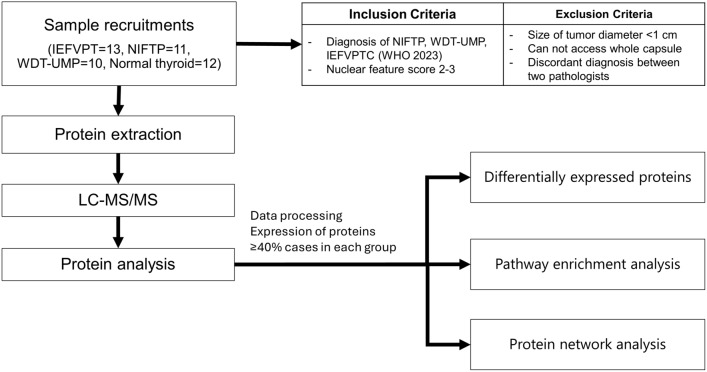
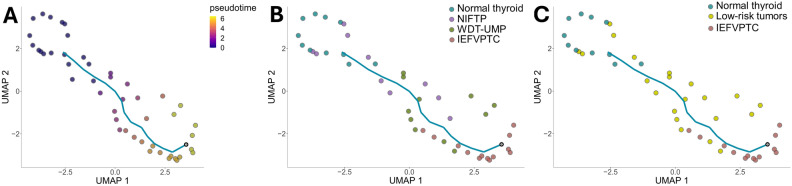
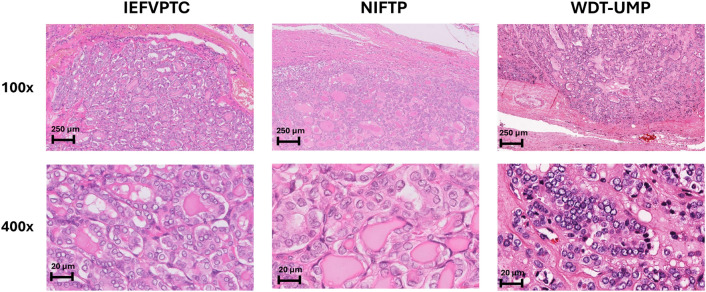
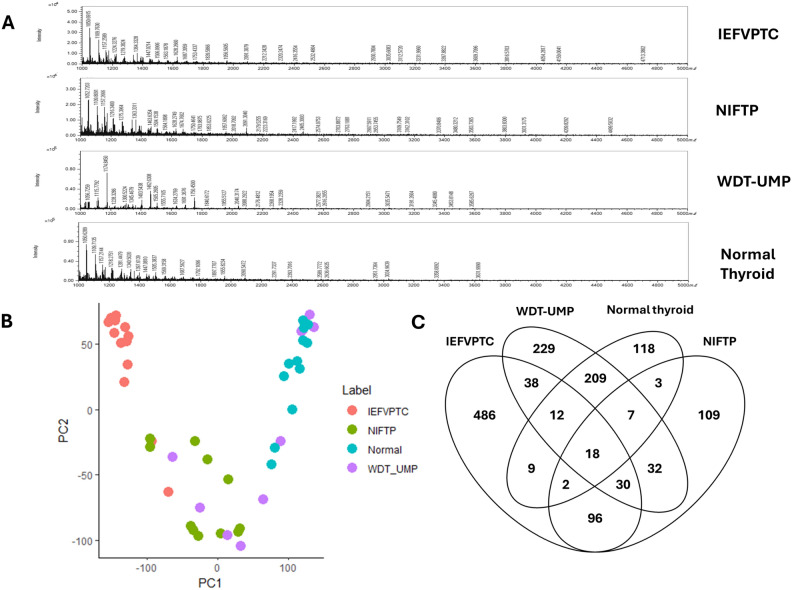
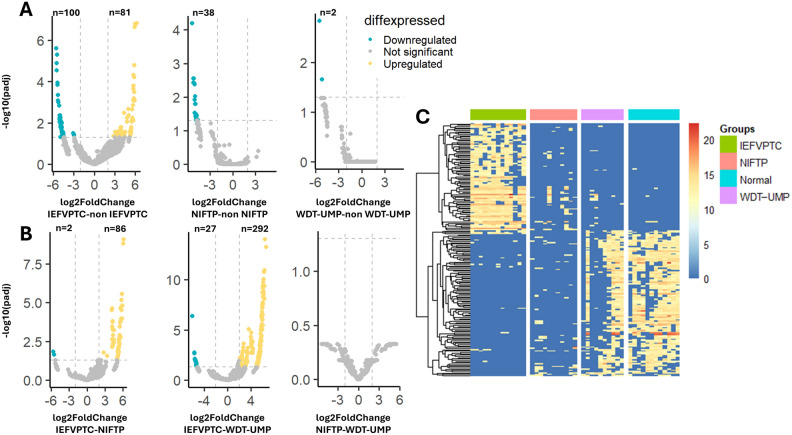
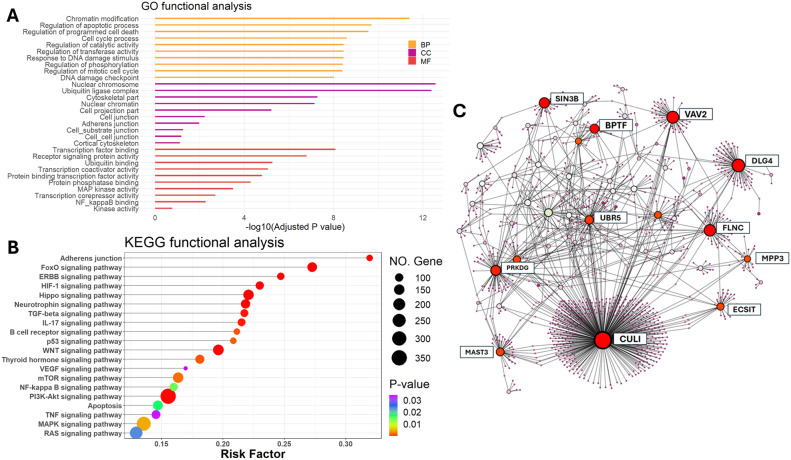
Diagnosing encapsulated follicular-patterned thyroid tumors like Invasive Encapsulated Follicular Variant of Papillary Thyroid Carcinoma (IEFVPTC), Non-invasive Follicular Thyroid Neoplasm with Papillary-like Nuclear Features (NIFTP), and Well-Differentiated Tumor of Uncertain Malignant Potential (WDT-UMP) remains challenging due to their morphological and molecular similarities. This study aimed to investigate the protein distinctions among these three thyroid tumors and discover biological tumorigenesis through proteomic analysis. We employed total shotgun proteome analysis allowing to discover the quantitative expression of over 1398 proteins from 12 normal thyroid tissues, 13 IEFVPTC, 11 NIFTP, and 10 WDT-UMP. Principal component analysis revealed a distinct separation of IEFVPTC and normal tissue samples, distinguishing them from the low-risk tumor group (NIFTP and WDT-UMP). IEFVPTC exhibited the highest number of differentially expressed proteins (DEPs) compared to the other tumors. No discriminatory proteins between NIFTP and WDT-UMP were identified. Moreover, DEPs in IEFVPTC were significantly associated with thyroid tumor progression pathways. Certain hub genes linked to the response of immune checkpoint inhibitor therapy, revealing the potential predictor of prognosis. In conclusion, the proteomic profile of IEFVPTC differs from that of low-risk tumors. These findings may provide valuable insights into tumor biology and offer a basis for developing novel therapeutic strategies for follicular-patterned thyroid neoplasms.
诊断包裹滤泡模式的甲状腺肿瘤,如侵袭性包裹滤泡型甲状腺乳头状癌(IEFVPTC)、非侵袭性滤泡性甲状腺肿瘤伴乳头状核特征(NIFTP)和低度恶性潜能的不确定恶性肿瘤(WDT-UMP),由于其形态学和分子学上的相似性,仍然具有挑战性。本研究旨在通过蛋白质组学分析研究这三种甲状腺肿瘤之间的蛋白质差异,并发现生物学肿瘤发生的机制。我们采用了全shotgun 蛋白质组分析方法,能够从 12 个正常甲状腺组织、13 个 IEFVPTC、11 个 NIFTP 和 10 个 WDT-UMP 中发现超过 1398 种蛋白质的定量表达。主成分分析显示,IEFVPTC 和正常组织样本明显分离,与低风险肿瘤组(NIFTP 和 WDT-UMP)区分开来。与其他肿瘤相比,IEFVPTC 表现出最高数量的差异表达蛋白(DEPs)。在 NIFTP 和 WDT-UMP 之间没有发现有区别的蛋白质。此外,IEFVPTC 中的 DEPs 与甲状腺肿瘤进展途径显著相关。某些与免疫检查点抑制剂治疗反应相关的关键基因,揭示了潜在的预后预测因子。总之,IEFVPTC 的蛋白质组谱与低风险肿瘤不同。这些发现可能为肿瘤生物学提供有价值的见解,并为开发滤泡模式甲状腺肿瘤的新治疗策略提供基础。