State Key Laboratory of Chemical Biology, Shanghai Institute of Organic Chemistry, University of Chinese Academy of Sciences, 200032, Shanghai, China.
Shanghai Institute for Advanced Immunochemical Studies and School of Life Science and Technology, ShanghaiTech University, 393 Middle Huaxia Road, 201210, Shanghai, China.
Commun Biol. 2024 Jul 16;7(1):867. doi: 10.1038/s42003-024-06559-x.
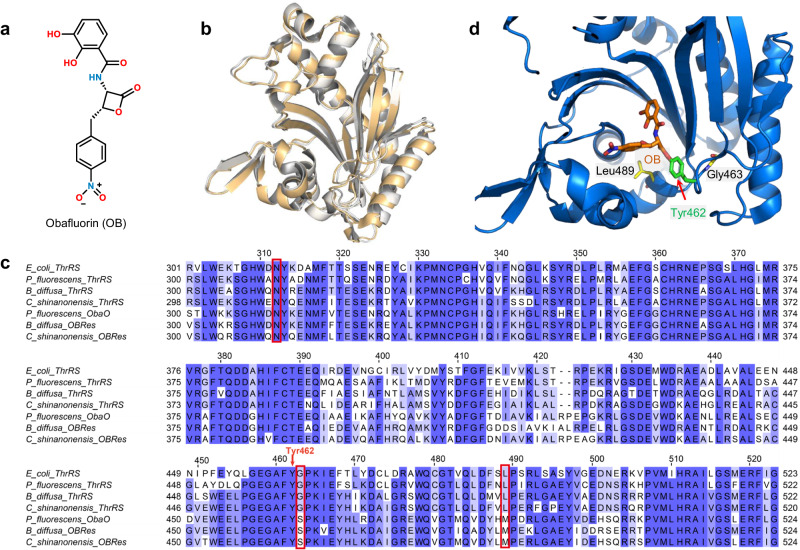
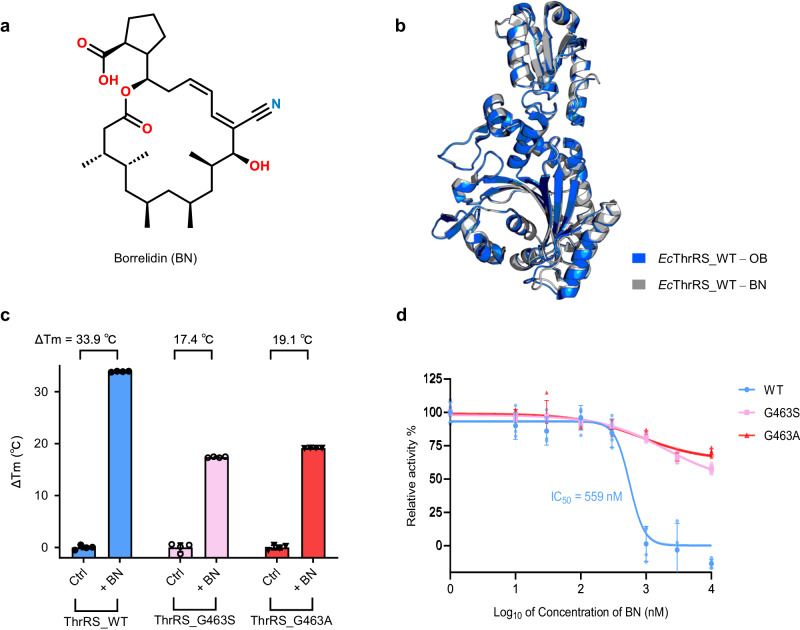
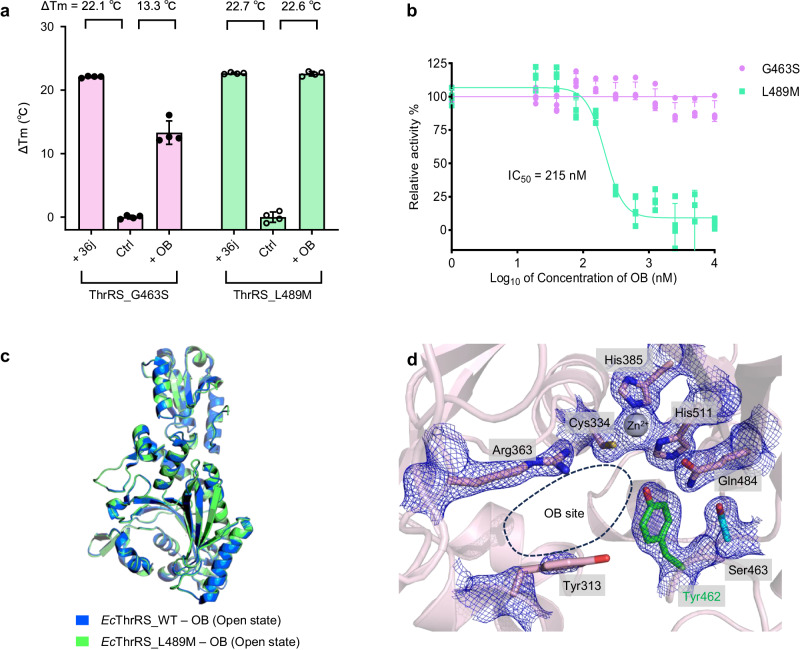
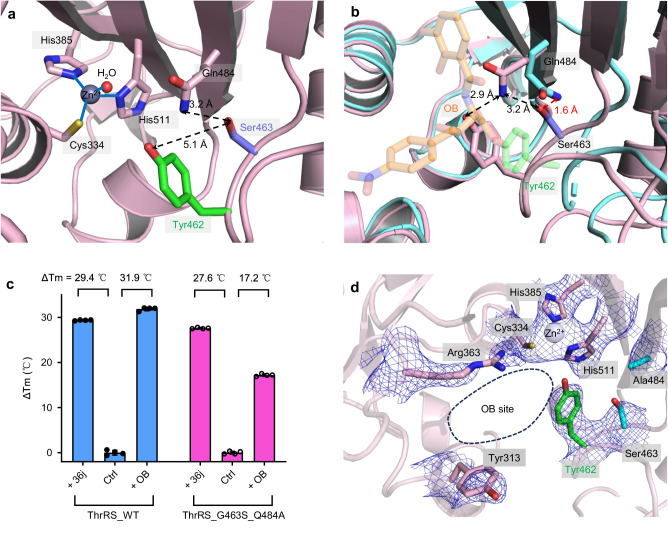
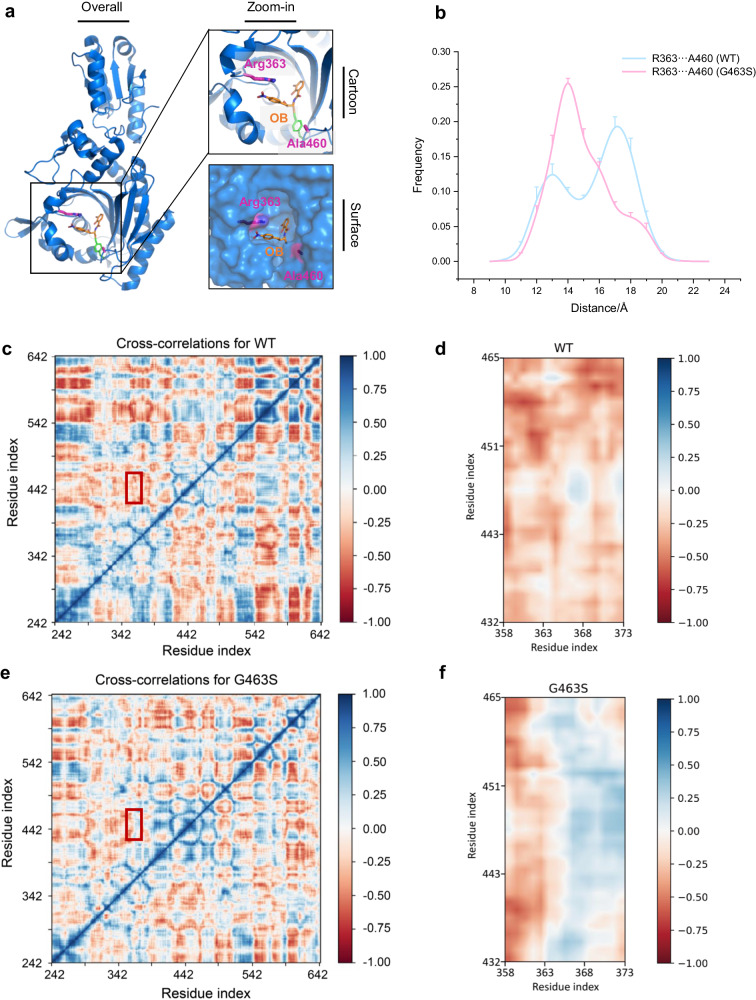
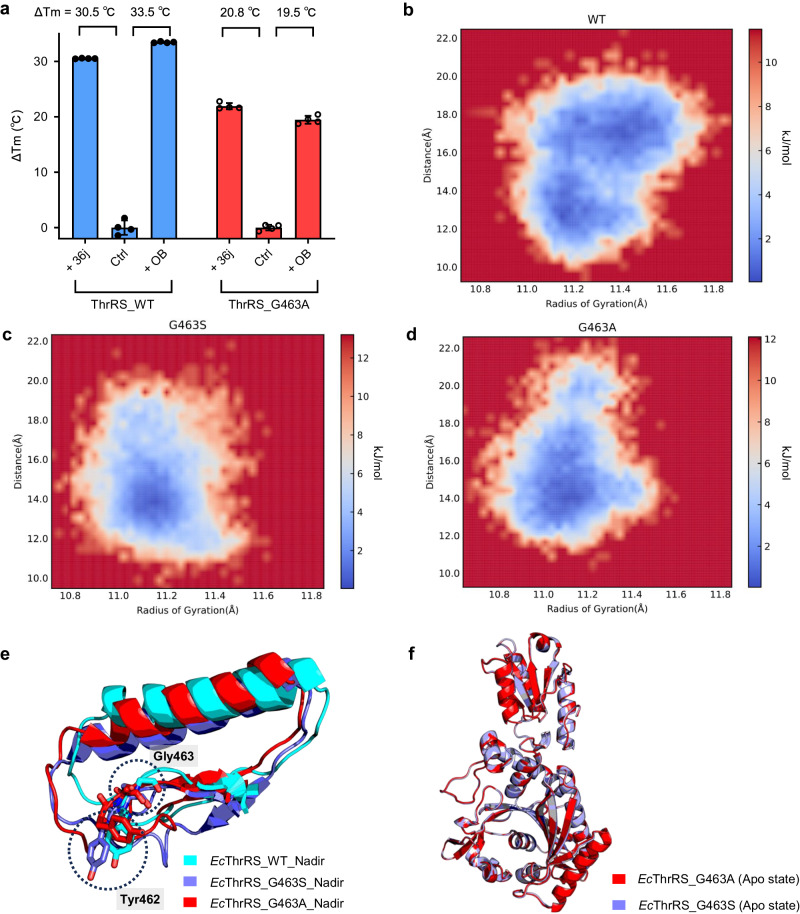
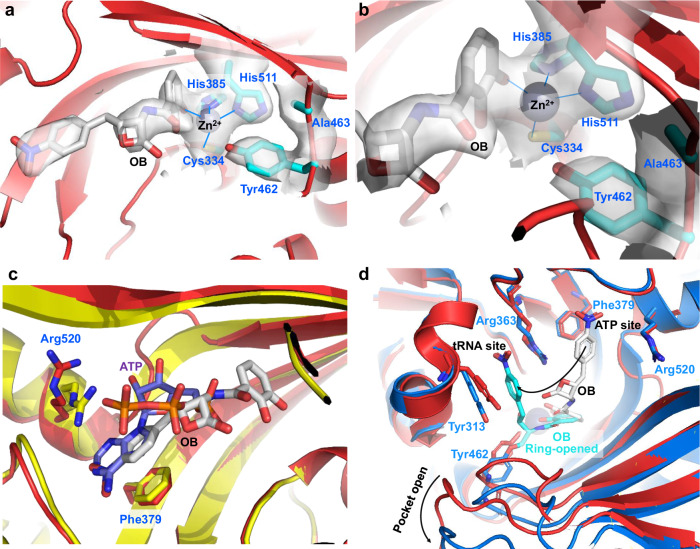
The function of proteins depends on their correct structure and proper dynamics. Understanding the dynamics of target proteins facilitates drug design and development. However, dynamic information is often hidden in the spatial structure of proteins. It is important but difficult to identify the specific residues that play a decisive role in protein dynamics. Here, we report that a critical glycine residue (Gly463) dominates the motion of threonyl-tRNA synthetase (ThrRS) and the sensitivity of the enzyme to antibiotics. Obafluorin (OB), a natural antibiotic, is a novel covalent inhibitor of ThrRS. The binding of OB induces a large conformational change in ThrRS. Through five crystal structures, biochemical and biophysical analyses, and computational simulations, we found that Gly463 plays an important role in the dynamics of ThrRS. Mutating this flexible residue into more rigid residues did not damage the enzyme's three-dimensional structure but significantly improved the thermal stability of the enzyme and suppressed its ability to change conformation. These mutations cause resistance of ThrRS to antibiotics that are conformationally selective, such as OB and borrelidin. This work not only elucidates the molecular mechanism of the self-resistance of OB-producing Pseudomonas fluorescens but also emphasizes the importance of backbone kinetics for aminoacyl-tRNA synthetase-targeting drug development.
蛋白质的功能取决于其正确的结构和适当的动力学。了解靶蛋白的动力学有助于药物设计和开发。然而,动态信息通常隐藏在蛋白质的空间结构中。确定在蛋白质动力学中起决定性作用的特定残基非常重要,但也很困难。在这里,我们报告说,一个关键的甘氨酸残基(Gly463)主导着苏氨酰-tRNA 合成酶(ThrRS)的运动和酶对抗生素的敏感性。Obafluorin(OB)是一种新型的 ThrRS 共价抑制剂,是一种天然抗生素。OB 的结合诱导 ThrRS 发生大的构象变化。通过五个晶体结构、生化和生物物理分析以及计算模拟,我们发现 Gly463 在 ThrRS 的动力学中起着重要作用。将这个灵活的残基突变为更刚性的残基不会破坏酶的三维结构,但会显著提高酶的热稳定性,并抑制其构象变化的能力。这些突变导致 ThrRS 对 OB 和borrelidin 等构象选择性抗生素产生耐药性。这项工作不仅阐明了产生 OB 的荧光假单胞菌自身耐药的分子机制,还强调了骨架动力学对靶向氨酰-tRNA 合成酶的药物开发的重要性。