
主动脉瓣疾病背景下的免疫疗法
Immunotherapy in the Context of Aortic Valve Diseases.
作者信息
Bartoli-Leonard Francesca, Pennel Tim, Caputo Massimo
机构信息
Bristol Medical School, Faculty of Health Sciences, University of Bristol, Bristol, UK.
Bristol Heart Institute, University Hospital Bristol and Weston NHS Foundation Trust, Bristol, UK.
出版信息
Cardiovasc Drugs Ther. 2024 Dec;38(6):1173-1185. doi: 10.1007/s10557-024-07608-7. Epub 2024 Jul 17.
PURPOSE
Aortic valve disease (AVD) affects millions of people around the world, with no pharmacological intervention available. Widely considered a multi-faceted disease comprising both regurgitative pathogenesis, in which retrograde blood flows back through to the left ventricle, and aortic valve stenosis, which is characterized by the thickening, fibrosis, and subsequent mineralization of the aortic valve leaflets, limiting the anterograde flow through the valve, surgical intervention is still the main treatment, which incurs considerable risk to the patient.
RESULTS
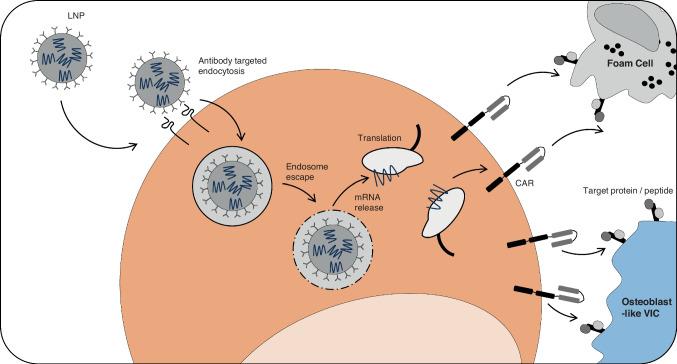
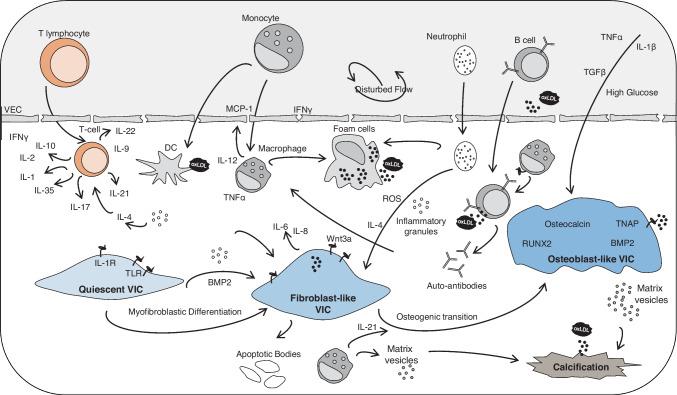
Though originally thought of as a passive degeneration of the valve or a congenital malformation that has occurred before birth, the paradigm of AVD is shifting, and research into the inflammatory drivers of valve disease as a potential mechanism to modulate the pathobiology of this life-limiting pathology is taking center stage. Following limited success in mainstay therapeutics such as statins and mineralisation inhibitors, immunomodulatory strategies are being developed. Immune cell therapy has begun to be adopted in the cancer field, in which T cells (chimeric antigen receptor (CAR) T cells) are isolated from the patient, programmed to attack the cancer, and then re-administered to the patient. Within cardiac research, a novel T cell-based therapeutic approach has been developed to target lipid nanoparticles responsible for increasing cardiac fibrosis in a failing heart. With clonally expanded T-cell populations recently identified within the diseased valve, their unique epitope presentation may serve to identify novel targets for the treatment of valve disease.
CONCLUSION
Taken together, targeted T-cell therapy may hold promise as a therapeutic platform to target a multitude of diseases with an autoimmune aspect, and this review aims to frame this in the context of cardiovascular disease, delineating what is currently known in the field, both clinically and translationally.
目的
主动脉瓣疾病(AVD)影响着全球数百万人,目前尚无可用的药物干预措施。AVD被广泛认为是一种多方面的疾病,包括反流性发病机制(即逆行血流回流至左心室)和主动脉瓣狭窄(其特征是主动脉瓣叶增厚、纤维化并随后矿化,限制了通过瓣膜的顺行血流),手术干预仍是主要治疗方法,但会给患者带来相当大的风险。
结果
尽管AVD最初被认为是瓣膜的被动退化或出生前发生的先天性畸形,但AVD的范式正在转变,对瓣膜疾病炎症驱动因素的研究作为调节这种危及生命病理的病理生物学的潜在机制正成为焦点。在他汀类药物和矿化抑制剂等主流治疗方法取得有限成功后,免疫调节策略正在被开发。免疫细胞疗法已开始应用于癌症领域,即从患者体内分离出T细胞(嵌合抗原受体(CAR)T细胞),对其进行编程以攻击癌症,然后再重新给予患者。在心脏研究中,已开发出一种基于T细胞的新型治疗方法,以靶向导致衰竭心脏中心脏纤维化增加的脂质纳米颗粒。最近在患病瓣膜中发现了克隆扩增的T细胞群体,它们独特的表位呈现可能有助于识别瓣膜疾病治疗的新靶点。
结论
综上所述,靶向T细胞疗法有望成为治疗多种具有自身免疫方面疾病的治疗平台,本综述旨在将其置于心血管疾病的背景下进行阐述,勾勒出该领域目前在临床和转化方面的已知情况。
 Zotero 插件