Mikula Peter, Bulla Martin, Blumstein Daniel T, Benedetti Yanina, Floigl Kristina, Jokimäki Jukka, Kaisanlahti-Jokimäki Marja-Liisa, Markó Gábor, Morelli Federico, Møller Anders Pape, Siretckaia Anastasiia, Szakony Sára, Weston Michael A, Zeid Farah Abou, Tryjanowski Piotr, Albrecht Tomáš
TUM School of Life Sciences, Ecoclimatology, Technical University of Munich, 85354, Freising, Germany.
Institute for Advanced Study, Technical University of Munich, 85748, Garching, Germany.
Commun Biol. 2024 Jul 17;7(1):874. doi: 10.1038/s42003-024-06387-z.
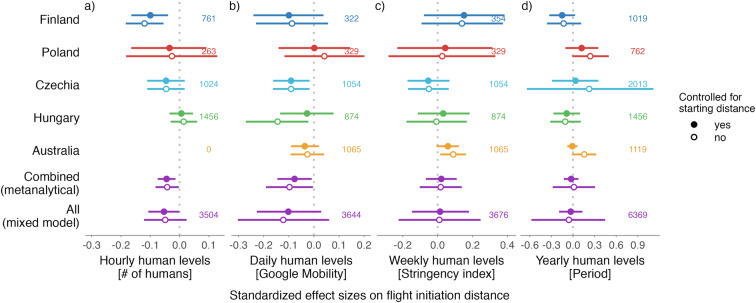
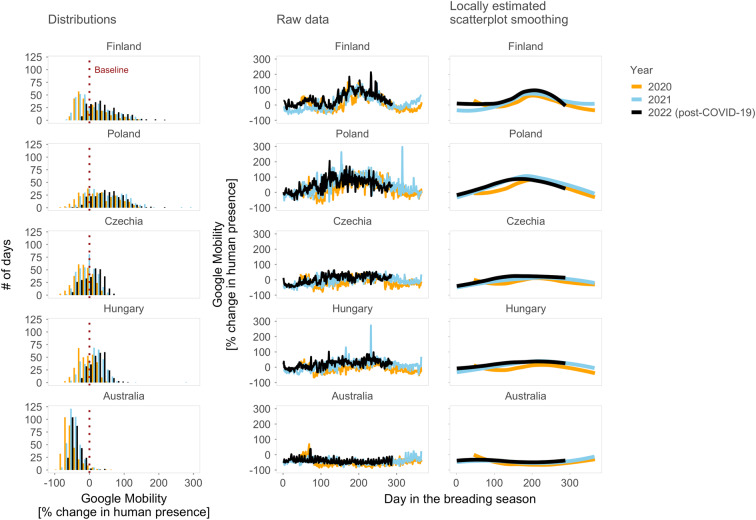
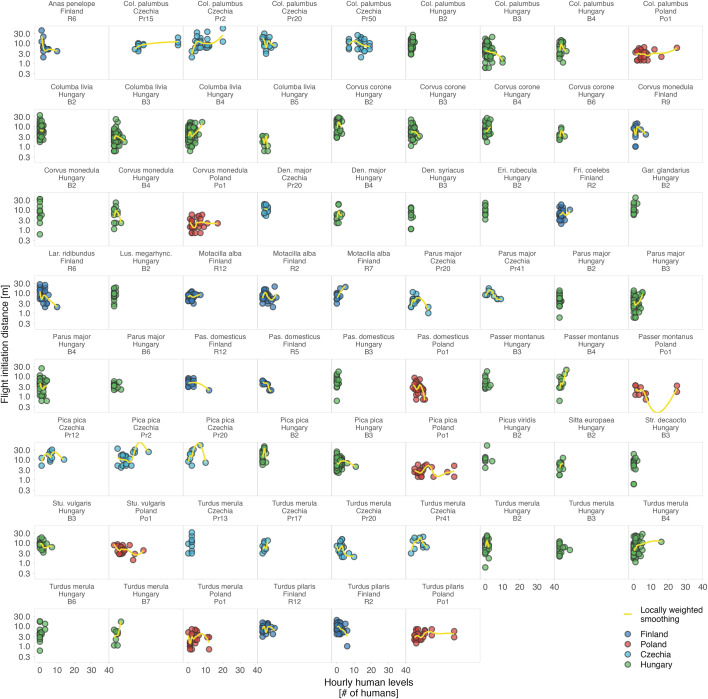
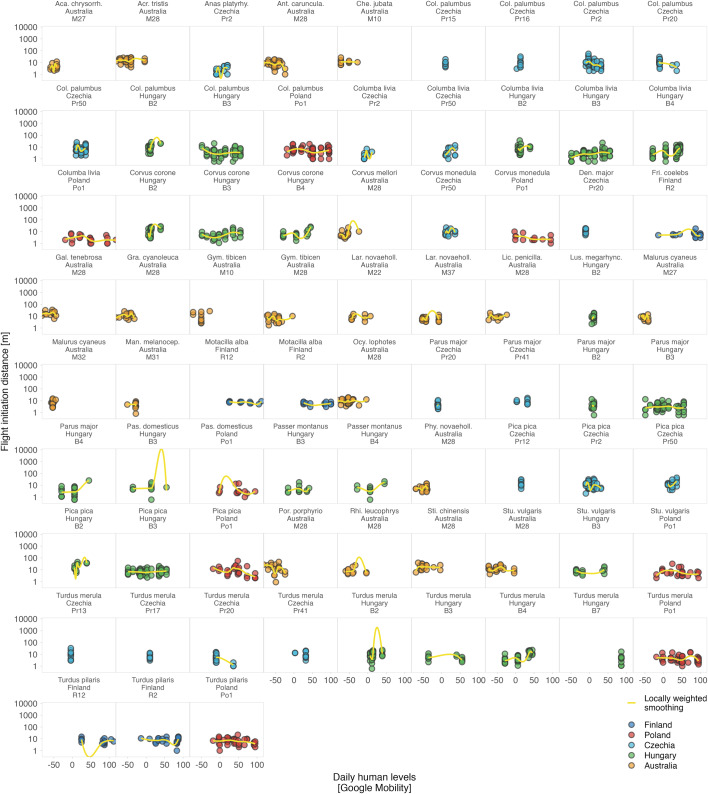
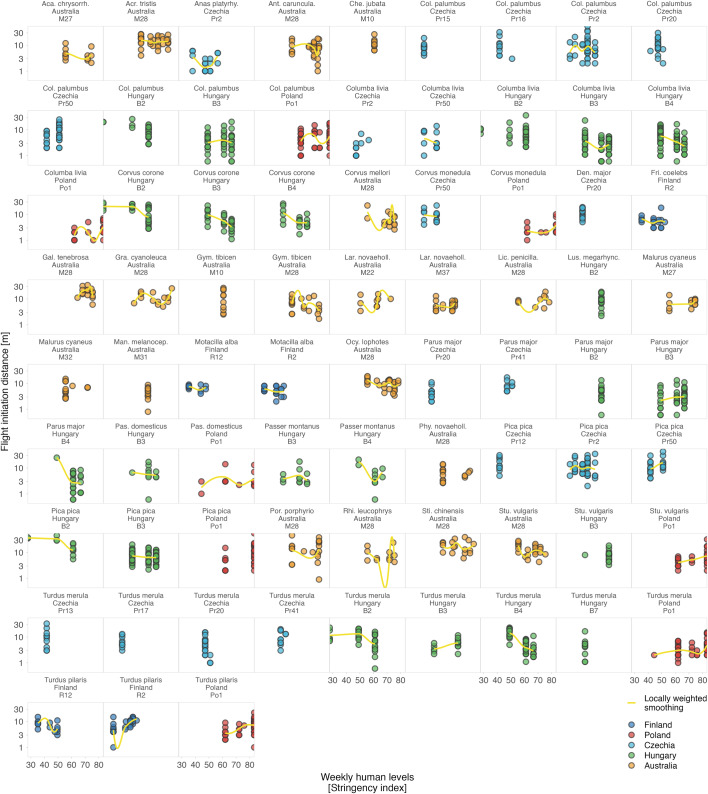
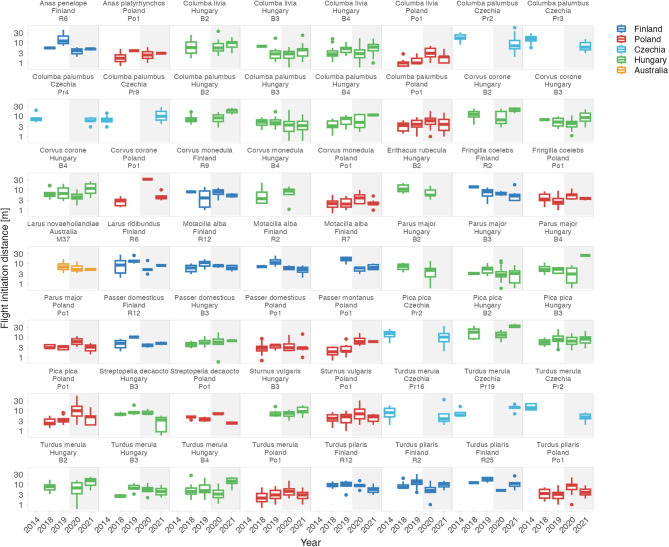
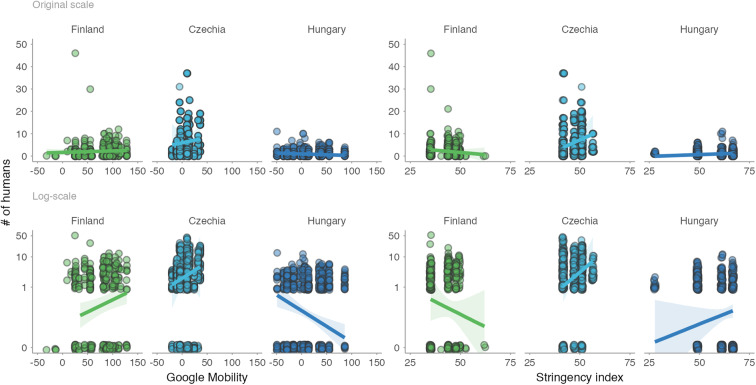
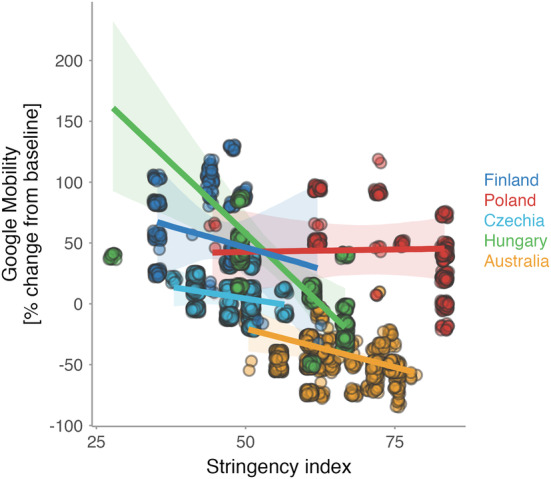
The coronavirus disease 2019 (COVID-19) pandemic and respective shutdowns dramatically altered human activities, potentially changing human pressures on urban-dwelling animals. Here, we use such COVID-19-induced variation in human presence to evaluate, across multiple temporal scales, how urban birds from five countries changed their tolerance towards humans, measured as escape distance. We collected 6369 escape responses for 147 species and found that human numbers in parks at a given hour, day, week or year (before and during shutdowns) had a little effect on birds' escape distances. All effects centered around zero, except for the actual human numbers during escape trial (hourly scale) that correlated negatively, albeit weakly, with escape distance. The results were similar across countries and most species. Our results highlight the resilience of birds to changes in human numbers on multiple temporal scales, the complexities of linking animal fear responses to human behavior, and the challenge of quantifying both simultaneously in situ.
2019年冠状病毒病(COVID-19)大流行及相应的封锁措施极大地改变了人类活动,可能改变了人类对城市动物的压力。在此,我们利用COVID-19导致的人类出现情况变化,在多个时间尺度上评估来自五个国家的城市鸟类如何改变它们对人类的容忍度,以逃避距离来衡量。我们收集了147个物种的6369次逃避反应,发现给定小时、日、周或年(封锁前和封锁期间)公园内的人类数量对鸟类的逃避距离影响很小。所有影响都集中在零左右,除了逃避试验期间(小时尺度)的实际人类数量与逃避距离呈负相关,尽管相关性较弱。各国和大多数物种的结果相似。我们的结果突出了鸟类在多个时间尺度上对人类数量变化的恢复力、将动物恐惧反应与人类行为联系起来的复杂性,以及在实地同时对两者进行量化的挑战。