Li Shuimei, Li Hongyan, Lu Lin, Shao Gaoneng, Guo Zhenling, He Yuntao, Wang Yong, Yang Xiaohui, Chen Mingxue, Hu Xianqiao
Rice Product Quality Supervision and Inspection Center, Ministry of Agriculture and Rural Affairs, China National Rice Research Institute, Hangzhou 310006, Zhejiang, China.
Guizhou Lianda Testing Technology Co., Ltd. Guiyang 550025, Guizhou, China.
Curr Res Food Sci. 2024 Jun 20;9:100794. doi: 10.1016/j.crfs.2024.100794. eCollection 2024.
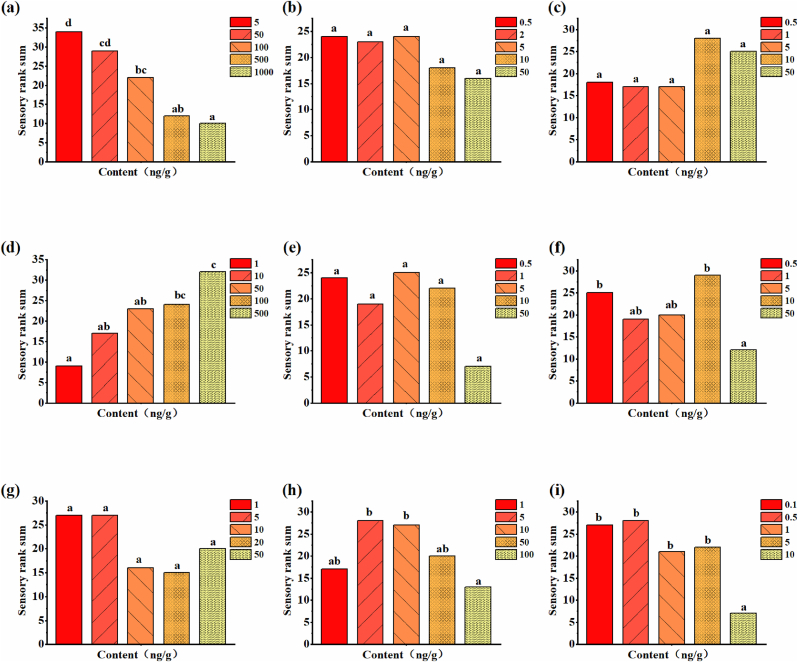
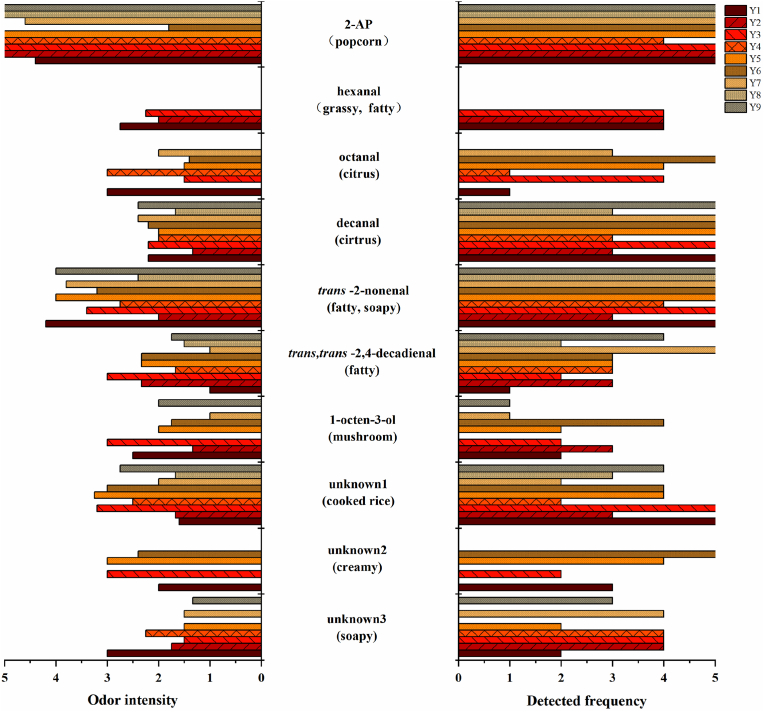
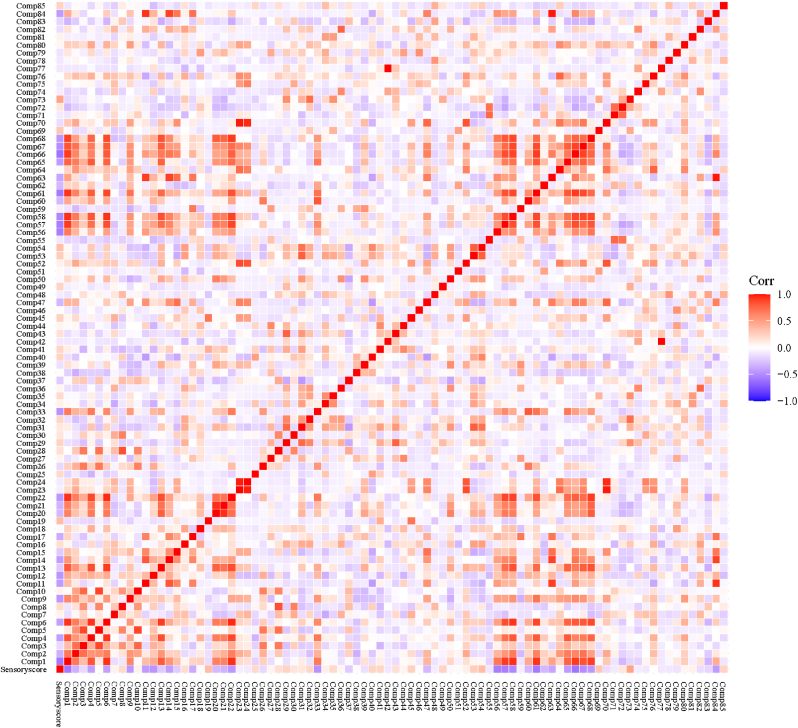
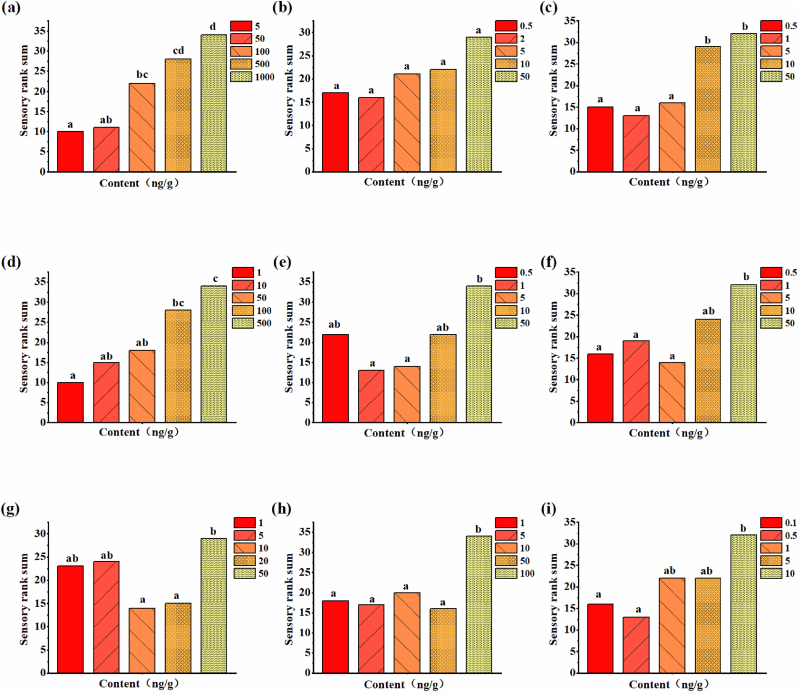
Rice aroma, one of the most important qualities of rice, was the comprehensive result of volatiles in rice and human sense. In this study, the main volatile compounds in rice were analyzed by using gas chromatography-mass spectrometry and gas chromatography-olfactometry, and their correlations with sensory score were investigated. A total of eighty-five volatiles were found in rice samples. By combining odor activity value and correlation analysis, nine volatiles were considered as potential characteristic volatiles in rice aroma, namely hexanal, 2-pentylfuran, octanal, 2-acetyl-1-pyrroline (2-AP), 1-octen-3-ol, trans-2-octenal, decanal, trans-2-nonenal and trans, trans-2,4-decadienal. It was found that the volatiles negatively correlated with sensory scores were positively correlated with hexanal. It indicated that hexanal might be a representative of the negative volatiles of rice aroma. The effects of the nine potential characteristic volatiles on rice aroma were investigated by using sensory analysis. The results showed that the odor intensity and preference level of 2-AP, hexanal, and 1-octen-3-ol were significantly affected by the content. Furthermore, the aroma of cooked rice was significantly different after adding 2-AP, hexanal or trans, trans-2,4-decadienal. Rice aroma was increased by adding 2-AP and deteriorated by adding hexanal or trans, trans-2,4-decadienal, indicating that 2-AP contributed positively to rice aroma while hexanal and trans, trans-2,4-decadienal contributed negatively to rice aroma. Hexanal, 2-AP, and trans, trans-2,4-decadienal were suggested to be the key characteristic volatiles for future aroma evaluation.
大米香气是大米最重要的品质之一,是大米中挥发性物质与人类感官综合作用的结果。本研究采用气相色谱-质谱联用和气相色谱-嗅觉测量法分析了大米中的主要挥发性化合物,并研究了它们与感官评分的相关性。在大米样品中共检测到85种挥发性物质。通过结合气味活性值和相关性分析,确定了9种挥发性物质为大米香气中的潜在特征挥发性物质,即己醛、2-戊基呋喃、辛醛、2-乙酰基-1-吡咯啉(2-AP)、1-辛烯-3-醇、反-2-辛烯醛、癸醛、反-2-壬烯醛和反,反-2,4-癸二烯醛。发现与感官评分呈负相关的挥发性物质与己醛呈正相关。这表明己醛可能是大米香气中负面挥发性物质的代表。通过感官分析研究了这9种潜在特征挥发性物质对大米香气的影响。结果表明,2-AP、己醛和1-辛烯-3-醇的气味强度和偏好程度受含量的显著影响。此外,添加2-AP、己醛或反,反-2,4-癸二烯醛后,米饭的香气有显著差异。添加2-AP可增加大米香气,而添加己醛或反,反-2,4-癸二烯醛则会使其变差,这表明2-AP对大米香气有正向贡献,而己醛和反,反-2,4-癸二烯醛对大米香气有负向贡献。己醛、2-AP和反,反-2,4-癸二烯醛被认为是未来香气评价的关键特征挥发性物质。