Chen Changhai, Ou Wen, Yang Chaobo, Liu Haiqiong, Yang Tao, Mo Huaqiang, Lu Weizhe, Yan Jing, Chen Aihua
Department of Cardiology, Heart Center, Zhujiang Hospital, Southern Medical University, Guangzhou, Guangdong, People's Republic of China.
Department of Cardiology, The Affiliated Suqian First People's Hospital of Nanjing Medical University, Suqian, Jiangsu, People's Republic of China.
Heliyon. 2024 Jun 21;10(12):e33371. doi: 10.1016/j.heliyon.2024.e33371. eCollection 2024 Jun 30.
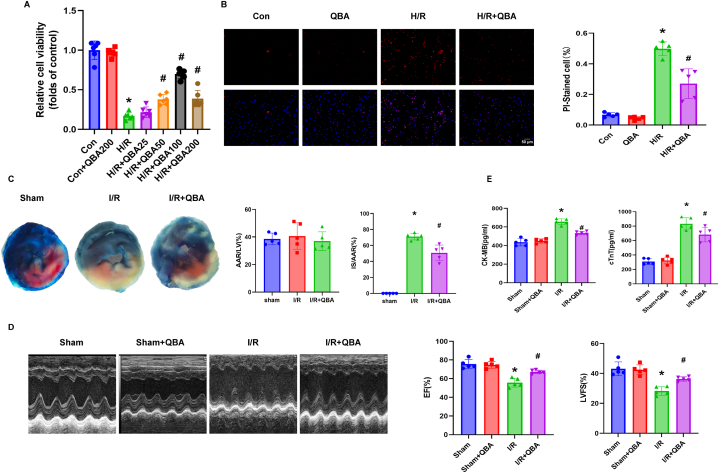
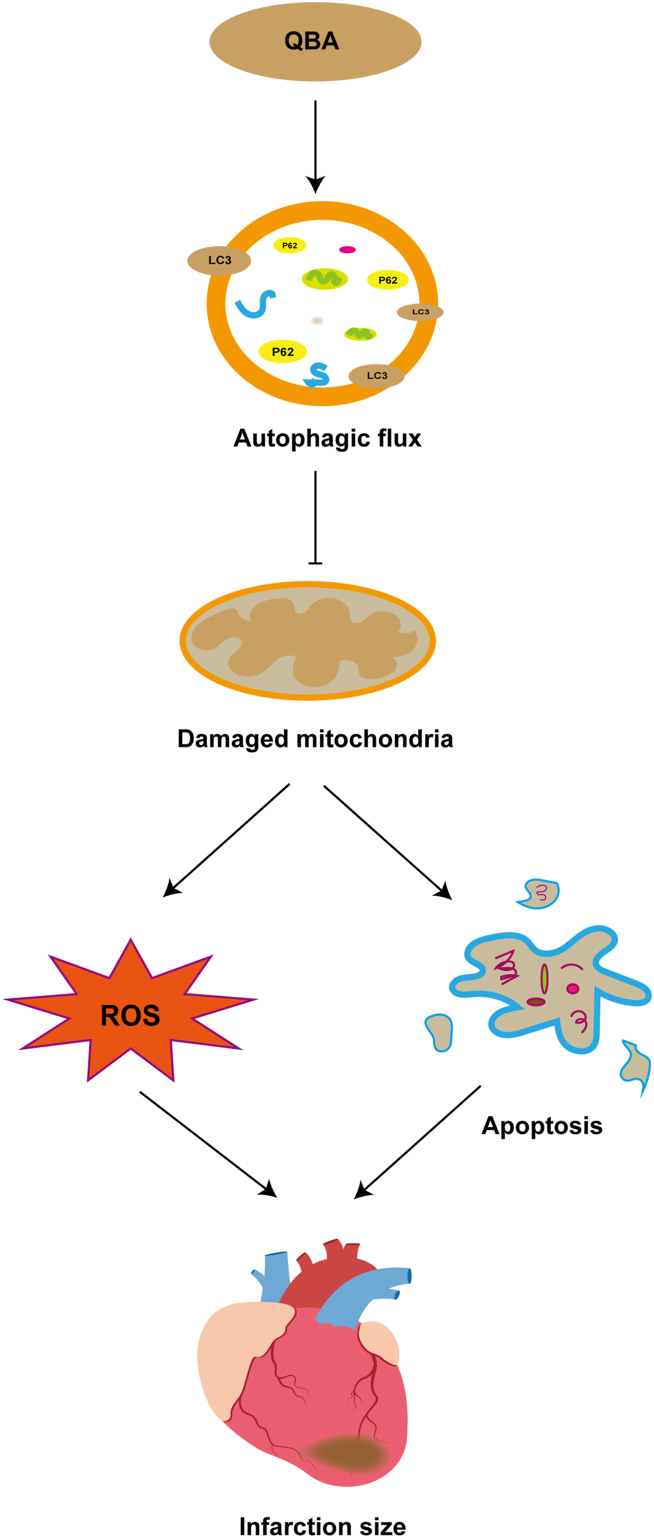
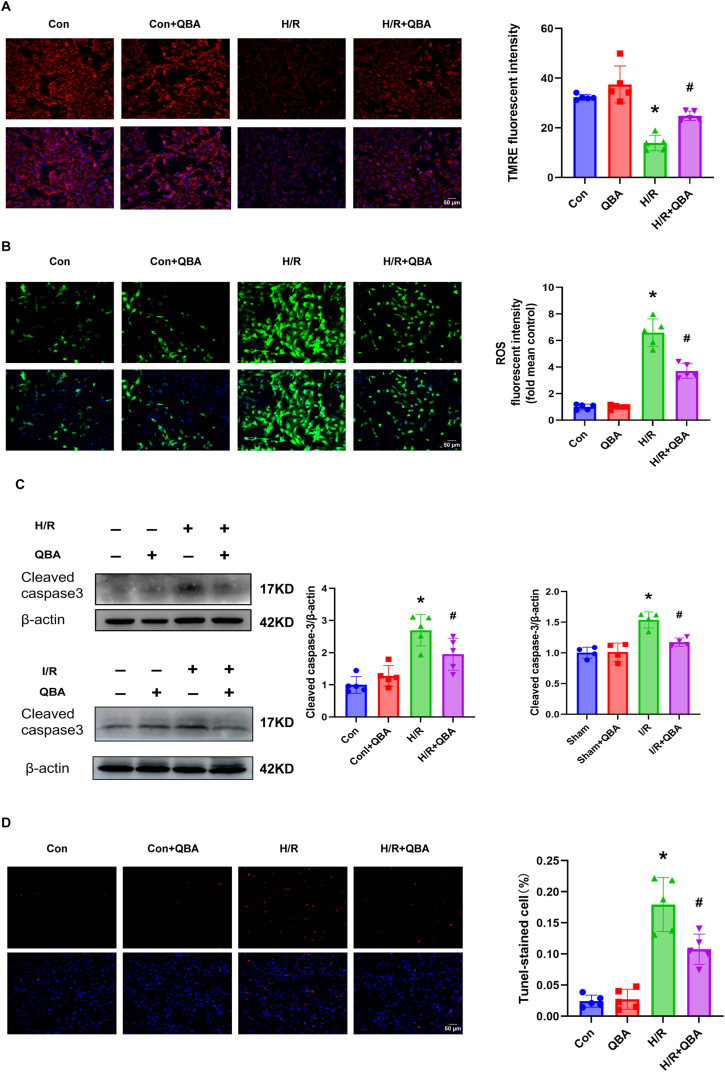
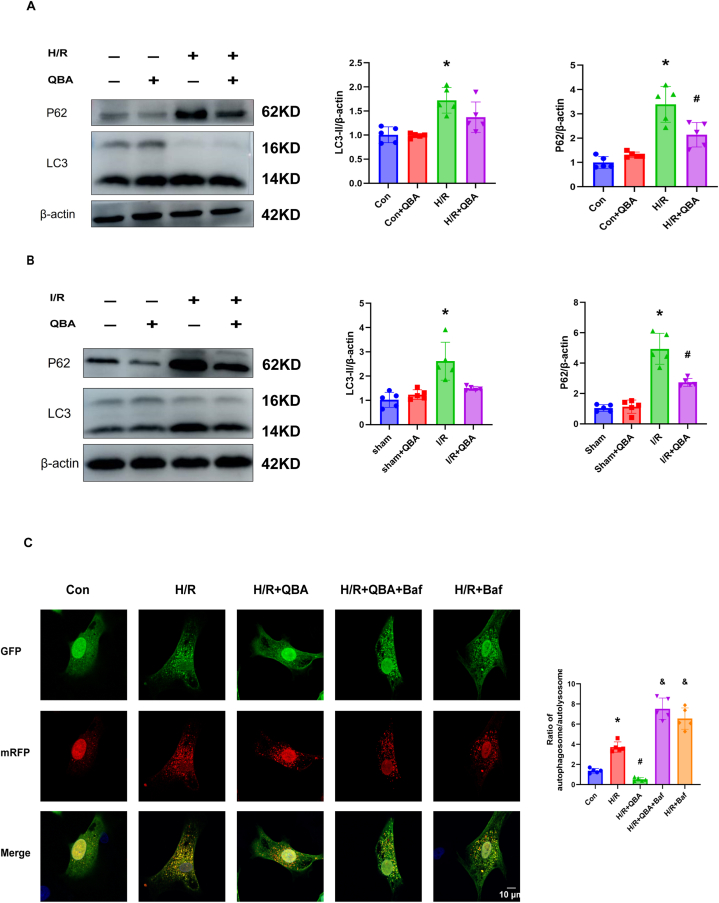
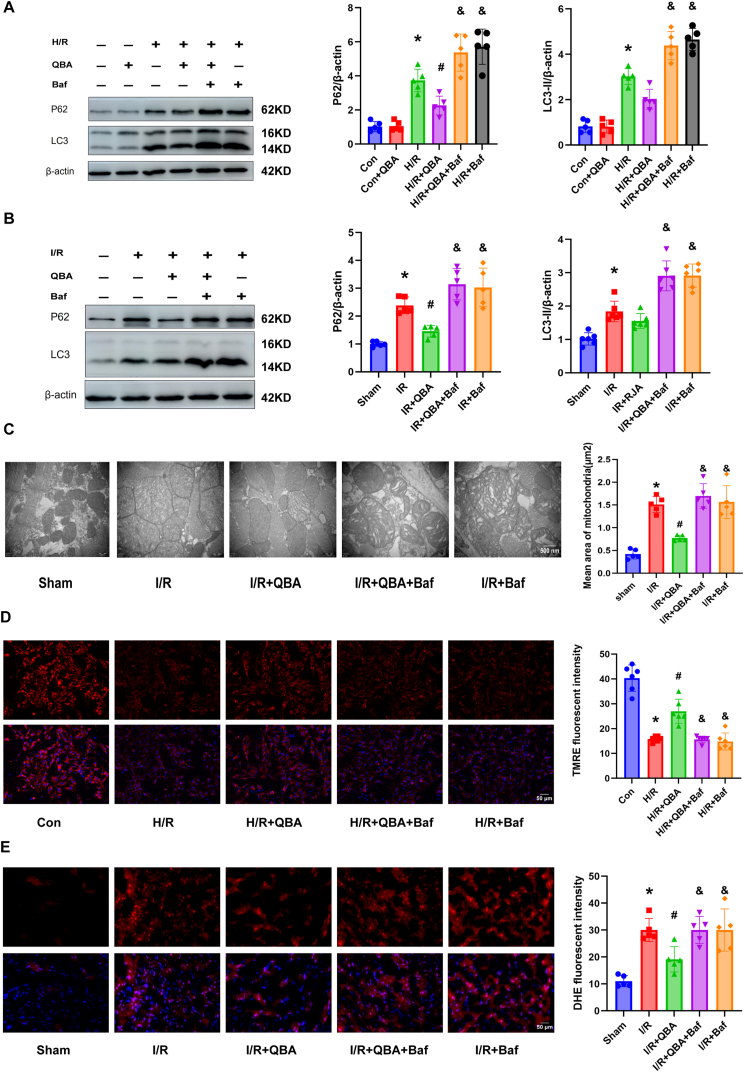
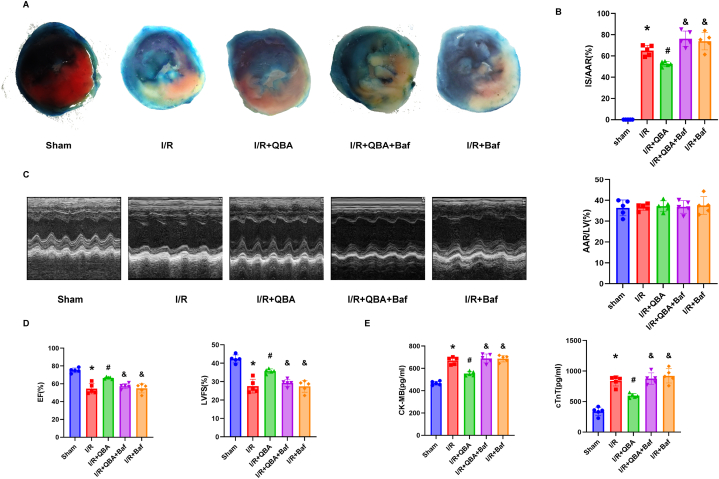
Queen bee acid (QBA), which is exclusively found in royal jelly, has anti-inflammatory, antihypercholesterolemic, and antiangiogenic effects. A recent study demonstrated that QBA enhances autophagic flux in the heart. Considering the significant role of autophagy in the development of myocardial ischemia/reperfusion (I/R) injury, we investigated the effect of pretreatment with QBA on myocardial damage. In an in vivo model, left coronary artery blockage for 30 min and reperfusion for 2 h were used to induce myocardial I/R. In an in vitro model, neonatal rat cardiomyocytes (NRCs) were exposed to 3 h of hypoxia and 3 h of reoxygenation (H/R). Our results showed that pretreatment with QBA increased the cell viability of cardiomyocytes exposed to H/R in a dose-dependent manner, and the best protective concentration of QBA was 100 μM. Next, we noted that QBA pretreatment (24h before H/R) enhanced autophagic flux and attenuated mitochondrial damage, cardiac oxidative stress and apoptosis in NRCs exposed to H/R injury, and these effects were weakened by cotreatment with the autophagy inhibitor bafilomycin A1 (Baf). In addition, similar results were observed when QBA (10 mg/kg) was injected intraperitoneally into I/R mice 30 min before ischemia. Compared to mice subjected to I/R alone, those treated with QBA had decreased myocardial infarct area and increased cardiac function, whereas, these effects were partly reversed by Baf. Notably, in NRCs exposed to H/R, tandem fluorescent mRFP-GFP-LC3 assays indicated increased autophagosome degradation due to the increase in autophagic flux upon QBA treatment, but coinjection of Baf blocked autophagic flux. In this investigation, no notable adverse effects of QBA were detected in either cellular or animal models. Our findings suggest that QBA pretreatment mitigates myocardial I/R injury by eliminating dysfunctional mitochondria and reducing reactive oxygen species via promoting autophagic flux.
蜂王酸(QBA)仅存在于蜂王浆中,具有抗炎、抗高胆固醇血症和抗血管生成作用。最近一项研究表明,QBA可增强心脏中的自噬通量。鉴于自噬在心肌缺血/再灌注(I/R)损伤发展中的重要作用,我们研究了QBA预处理对心肌损伤的影响。在体内模型中,通过左冠状动脉阻塞30分钟和再灌注2小时来诱导心肌I/R。在体外模型中,新生大鼠心肌细胞(NRCs)暴露于3小时缺氧和3小时复氧(H/R)。我们的结果表明,QBA预处理以剂量依赖的方式增加了暴露于H/R的心肌细胞的活力,QBA的最佳保护浓度为100μM。接下来,我们注意到QBA预处理(H/R前24小时)增强了自噬通量,并减轻了暴露于H/R损伤的NRCs中的线粒体损伤、心脏氧化应激和细胞凋亡,而自噬抑制剂巴弗洛霉素A1(Baf)共处理减弱了这些作用。此外,在缺血前30分钟将QBA(10mg/kg)腹腔注射到I/R小鼠体内时,也观察到了类似的结果。与单独接受I/R的小鼠相比,接受QBA治疗的小鼠心肌梗死面积减小,心脏功能增强,而Baf部分逆转了这些作用。值得注意的是,在暴露于H/R的NRCs中,串联荧光mRFP-GFP-LC3分析表明,由于QBA处理后自噬通量增加,自噬体降解增加,但同时注射Baf可阻断自噬通量。在本研究中,在细胞或动物模型中均未检测到QBA的明显不良反应。我们的研究结果表明,QBA预处理通过促进自噬通量消除功能失调的线粒体并减少活性氧,从而减轻心肌I/R损伤。