
Ⅱ类铁死亡诱导剂是治疗 t(4;14)阳性多发性骨髓瘤的一种新方法。
Class II ferroptosis inducers are a novel therapeutic approach for t(4;14)-positive multiple myeloma.
机构信息
Department of Hematology, Union Hospital, Tongji Medical College, Huazhong University of Science and Technology, Wuhan, China.
出版信息
Blood Adv. 2024 Oct 8;8(19):5022-5038. doi: 10.1182/bloodadvances.2023010335.
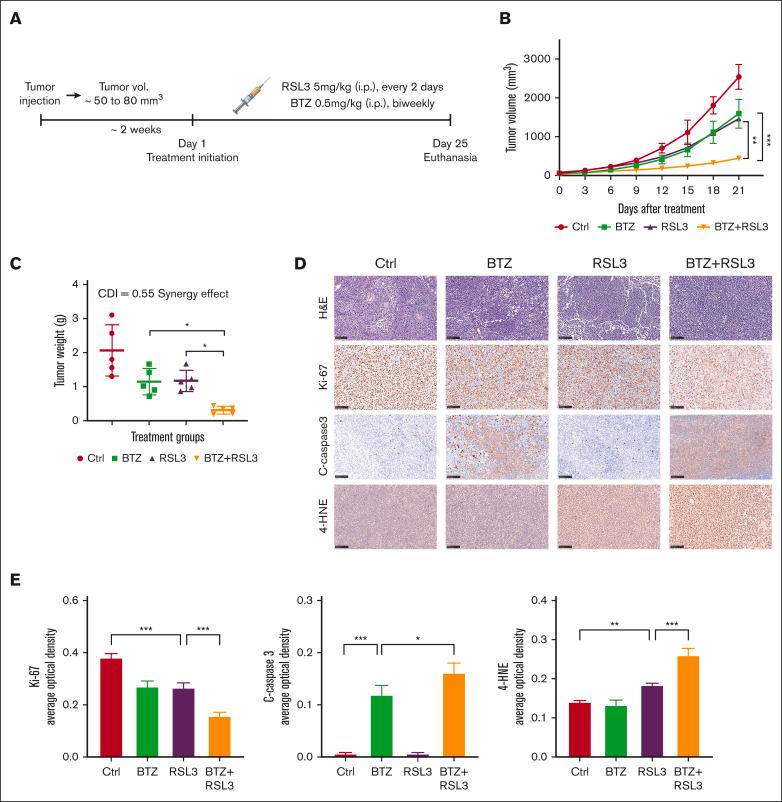
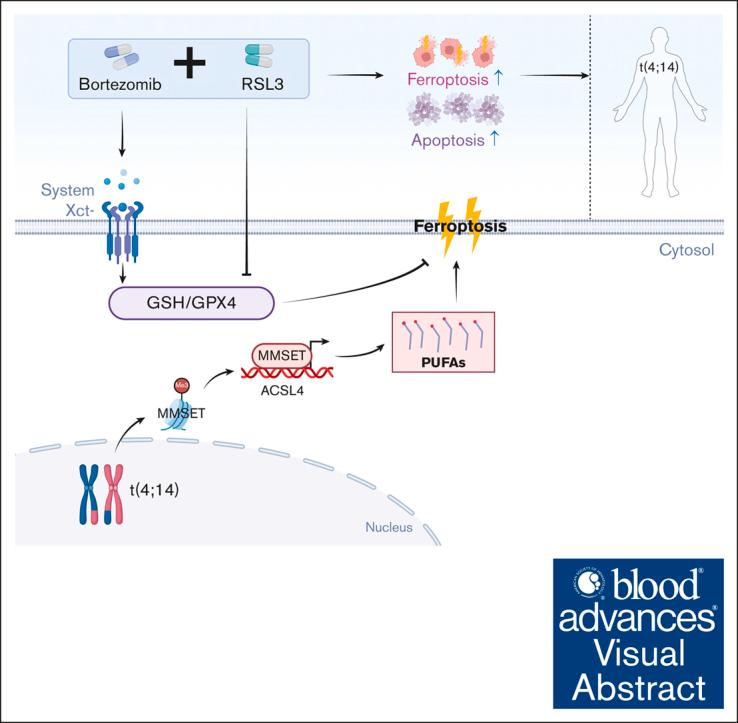
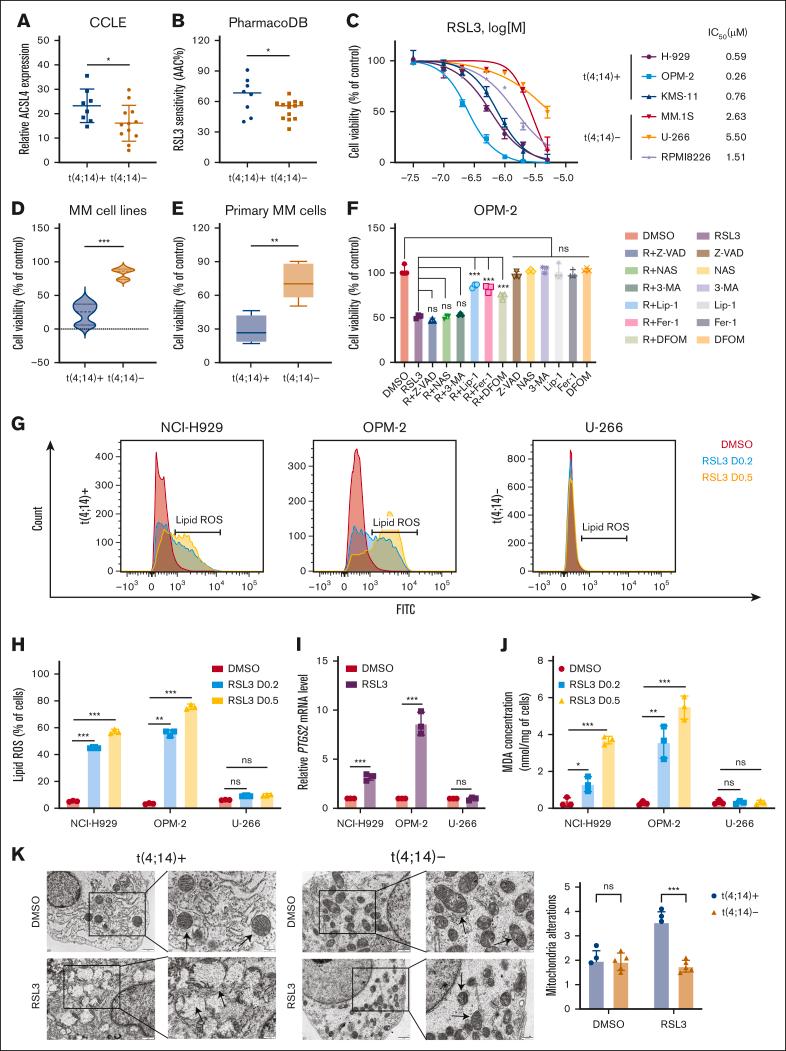
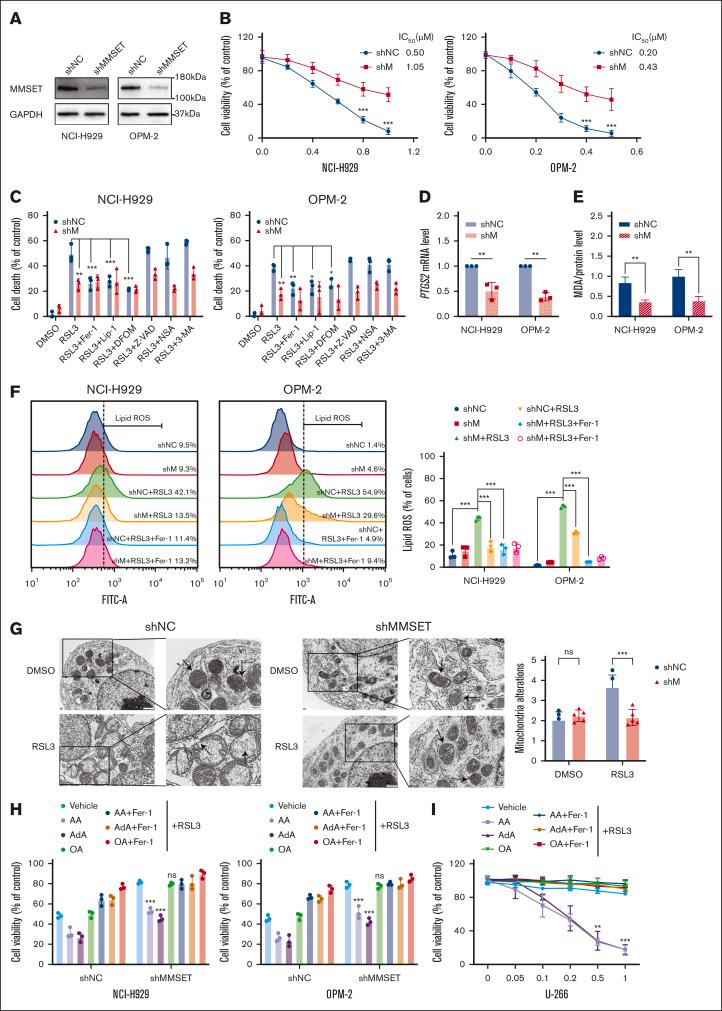
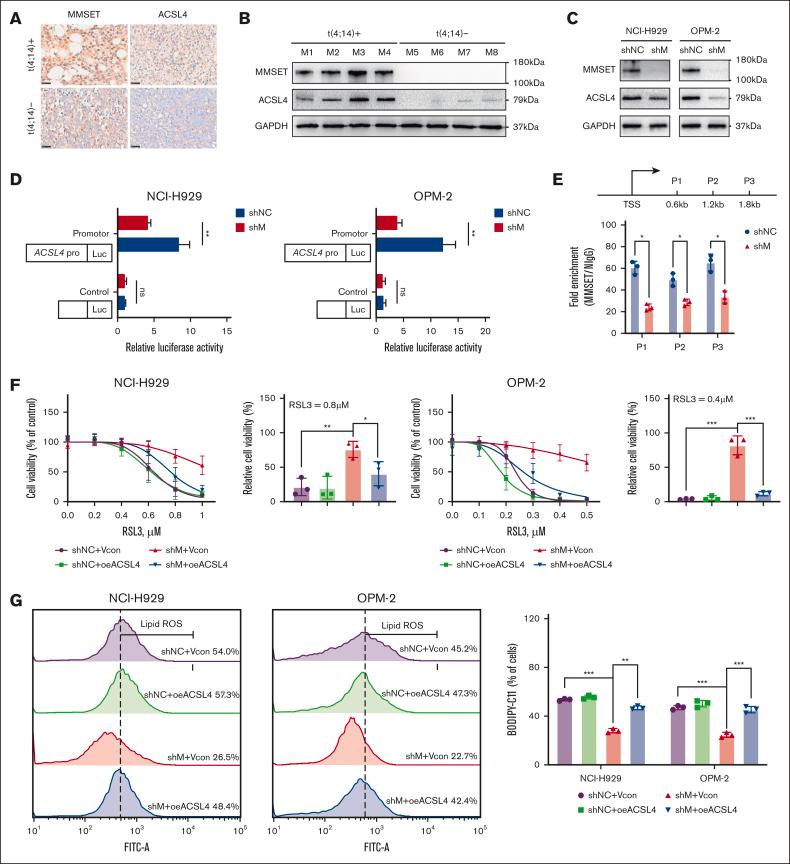
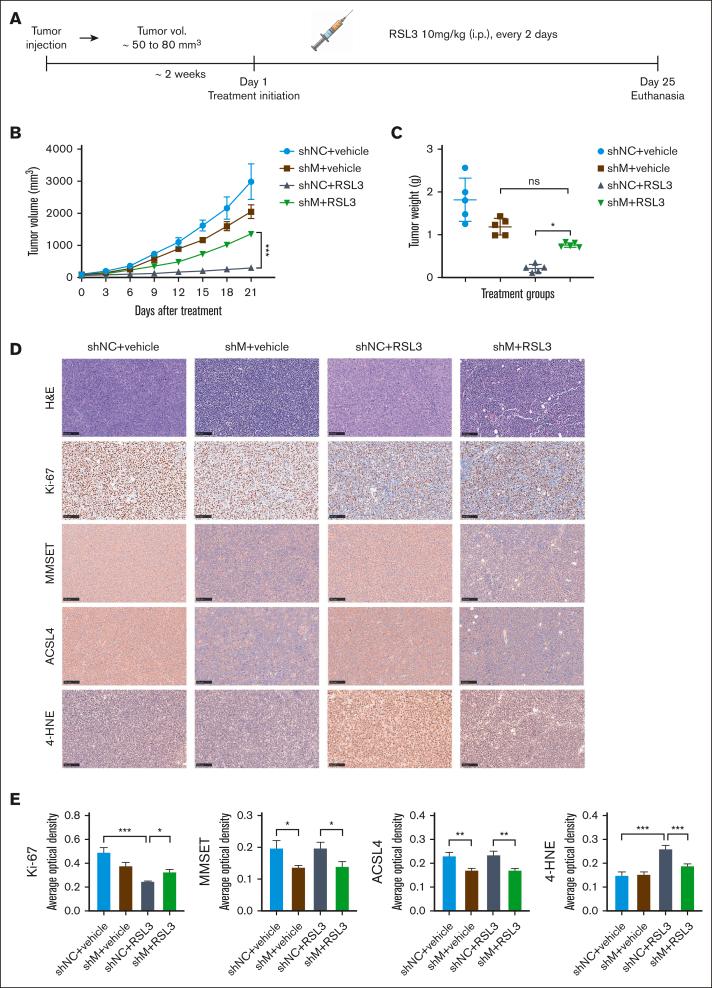
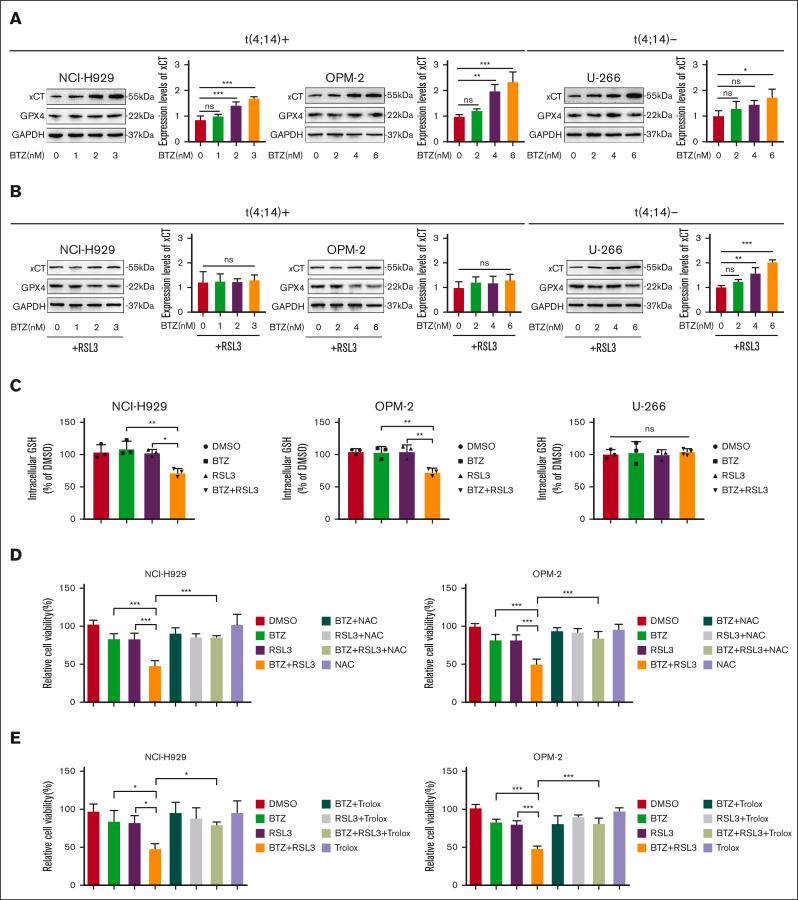
Multiple myeloma (MM) is a clonal plasma cell malignancy that is characterized by genetic heterogeneity. The cytogenetic abnormality t(4;14) strongly predicts poor outcome in patients with MM, even in the era of novel drugs. Ferroptosis is a new approach to antitumor therapy, but the relationship between ferroptosis and MM cytogenetic abnormalities remains largely unclear. In this study, we show that t(4;14)-positive but not t(4;14)-negative MM cells are susceptible to class II ferroptosis inducers (FINs) in a preclinical setting, which is dependent on the significant upregulation of the MM SET domain-containing protein (MMSET). Mechanistically, MMSET upregulates acyl-coenzyme A synthetase long-chain family member 4 transcription by binding to its promoter region, leading to increased polyunsaturated fatty acid (PUFA) levels and enhanced sensitivity of t(4;14)-positive MM cells to ferroptosis. Supplementation with PUFAs efficiently restores the susceptibility of t(4;14)-negative MM cells to ferroptosis. In addition, combining class II FIN treatment with bortezomib in t(4;14)-positive MM cells attenuates cellular glutathione and induces both apoptosis and ferroptosis levels by inhibiting the increase in solute carrier family 7 member 11, demonstrating synergistic antitumor activity in vitro and in a xenograft model. Taken together, our findings suggest that targeting ferroptosis with class II FINs is a novel and promising therapeutic approach to improve the outcome of t(4;14)-positive patients with MM.
多发性骨髓瘤(MM)是一种克隆性浆细胞恶性肿瘤,其特征是遗传异质性。细胞遗传学异常 t(4;14) 强烈预测 MM 患者的预后不良,即使在新型药物时代也是如此。铁死亡是一种新的抗肿瘤治疗方法,但铁死亡与 MM 细胞遗传学异常之间的关系在很大程度上仍不清楚。在这项研究中,我们表明,在临床前环境中,t(4;14)-阳性但不是 t(4;14)-阴性 MM 细胞对 II 类铁死亡诱导剂(FINs)敏感,这依赖于 MM SET 结构域包含蛋白(MMSET)的显著上调。在机制上,MMSET 通过结合其启动子区域上调长链酰基辅酶 A 合成酶家族成员 4 的转录,导致多不饱和脂肪酸(PUFA)水平增加,并增强 t(4;14)-阳性 MM 细胞对铁死亡的敏感性。用 PUFAs 补充剂有效地恢复了 t(4;14)-阴性 MM 细胞对铁死亡的敏感性。此外,在 t(4;14)-阳性 MM 细胞中,联合使用 II 类 FIN 治疗和硼替佐米可通过抑制溶质载体家族 7 成员 11 的增加来减轻细胞谷胱甘肽水平,并诱导凋亡和铁死亡水平,从而在体外和异种移植模型中显示出协同的抗肿瘤活性。总之,我们的研究结果表明,用 II 类 FIN 靶向铁死亡是改善 t(4;14)-阳性 MM 患者预后的一种新的有前途的治疗方法。

 Zotero 插件