Department of Biochemistry and Molecular Biology, The Pennsylvania State University College of Medicine, Hershey, PA, 17033, USA.
Nat Commun. 2024 Jul 23;15(1):6197. doi: 10.1038/s41467-024-50429-3.
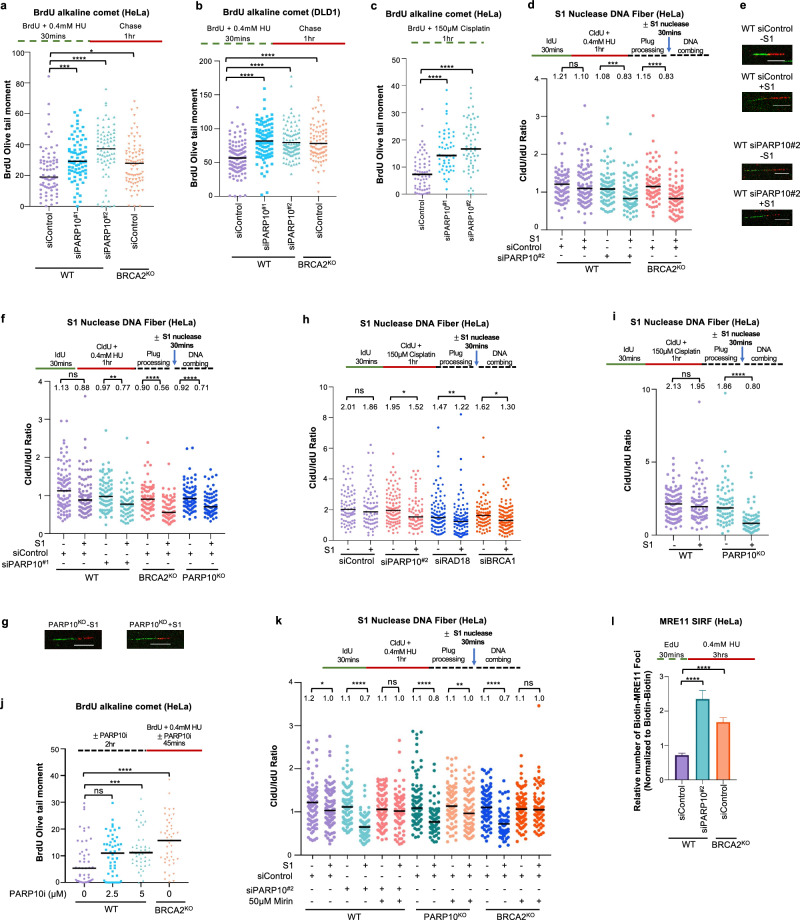
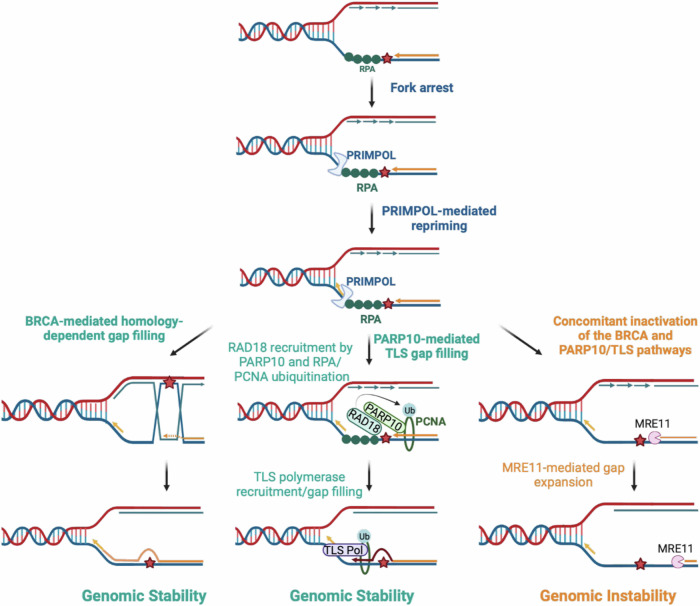
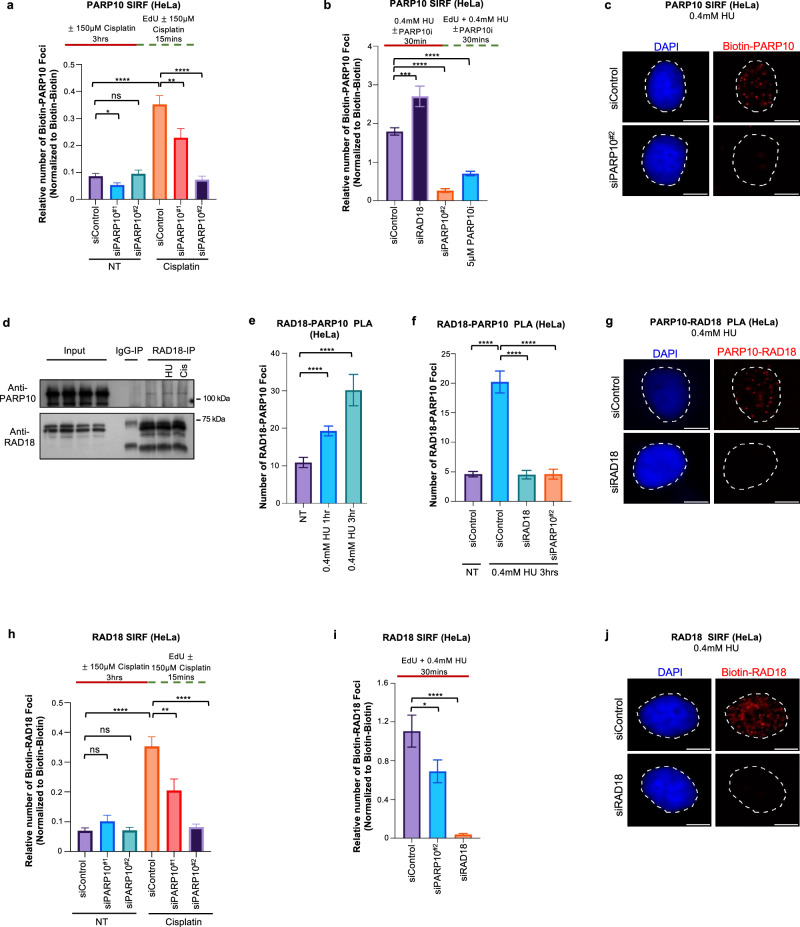
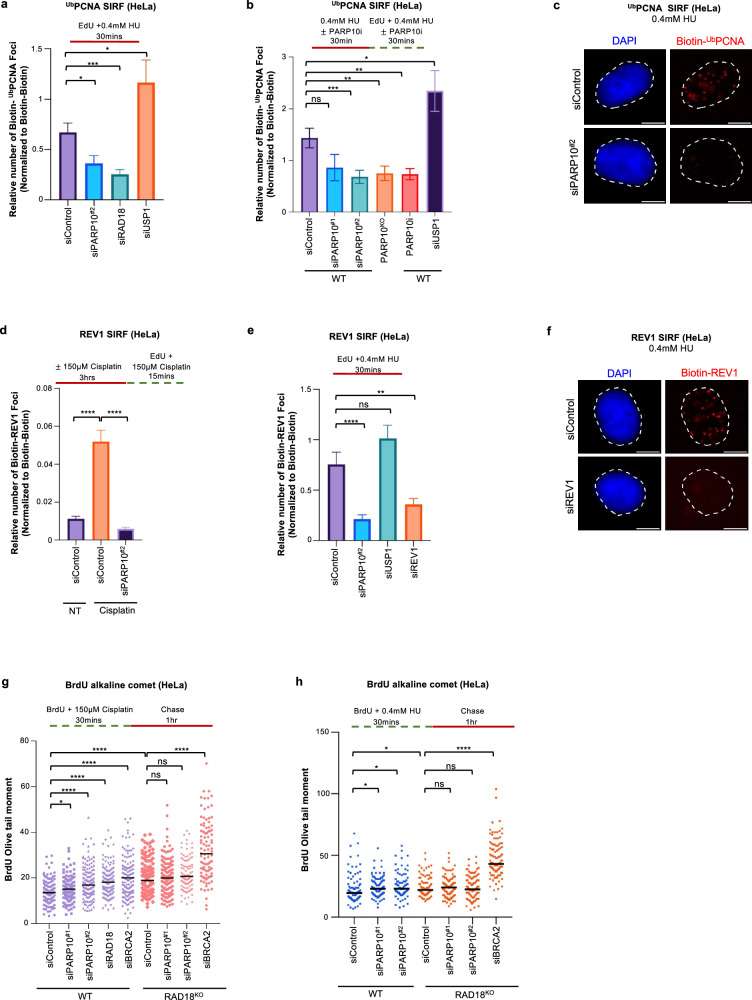
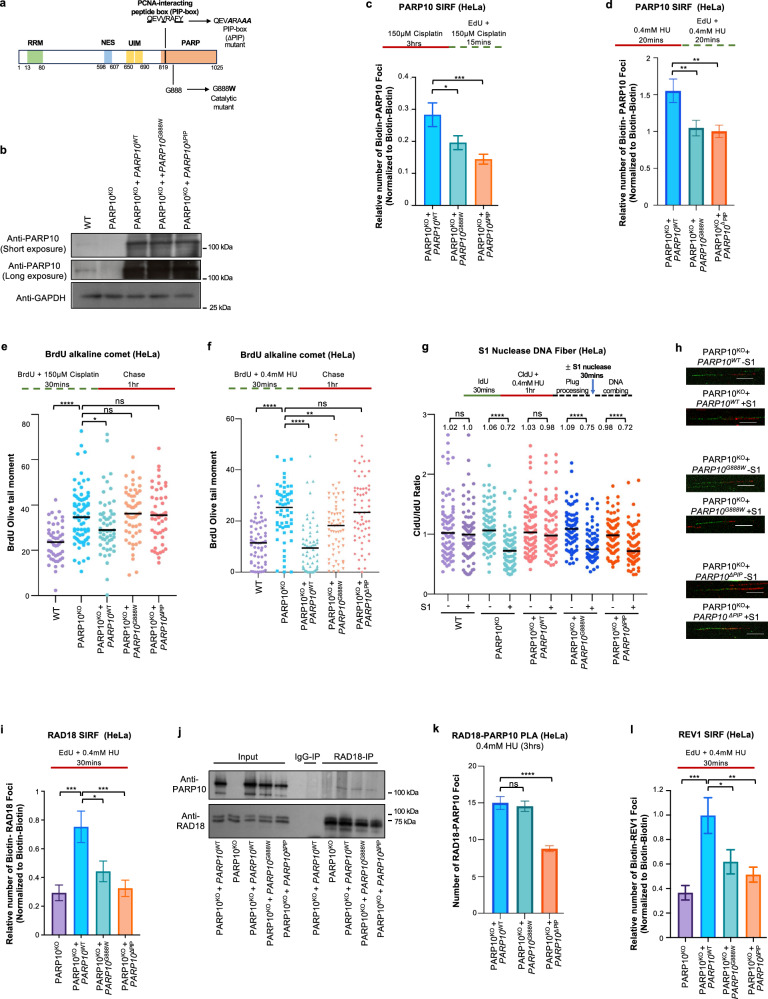
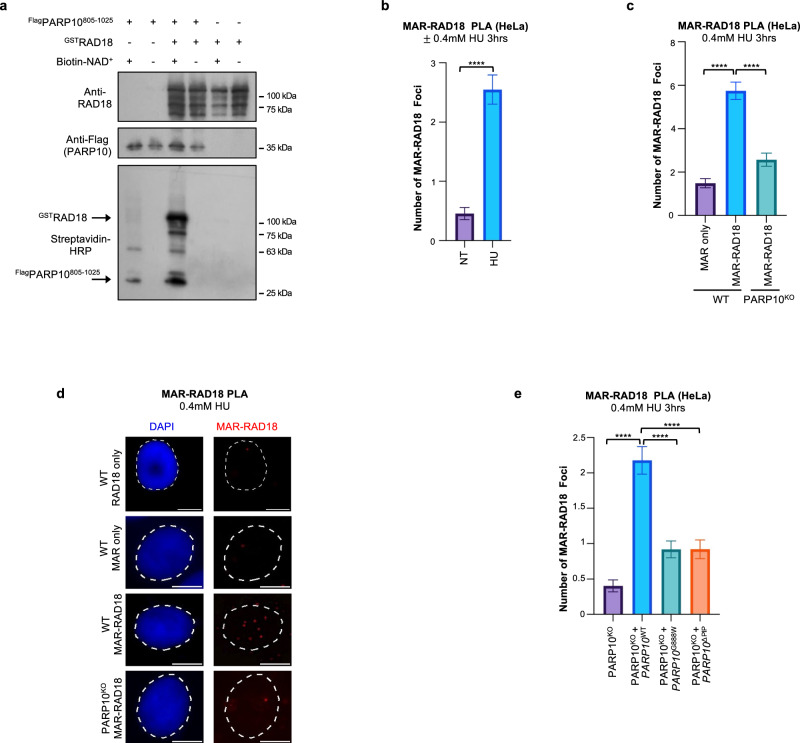
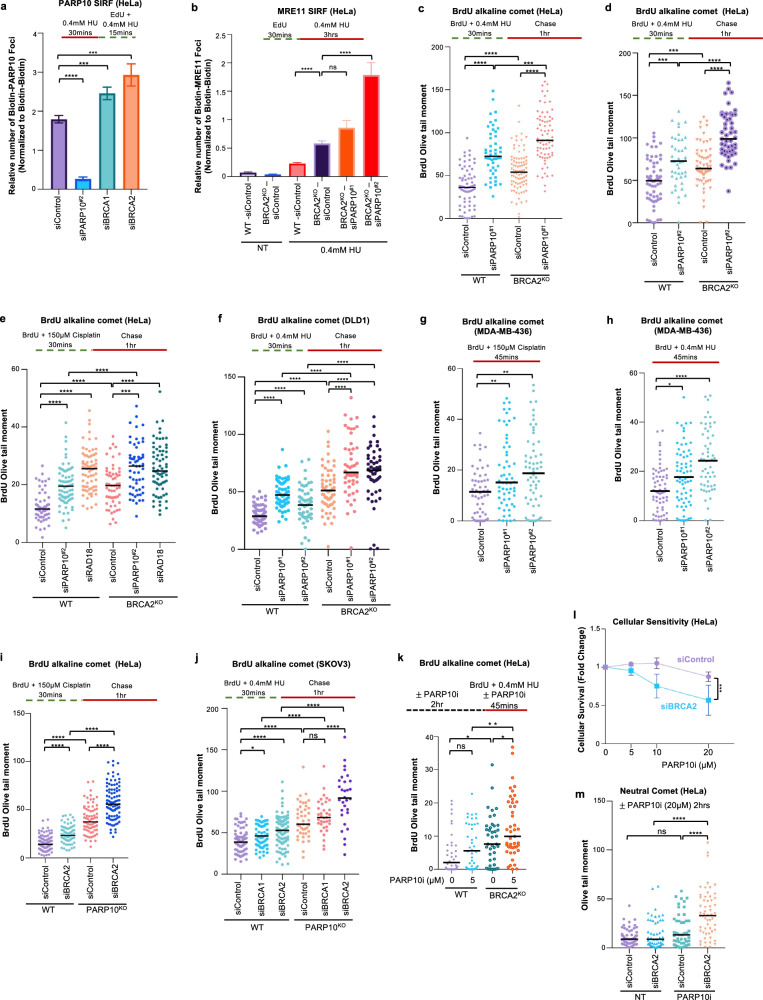
Replication stress compromises genomic integrity. Fork blocking lesions such as those induced by cisplatin and other chemotherapeutic agents arrest replication forks. Repriming downstream of these lesions represents an important mechanism of replication restart, however the single stranded DNA (ssDNA) gaps left behind, unless efficiently filled, can serve as entry point for nucleases. Nascent strand gaps can be repaired by BRCA-mediated homology repair. Alternatively, gaps can also be filled by translesion synthesis (TLS) polymerases. How these events are regulated is still not clear. Here, we show that PARP10, a poorly-characterized mono-ADP-ribosyltransferase, is recruited to nascent strand gaps to promote their repair. PARP10 interacts with the ubiquitin ligase RAD18 and recruits it to these structures, resulting in the ubiquitination of the replication factor PCNA. PCNA ubiquitination, in turn, recruits the TLS polymerase REV1 for gap filling. We show that PARP10 recruitment to gaps and the subsequent REV1-mediated gap filling requires both the catalytic activity of PARP10, and its ability to interact with PCNA. We moreover show that PARP10 is hyperactive in BRCA-deficient cells, and its inactivation potentiates gap accumulations and cytotoxicity in these cells. Our work uncovers PARP10 as a regulator of ssDNA gap filling, which promotes genomic stability in BRCA-deficient cells.
复制压力会损害基因组完整性。顺铂和其他化疗药物等引起的叉状阻滞病变会阻止复制叉。这些病变下游的重新引发是复制起始的重要机制,但是,如果不能有效地填补留下的单链 DNA(ssDNA)缺口,它们可能成为核酶的进入点。新生链缺口可以通过 BRCA 介导的同源修复来修复。或者,这些缺口也可以通过跨损伤合成(TLS)聚合酶来填补。这些事件如何被调控尚不清楚。在这里,我们表明,PARP10 是一种功能尚未完全阐明的单 ADP-核糖基转移酶,它被募集到新生链缺口以促进其修复。PARP10 与泛素连接酶 RAD18 相互作用,并将其招募到这些结构中,导致复制因子 PCNA 的泛素化。PCNA 泛素化反过来又招募 TLS 聚合酶 REV1 进行缺口填充。我们表明,PARP10 对缺口的募集以及随后的 REV1 介导的缺口填充既需要 PARP10 的催化活性,也需要其与 PCNA 相互作用的能力。此外,我们还表明,PARP10 在 BRCA 缺陷细胞中过度活跃,其失活会增加这些细胞中的缺口积累和细胞毒性。我们的工作揭示了 PARP10 是 ssDNA 缺口填充的调节剂,它促进了 BRCA 缺陷细胞的基因组稳定性。