Department of Otorhinolaryngology, Affiliated Qingyuan Hospital, Guangzhou Medical University, Qingyuan People's Hospital, 16th Floor, No. 2 Inpatient Building, Qingyuan, People's Republic of China.
Department of Head and Neck Surgery, Sun Yat-Sen University Cancer Center, Guangzhou, People's Republic of China.
Sci Rep. 2024 Jul 23;14(1):16972. doi: 10.1038/s41598-024-65090-5.
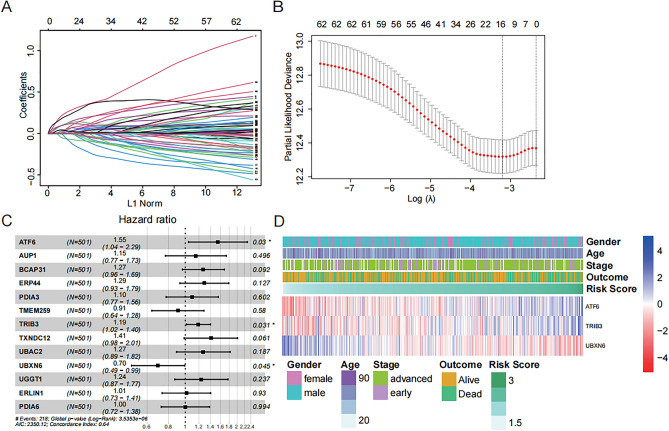
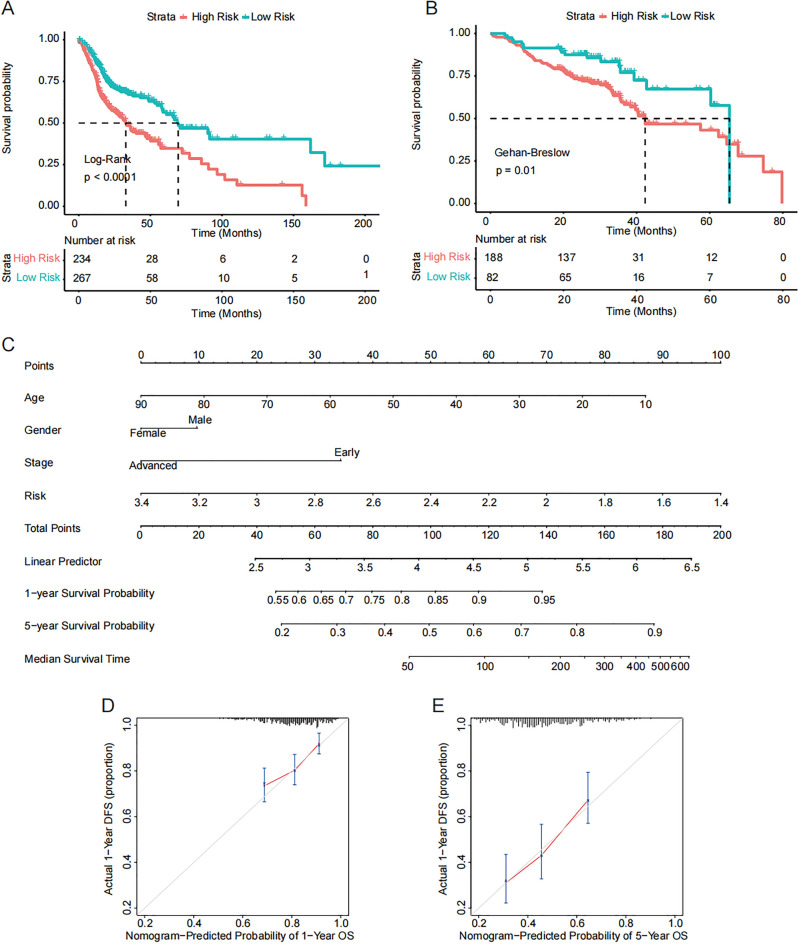
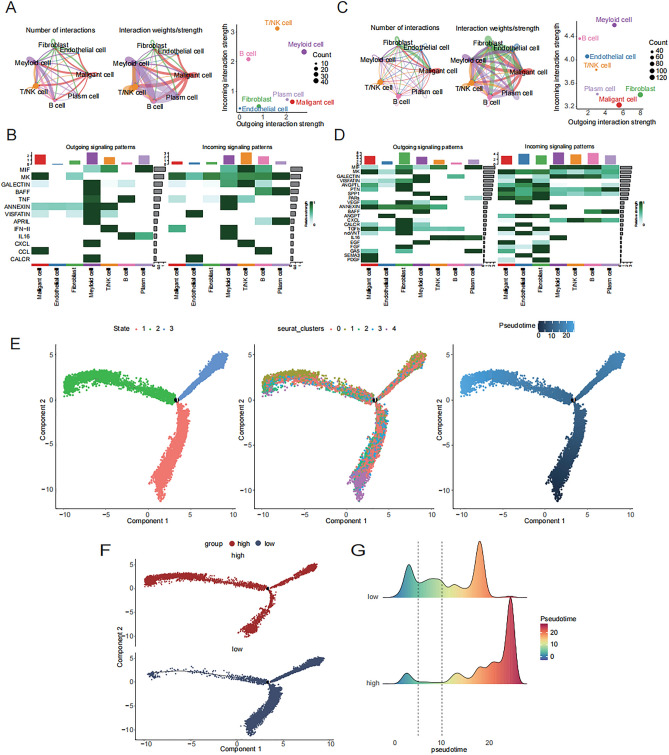
Head and neck squamous carcinoma (HNSC) is a prevalent malignant disease, with the majority of patients being diagnosed at an advanced stage. Endoplasmic reticulum stress (ERS) is considered to be a process that promotes tumorigenesis and impacts the tumor microenvironment (TME) in various cancers. The study aims to investigate the predictive value of ERS in HNSC and explore the correlation between ERS-related genes and TME. A series of bioinformatics analyses were carried out based on mRNA and scRNA-seq data from the TCGA and GEO databases. We conducted RT-qPCR and western blot to validate the signature, and performed cell functional experiments to investigate the in vitro biological functions of the gene. We identified 63 ERS-related genes that were associated with outcome and stage in HNSC. A three-gene signature (ATF6, TRIB3, and UBXN6) was developed, which presents predictive value in the prognosis and immunotherapy response of HNSC patients. The high-risk group exhibited a worse prognosis but may benefit from immunotherapy. Furthermore, there was a significant correlation between the signature and immune infiltration. In the high-risk group, fibroblasts were more active in intercellular communication, and more T cells were observed at the end of the sequential phase. The genes in the ERS-related signature were overexpressed in HNSC cells, and the knockdown of TRIB3 significantly inhibited cell proliferation and migration. This study established a novel ERS-related signature that has potential implications for HNSC therapy and the understanding of TME.
头颈部鳞状细胞癌(HNSC)是一种常见的恶性疾病,大多数患者在晚期被诊断出来。内质网应激(ERS)被认为是促进肿瘤发生并影响各种癌症肿瘤微环境(TME)的过程。本研究旨在探讨 ERS 在 HNSC 中的预测价值,并探讨 ERS 相关基因与 TME 之间的相关性。基于 TCGA 和 GEO 数据库的 mRNA 和 scRNA-seq 数据,进行了一系列的生物信息学分析。我们通过 RT-qPCR 和 Western blot 验证了该特征,并进行了细胞功能实验以研究基因的体外生物学功能。我们确定了 63 个与 HNSC 结局和分期相关的 ERS 相关基因。开发了一个由三个基因(ATF6、TRIB3 和 UBXN6)组成的特征,该特征在 HNSC 患者的预后和免疫治疗反应中具有预测价值。高危组的预后较差,但可能受益于免疫治疗。此外,特征与免疫浸润之间存在显著相关性。在高危组中,成纤维细胞在细胞间通讯中更活跃,并且在连续相的末端观察到更多的 T 细胞。HNSC 细胞中 ERS 相关特征的基因表达上调,TRIB3 的敲低显著抑制细胞增殖和迁移。这项研究建立了一个新的 ERS 相关特征,对头颈部鳞状细胞癌的治疗和肿瘤微环境的理解具有潜在意义。