• 文献检索
  • 文档翻译
  • 深度研究
  • 学术资讯
  • Suppr Zotero 插件Zotero 插件
  • 邀请有礼
  • 套餐&价格
  • 历史记录
应用&插件
Suppr Zotero 插件Zotero 插件浏览器插件Mac 客户端Windows 客户端微信小程序
定价
高级版会员购买积分包购买API积分包
服务
文献检索文档翻译深度研究API 文档MCP 服务
关于我们
关于 Suppr公司介绍联系我们用户协议隐私条款
关注我们

Suppr 超能文献

核心技术专利:CN118964589B侵权必究
粤ICP备2023148730 号-1Suppr @ 2026

文献检索

告别复杂PubMed语法,用中文像聊天一样搜索,搜遍4000万医学文献。AI智能推荐,让科研检索更轻松。

立即免费搜索

文件翻译

保留排版,准确专业,支持PDF/Word/PPT等文件格式,支持 12+语言互译。

免费翻译文档

深度研究

AI帮你快速写综述,25分钟生成高质量综述,智能提取关键信息,辅助科研写作。

立即免费体验

人工智能分析重症肺炎患者的胸肌量

Cluster analysis of thoracic muscle mass using artificial intelligence in severe pneumonia.

机构信息

Department of Physical Medicine and Rehabilitation, Soonchunhyang University Seoul Hospital, Soonchunhyang University College of Medicine, Seoul, Republic of Korea.

Department of Radiology, Seoul Metropolitan Government-Seoul National University Boramae Medical Center, Seoul National University College of Medicine, Seoul, Republic of Korea.

出版信息

Sci Rep. 2024 Jul 23;14(1):16912. doi: 10.1038/s41598-024-67625-2.

DOI:10.1038/s41598-024-67625-2
PMID:39043882
原文链接:https://pmc.ncbi.nlm.nih.gov/articles/PMC11266397/
Abstract

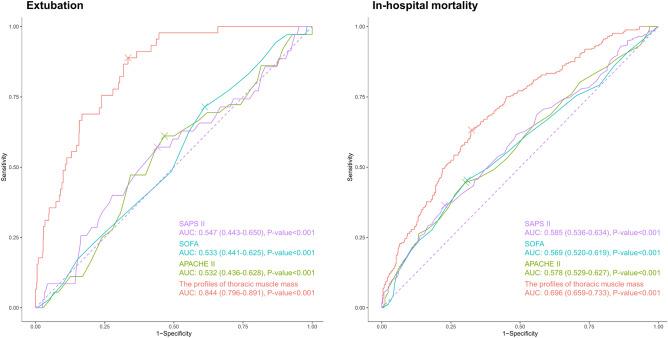
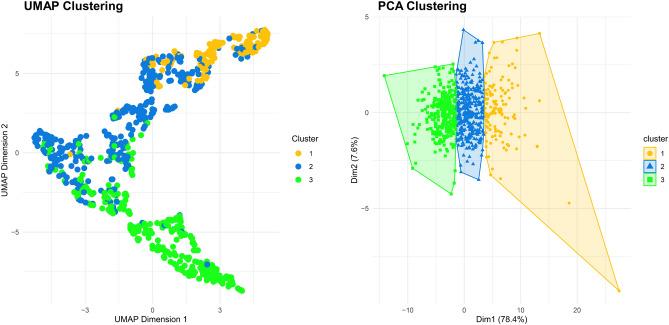
Severe pneumonia results in high morbidity and mortality despite advanced treatments. This study investigates thoracic muscle mass from chest CT scans as a biomarker for predicting clinical outcomes in ICU patients with severe pneumonia. Analyzing electronic medical records and chest CT scans of 778 ICU patients with severe community-acquired pneumonia from January 2016 to December 2021, AI-enhanced 3D segmentation was used to assess thoracic muscle mass. Patients were categorized into clusters based on muscle mass profiles derived from CT scans, and their effects on clinical outcomes such as extubation success and in-hospital mortality were assessed. The study identified three clusters, showing that higher muscle mass (Cluster 1) correlated with lower in-hospital mortality (8% vs. 29% in Cluster 3) and improved clinical outcomes like extubation success. The model integrating muscle mass metrics outperformed conventional scores, with an AUC of 0.844 for predicting extubation success and 0.696 for predicting mortality. These findings highlight the strong predictive capacity of muscle mass evaluation over indices such as APACHE II and SOFA. Using AI to analyze thoracic muscle mass via chest CT provides a promising prognostic approach in severe pneumonia, advocating for its integration into clinical practice for better outcome predictions and personalized patient management.

摘要

尽管有先进的治疗方法,严重肺炎仍会导致高发病率和死亡率。本研究通过胸部 CT 扫描调查胸肌量作为 ICU 重症肺炎患者预测临床结局的生物标志物。分析了 2016 年 1 月至 2021 年 12 月期间 778 例 ICU 重症社区获得性肺炎患者的电子病历和胸部 CT 扫描,采用人工智能增强 3D 分割来评估胸肌量。根据 CT 扫描得出的肌肉量图谱,患者分为不同的簇,评估其对临床结局(如拔管成功率和住院死亡率)的影响。研究确定了三个簇,表明更高的肌肉量(簇 1)与较低的住院死亡率(簇 3 中为 29%,簇 1 中为 8%)和更好的临床结局(如拔管成功率)相关。整合肌肉量指标的模型优于常规评分,对拔管成功率的预测 AUC 为 0.844,对死亡率的预测 AUC 为 0.696。这些发现强调了肌肉量评估比 APACHE II 和 SOFA 等指数具有更强的预测能力。使用人工智能通过胸部 CT 分析胸肌量为严重肺炎提供了一种有前途的预后方法,提倡将其纳入临床实践,以更好地预测结果和进行个性化患者管理。
https://cdn.ncbi.nlm.nih.gov/pmc/blobs/55c4/11266397/185c059ea25f/41598_2024_67625_Fig3_HTML.jpg
https://cdn.ncbi.nlm.nih.gov/pmc/blobs/55c4/11266397/26fe38ef1d6d/41598_2024_67625_Fig1_HTML.jpg
https://cdn.ncbi.nlm.nih.gov/pmc/blobs/55c4/11266397/43943c374b40/41598_2024_67625_Fig2_HTML.jpg
https://cdn.ncbi.nlm.nih.gov/pmc/blobs/55c4/11266397/185c059ea25f/41598_2024_67625_Fig3_HTML.jpg
https://cdn.ncbi.nlm.nih.gov/pmc/blobs/55c4/11266397/26fe38ef1d6d/41598_2024_67625_Fig1_HTML.jpg
https://cdn.ncbi.nlm.nih.gov/pmc/blobs/55c4/11266397/43943c374b40/41598_2024_67625_Fig2_HTML.jpg
https://cdn.ncbi.nlm.nih.gov/pmc/blobs/55c4/11266397/185c059ea25f/41598_2024_67625_Fig3_HTML.jpg

相似文献

1
Cluster analysis of thoracic muscle mass using artificial intelligence in severe pneumonia.人工智能分析重症肺炎患者的胸肌量
Sci Rep. 2024 Jul 23;14(1):16912. doi: 10.1038/s41598-024-67625-2.
2
Low thoracic skeletal muscle is a risk factor for 6-month mortality of severe community-acquired pneumonia in older men in intensive care unit.低胸壁骨骼肌是重症监护病房老年男性重症社区获得性肺炎 6 个月死亡率的危险因素。
BMC Pulm Med. 2024 Aug 11;24(1):387. doi: 10.1186/s12890-024-03200-9.
3
Community-Acquired Pneumonia Visualized on CT Scans but Not Chest Radiographs: Pathogens, Severity, and Clinical Outcomes.CT 扫描而非胸部 X 线片显示的社区获得性肺炎:病原体、严重程度和临床结局。
Chest. 2018 Mar;153(3):601-610. doi: 10.1016/j.chest.2017.07.035. Epub 2017 Aug 9.
4
Mortality prediction in community-acquired pneumonia requiring mechanical ventilation; values of pneumonia and intensive care unit severity scores.需要机械通气的社区获得性肺炎的死亡率预测;肺炎和重症监护病房严重程度评分的价值。
Tuberk Toraks. 2010;58(1):25-34.
5
Early chest computed tomography in adult acute severe community-acquired pneumonia patients treated in the intensive care unit.成人急性重症社区获得性肺炎患者在重症监护病房接受治疗时的早期胸部计算机断层扫描
Acta Anaesthesiol Scand. 2016 Sep;60(8):1102-10. doi: 10.1111/aas.12749. Epub 2016 Jun 7.
6
The association between L1 skeletal muscle index derived from routine CT and in-hospital mortality in CAP patients in the ED.ED 中常规 CT 测定的 L1 骨骼肌指数与 CAP 患者院内死亡率的关系。
Am J Emerg Med. 2021 Apr;42:49-54. doi: 10.1016/j.ajem.2020.12.064. Epub 2020 Dec 26.
7
Lumbar skeletal muscle index derived from routine computed tomography exams predict adverse post-extubation outcomes in critically ill patients.基于常规 CT 检查的腰椎骨骼肌指数可预测危重症患者拔管后不良结局。
J Crit Care. 2018 Apr;44:117-123. doi: 10.1016/j.jcrc.2017.10.033. Epub 2017 Oct 23.
8
[Timing of sequential noninvasive mechanical ventilation following early extubation in aged patients with severe community-acquired pneumonia].老年重症社区获得性肺炎患者早期拔管后序贯无创机械通气的时机
Zhonghua Wei Zhong Bing Ji Jiu Yi Xue. 2020 Mar;32(3):324-329. doi: 10.3760/cma.j.cn121430-20191224-00072.
9
Severe community acquired pneumonia: a one-year analysis in a tertiary referral intensive care unit.重症社区获得性肺炎:在一家三级转诊重症监护病房的一年分析
N Z Med J. 2000 May 12;113(1109):161-4.
10
Application and comparison of scoring indices to predict outcomes in patients with healthcare-associated pneumonia.应用和比较评分指标预测医疗相关性肺炎患者的结局。
Crit Care. 2011;15(1):R32. doi: 10.1186/cc9979. Epub 2011 Jan 19.

引用本文的文献

1
A Cohort Study of Pediatric Severe Community-Acquired Pneumonia Involving AI-Based CT Image Parameters and Electronic Health Record Data.一项涉及基于人工智能的CT图像参数和电子健康记录数据的儿童重症社区获得性肺炎队列研究。
Infect Dis Ther. 2025 Aug 8. doi: 10.1007/s40121-025-01197-0.

本文引用的文献

1
Association between reduced muscle mass and poor prognosis of biliary sepsis.肌肉减少症与胆道感染预后不良的关系。
Sci Rep. 2024 Jan 22;14(1):1857. doi: 10.1038/s41598-024-52502-9.
2
Assessment of the Diaphragm Thickness Decrease in Critically Ill COVID-19 Patients: Could Computed Tomography Be of Aid Regarding Diaphragm Muscle Mass?危重症 COVID-19 患者膈肌厚度减少的评估:计算机断层扫描对评估膈肌肌肉质量有帮助吗?
Cureus. 2023 Oct 17;15(10):e47195. doi: 10.7759/cureus.47195. eCollection 2023 Oct.
3
Nutrition and Regulation of Muscle Protein Synthesis.
肌肉蛋白质合成的营养与调节
Nutrients. 2023 Sep 16;15(18):4017. doi: 10.3390/nu15184017.
4
Association between successful weaning from nasogastric tube feeding and thoracic muscle mass in patients with aspiration pneumonia.经鼻胃管喂养成功脱机与吸入性肺炎患者胸肌量的关系。
Medicine (Baltimore). 2023 Jul 28;102(30):e34298. doi: 10.1097/MD.0000000000034298.
5
Machine learning-based prediction of in-ICU mortality in pneumonia patients.基于机器学习的肺炎患者 ICU 内死亡率预测。
Sci Rep. 2023 Jul 17;13(1):11527. doi: 10.1038/s41598-023-38765-8.
6
Prevalence and mortality risk of low skeletal muscle mass in critically ill patients: an updated systematic review and meta-analysis.危重症患者低骨骼肌量的患病率及死亡风险:一项更新的系统评价与荟萃分析
Front Nutr. 2023 May 12;10:1117558. doi: 10.3389/fnut.2023.1117558. eCollection 2023.
7
The Clinical Frailty Scale for mortality prediction of old acutely admitted intensive care patients: a meta-analysis of individual patient-level data.用于预测老年急性入院重症监护患者死亡率的临床衰弱量表:个体患者水平数据的荟萃分析
Ann Intensive Care. 2023 May 3;13(1):37. doi: 10.1186/s13613-023-01132-x.
8
CT analysis of thoracolumbar body composition for estimating whole-body composition.用于估计全身成分的胸腰椎体成分的CT分析。
Insights Imaging. 2023 Apr 24;14(1):69. doi: 10.1186/s13244-023-01402-z.
9
Characterization of muscle mass, strength and mobility of critically ill patients with SARS-CoV-2 pneumonia: Distribution by sex, age, days on mechanical ventilation, and muscle weakness.新型冠状病毒肺炎危重症患者肌肉质量、力量和活动能力的特征:按性别、年龄、机械通气天数和肌肉无力情况分布
Front Physiol. 2023 Feb 10;14:1095228. doi: 10.3389/fphys.2023.1095228. eCollection 2023.
10
Clustering of critically ill patients using an individualized learning approach enables dose optimization of mobilization in the ICU.采用个体化学习方法对危重症患者进行聚类,可实现 ICU 中动员治疗的剂量优化。
Crit Care. 2023 Jan 3;27(1):1. doi: 10.1186/s13054-022-04291-8.