Department of Biomedical Sciences, University of Sassari, Sassari, Italy.
Discipline of Clinical Pharmacology, College of Medicine and Public Health, Flinders University, Adelaide, Australia.
Immun Inflamm Dis. 2024 Jul;12(7):e1349. doi: 10.1002/iid3.1349.
There is good evidence that specific autoimmune rheumatic diseases (RDs), for example, rheumatoid arthritis and systemic lupus erythematosus (SLE), are associated with a state of hypercoagulability and an increased risk of venous thromboembolism (VTE). However, limited information regarding this association is available for other autoimmune or autoinflammatory RDs. We sought to address this issue by conducting a systematic review and meta-analysis of the association between the d-dimer, an established marker of hypercoagulability and VTE, and RDs and the possible clinical and demographic factors mediating this association.
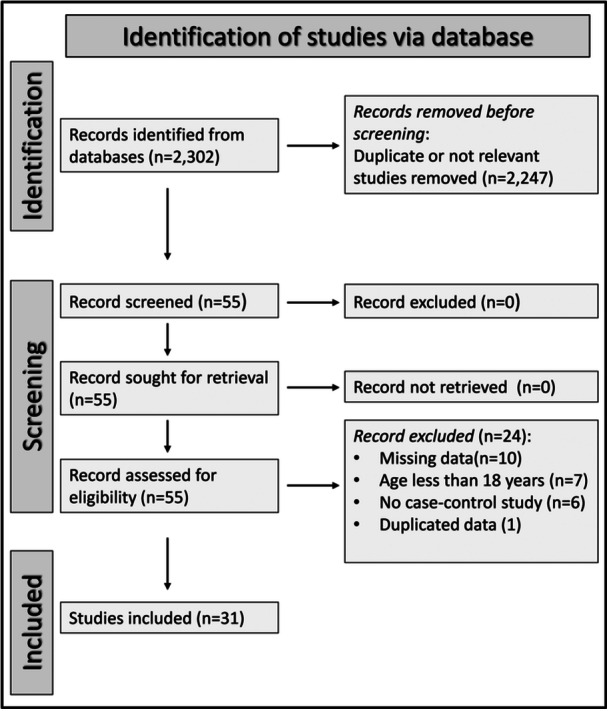
We searched the electronic databases PubMed, Web of Science, and Scopus from inception to January 31, 2024. The risk of bias and the certainty of evidence were assessed using the Joanna Briggs Institute Critical Appraisal Checklist and GRADE, respectively.
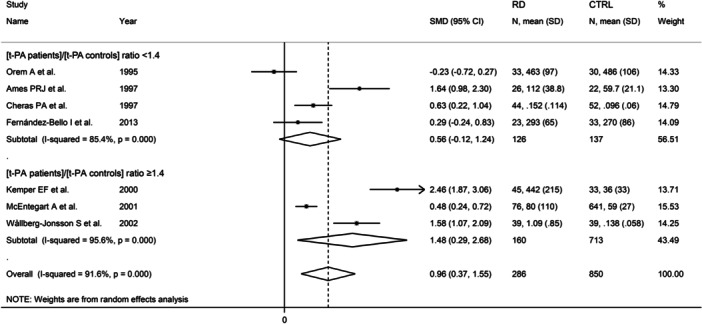
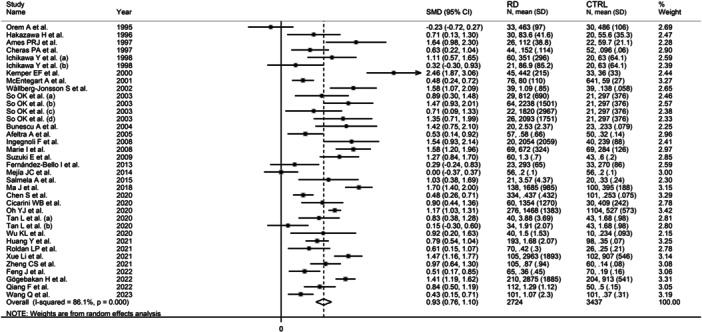
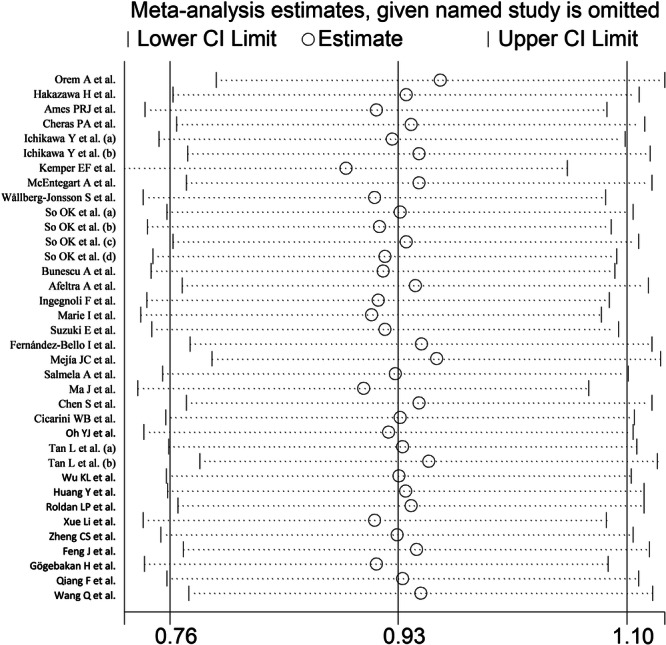
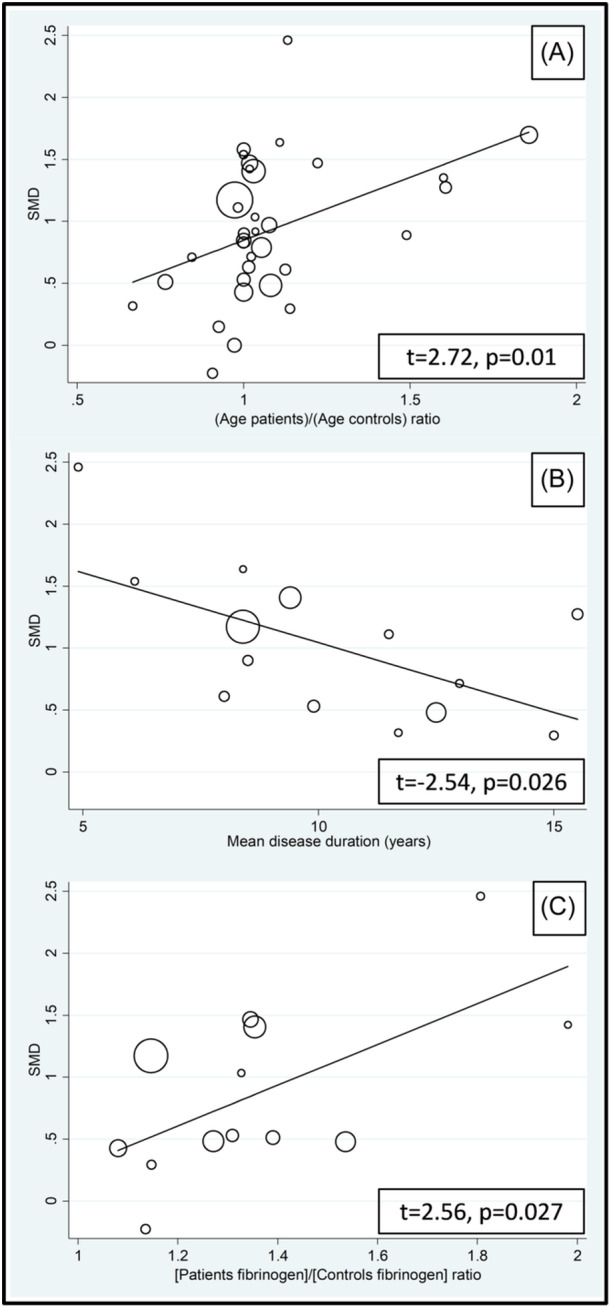
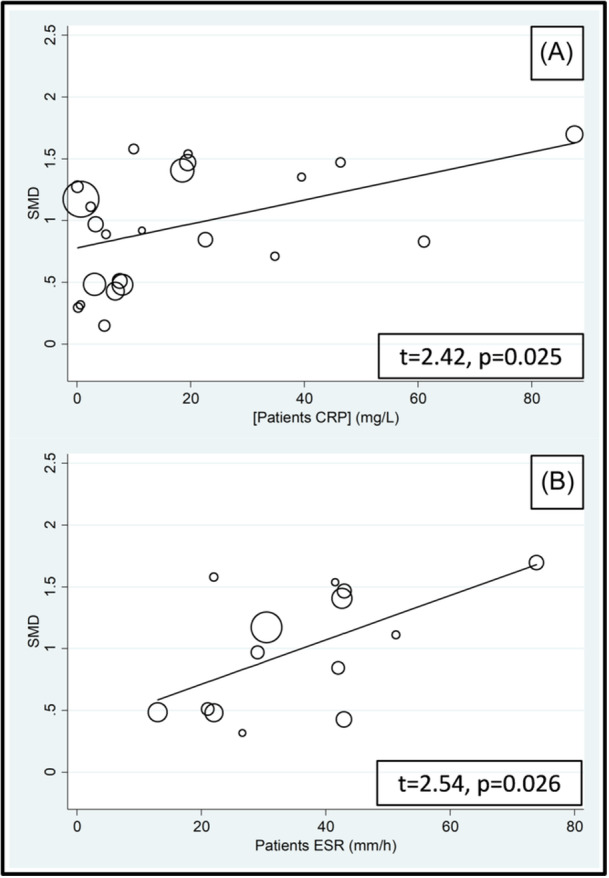
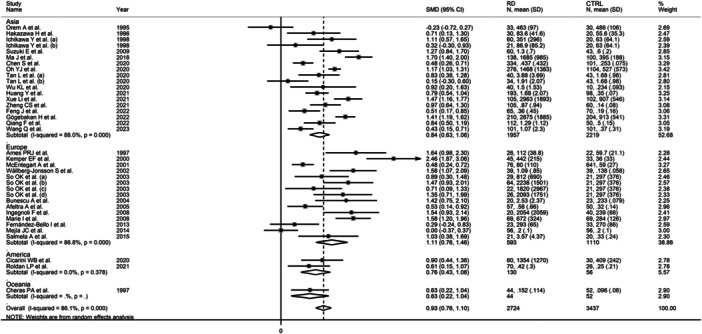
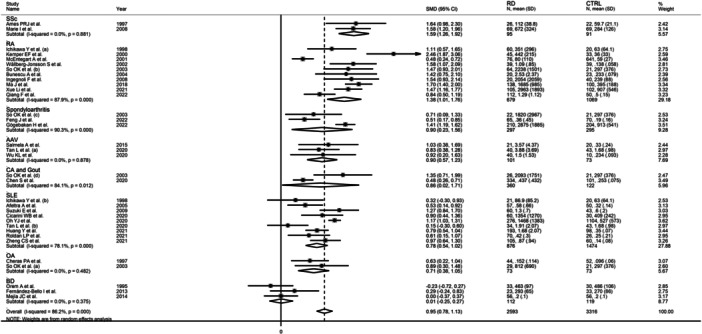
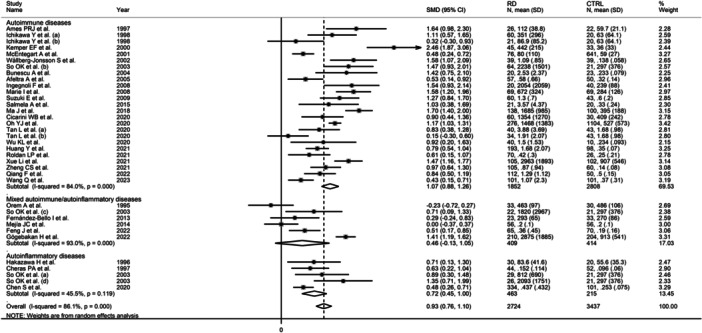
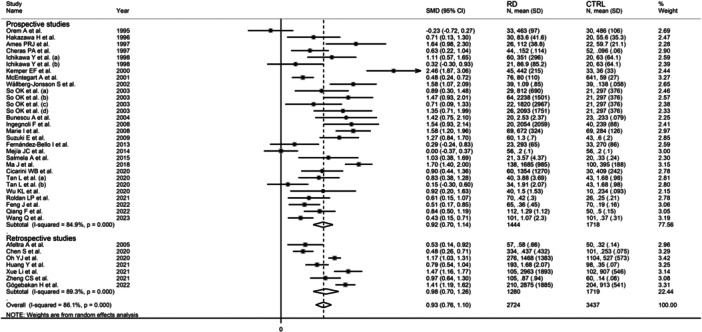
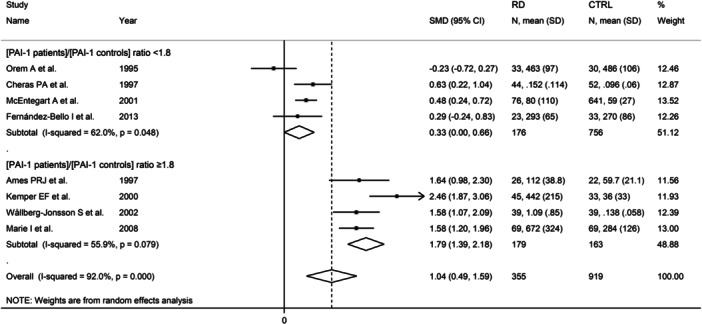
In 31 studies selected for analysis (2724 RD patients and 3437 healthy controls), RD patients had overall significantly higher d-dimer concentrations when compared to controls (standard mean difference = 0.93, 95% CI 0.76-1.10, p < .001; I = 86.1%, p < .001; moderate certainty of evidence). The results were stable in a sensitivity analysis. Significant associations were observed between the effect size of the between-group differences in d-dimer concentration and age, specific RD and RD category, RD duration, fibrinogen, plasminogen activator inhibitor, C-reactive protein, and erythrocyte sedimentation rate.
Overall, patients with RDs have significantly higher d-dimer concentrations when compared with healthy controls, indicating a state of hypercoagulability. The alterations in d-dimer concentrations are mediated by age, specific RD and RD category, RD duration, and markers of anticoagulation and inflammation. Further research is warranted to investigate d-dimer concentrations across the spectrum of RDs and their utility in predicting and managing VTE in these patients (PROSPERO registration number: CRD42024517712).
有充分的证据表明,某些自身免疫性风湿性疾病(RDs),例如类风湿关节炎和系统性红斑狼疮(SLE),与高凝状态和静脉血栓栓塞(VTE)风险增加有关。然而,关于其他自身免疫性或自身炎症性 RDs 与 VTE 之间的这种关联,信息有限。我们通过对 d-二聚体(一种已确立的高凝状态和 VTE 标志物)与 RDs 之间的关联以及可能介导这种关联的临床和人口统计学因素进行系统评价和荟萃分析,来解决这个问题。
我们从 2024 年 1 月 31 日起,在 PubMed、Web of Science 和 Scopus 电子数据库中进行了搜索。使用 Joanna Briggs 研究所批判性评估清单和 GRADE 分别评估偏倚风险和证据确定性。
在纳入分析的 31 项研究(2724 名 RD 患者和 3437 名健康对照者)中,RD 患者的 d-二聚体浓度总体明显高于对照组(标准均数差=0.93,95%CI0.76-1.10,p<.001;I=86.1%,p<.001;证据确定性为中等)。在敏感性分析中,结果稳定。在 d-二聚体浓度组间差异的效应大小与年龄、特定 RD 和 RD 类别、RD 持续时间、纤维蛋白原、纤溶酶原激活物抑制剂、C 反应蛋白和红细胞沉降率之间观察到显著关联。
总体而言,与健康对照组相比,RD 患者的 d-二聚体浓度明显升高,表明存在高凝状态。d-二聚体浓度的变化由年龄、特定 RD 和 RD 类别、RD 持续时间以及抗凝和炎症标志物介导。需要进一步研究来调查 RDs 谱中的 d-二聚体浓度及其在预测和管理这些患者的 VTE 中的效用(PROSPERO 注册号:CRD42024517712)。