Justicia-Galiano M José, Pelegrina Santiago
Department of Psychology, University of Jaén, 23071 Jaén, Spain.
Eur J Investig Health Psychol Educ. 2024 Jun 28;14(7):1913-1926. doi: 10.3390/ejihpe14070127.
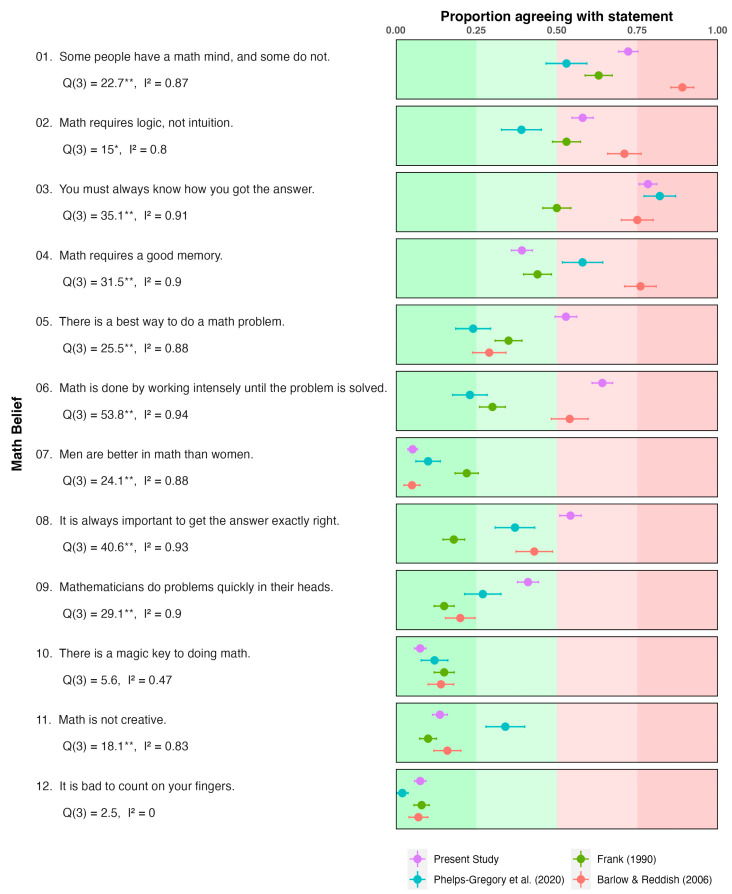
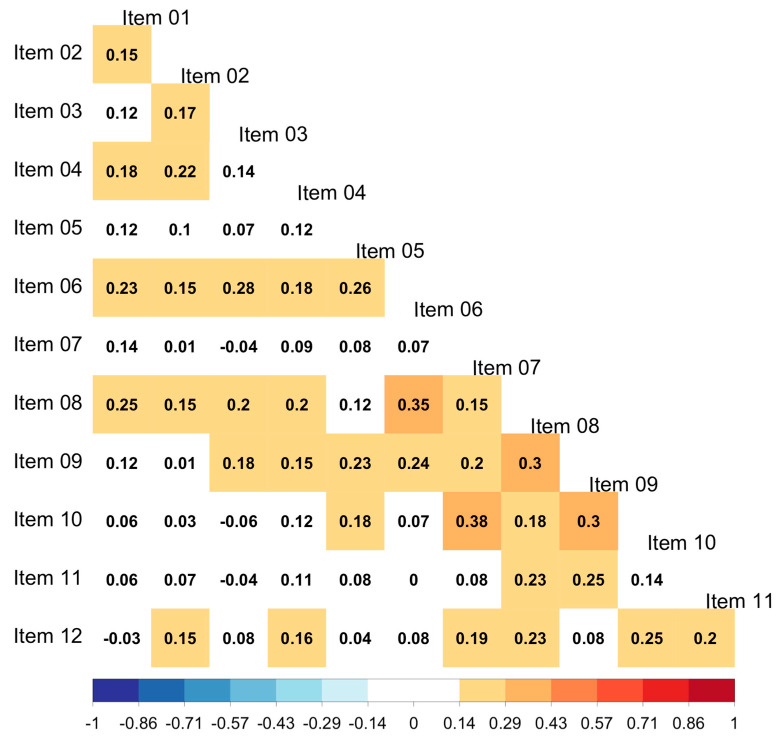
Teachers may hold beliefs about how students learn mathematics and about the subject itself. However, some of these beliefs, often referred to as "math myths", may be oversimplified ideas that appear valid but lack solid scientific evidence. This study was aimed to investigate the prevalence of math myths among Spanish pre-service teachers and compare it with the degree of support for these myths reported in previous studies; investigate the possible underlying structure of a set of false beliefs about math; and determine the relationships of certain math misconceptions with math anxiety. A total of 212 Spanish pre-service teachers were administered questionnaires about math myths and about general and math anxiety. The results showed prevalence patterns of each math misconception similar to those in previous studies. False beliefs about math showed weak or negligible correlations with each other and did not exhibit a discernible underlying structure. Furthermore, math anxiety was related to the belief that some individuals are perceived to possess a "math mind" while others do not. Our results suggest diverse origins for the development of different math myths, rather than the myths being the consequence of a single underlying factor. Finally, the endorsement of certain beliefs about who can do mathematics may contribute to negative emotions towards mathematics.
教师可能对学生如何学习数学以及数学学科本身持有一些信念。然而,其中一些信念,通常被称为“数学迷思”,可能是过于简单化的观点,看似合理但缺乏确凿的科学证据。本研究旨在调查西班牙职前教师中数学迷思的流行程度,并将其与先前研究中报告的对这些迷思的支持程度进行比较;研究一组关于数学的错误信念可能的潜在结构;并确定某些数学误解与数学焦虑之间的关系。总共212名西班牙职前教师接受了关于数学迷思以及一般焦虑和数学焦虑的问卷调查。结果显示,每种数学误解的流行模式与先前研究中的相似。关于数学的错误信念之间的相关性较弱或可忽略不计,并且没有呈现出可识别的潜在结构。此外,数学焦虑与认为有些人被认为拥有“数学头脑”而另一些人则没有的信念有关。我们的结果表明,不同数学迷思的形成有多种来源,而不是这些迷思是单一潜在因素的结果。最后,对谁能学习数学的某些信念的认同可能会导致对数学的负面情绪。