Laranjeira Angelo B A, Nguyen Dat, Pelosof Lorraine C, Doroshow James H, Yang Sherry X
Division of Cancer Treatment and Diagnosis, National Cancer Institute, National Institutes of Health, Bethesda, MD 20892, USA.
Diseases. 2024 Jul 18;12(7):163. doi: 10.3390/diseases12070163.
Ten-eleven-translocation (TET) 2 is a member of the TET family of proteins (TET1-3). gene deletion confers resistance to DNA methyltransferase (DNMT) inhibitors in colorectal, breast, and ovarian cancer cells. Currently, the effect of gene status on TET2 phenotype following DNMT inhibitor treatment is unclear in human malignancies.
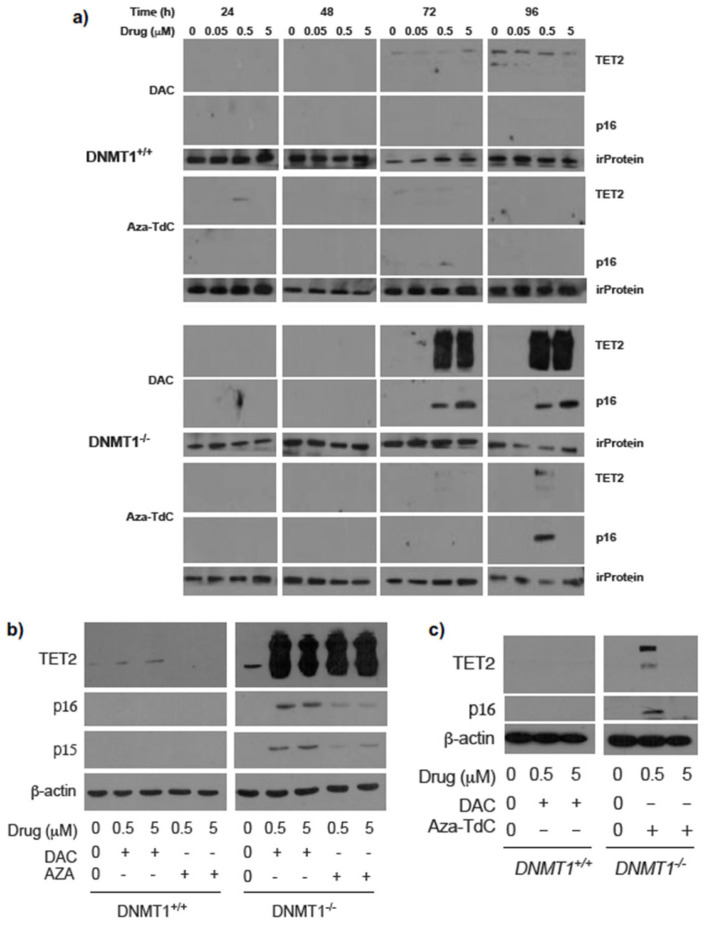
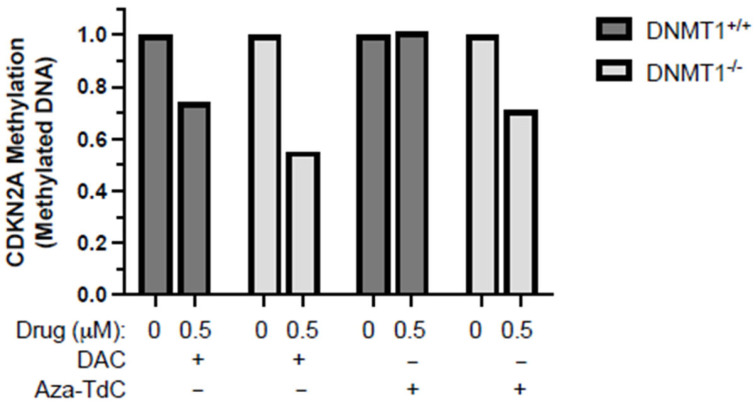
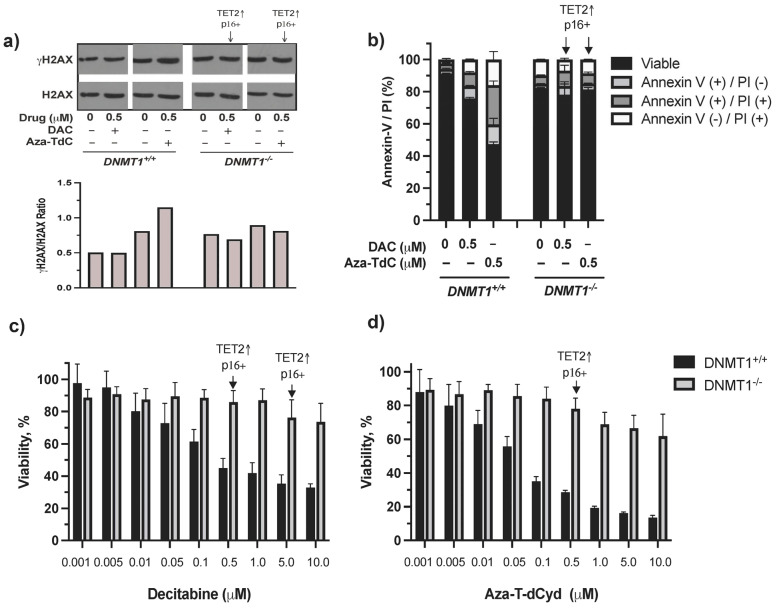
Human colorectal carcinoma HCT116 cells () and their isogenic DNMT1 knockout () counterpart were treated with DNMT inhibitors. Expression of TET2 and tumor suppressor (p16 and p15) proteins were examined by Western blot. Apoptosis and promoter demethylation following drug treatment were detected by Annexin-V apoptosis assay and methylation-specific PCR.
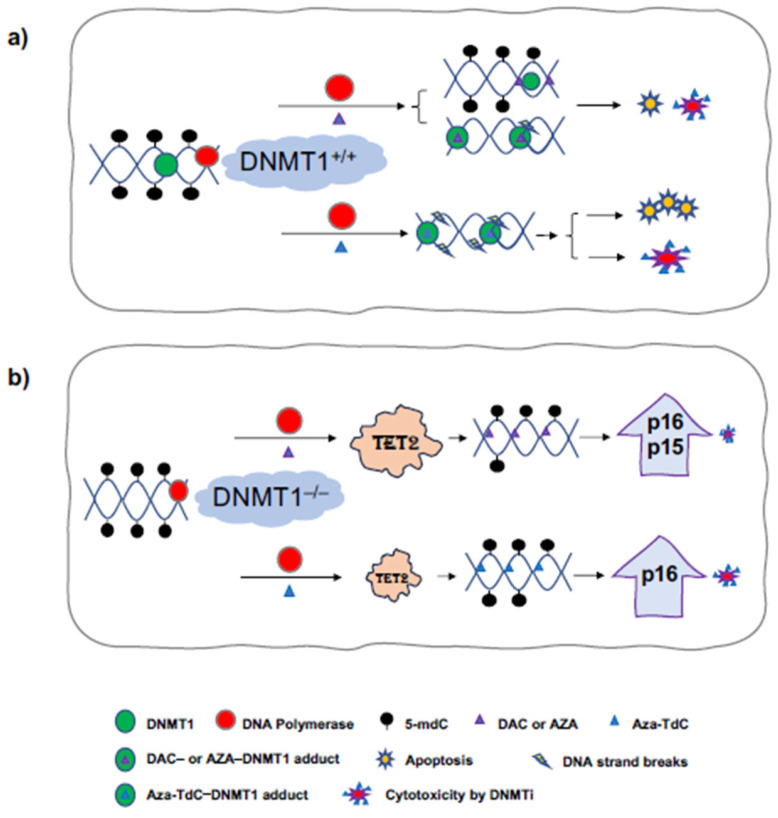
TET2 expression was robustly increased in cells by 0.5 µM and 5 µM decitabine and azacitidine treatment. Augmentation of TET2 expression was accompanied by re-expression of p16 and p15 proteins and promoter demethylation. TET2 upregulation and tumor suppressor re-expression were associated with resistance conferred by deletion. Treatment with 5-aza-4'-thio-2'-deoxycytidine at a low 0.5 µM dose only upregulated TET2 and reduced promoter methylation, and re-expression of p16 in cells. DNMT inhibitors showed minimal effects on TET2 upregulation and re-expression of tumor suppressor proteins in cells with intact .
gene deletion made cancer cells prone to TET2 upregulation and activation of tumor suppressor expression upon DNMT inhibitor challenge. TET2 augmentation is concomitant with resistance to DNMT inhibitors in a -deleted state.
10-11易位(TET)2是TET蛋白家族(TET1 - 3)的成员。基因缺失赋予结肠直肠癌、乳腺癌和卵巢癌细胞对DNA甲基转移酶(DNMT)抑制剂的抗性。目前,在人类恶性肿瘤中,DNMT抑制剂治疗后基因状态对TET2表型的影响尚不清楚。
用人结肠直肠癌HCT116细胞()及其同基因DNMT1敲除()对应物进行DNMT抑制剂处理。通过蛋白质免疫印迹法检测TET2和肿瘤抑制蛋白(p16和p15)的表达。通过膜联蛋白V凋亡检测法和甲基化特异性PCR检测药物处理后的细胞凋亡和启动子去甲基化。
0.5 μM和5 μM地西他滨及阿扎胞苷处理使细胞中TET2表达显著增加。TET2表达的增加伴随着p16和p15蛋白的重新表达以及启动子去甲基化。TET2上调和肿瘤抑制蛋白重新表达与缺失赋予的抗性相关。低剂量0.5 μM的5-氮杂-4'-硫代-2'-脱氧胞苷处理仅上调细胞中的TET2并降低启动子甲基化,以及p16的重新表达。DNMT抑制剂对具有完整的细胞中TET2上调和肿瘤抑制蛋白重新表达的影响最小。
基因缺失使癌细胞在受到DNMT抑制剂攻击时易于发生TET2上调和肿瘤抑制因子表达的激活。在缺失状态下,TET2增强与对DNMT抑制剂的抗性相伴。