Department of Neurology and Neurological Sciences, Stanford University, Stanford, CA 94305, USA.
Department of Cardiothoracic Surgery, Stanford University, Stanford, CA 94305, USA.
Stem Cell Reports. 2024 Aug 13;19(8):1061-1073. doi: 10.1016/j.stemcr.2024.06.010. Epub 2024 Jul 25.
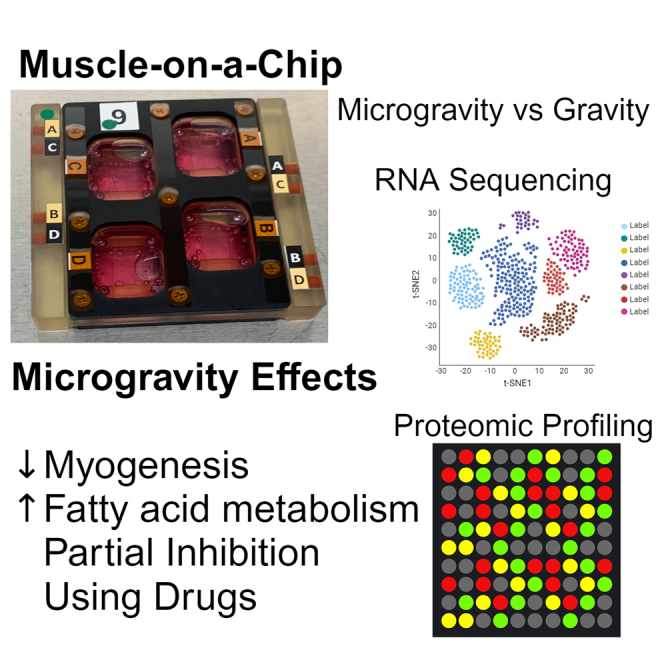
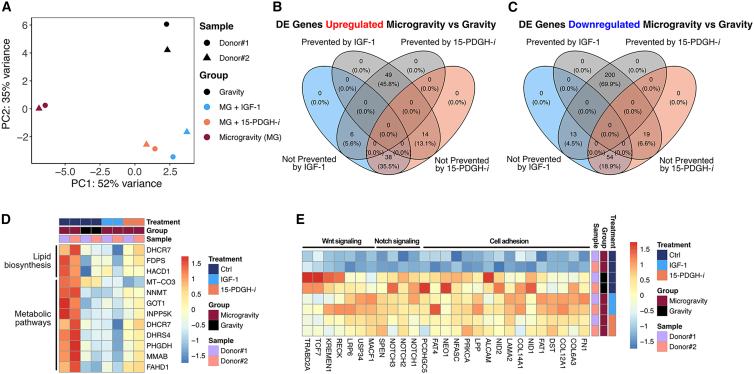
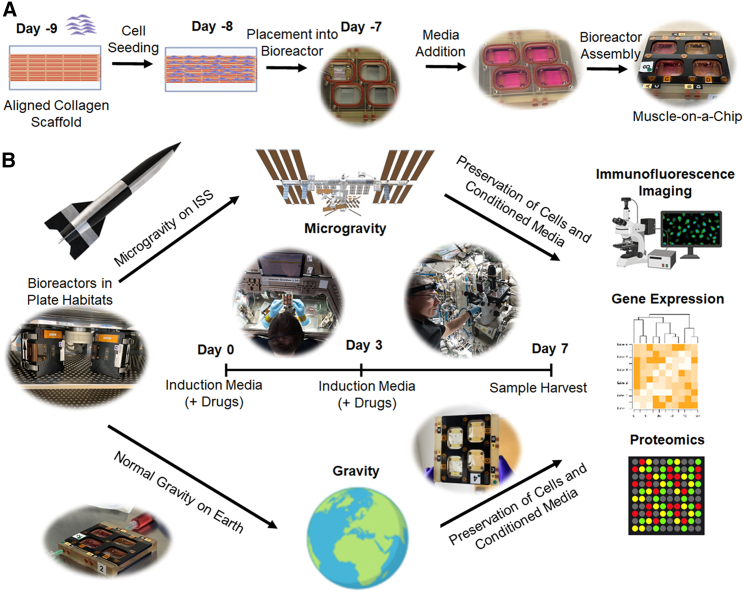
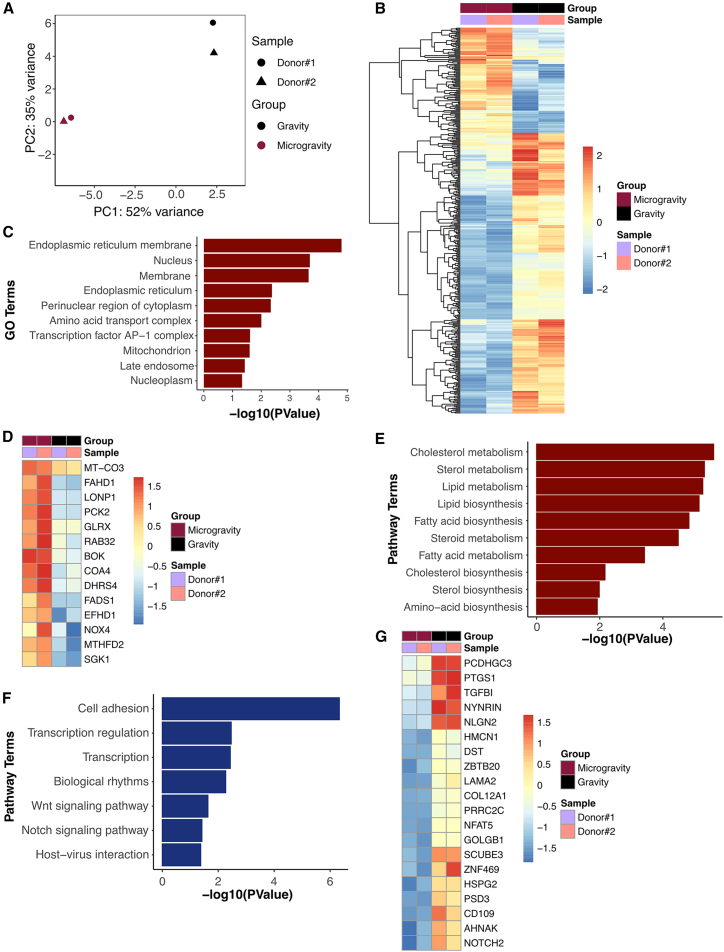
Microgravity has been shown to lead to both muscle atrophy and impaired muscle regeneration. The purpose was to study the efficacy of microgravity to model impaired muscle regeneration in an engineered muscle platform and then to demonstrate the feasibility of performing drug screening in this model. Engineered human muscle was launched to the International Space Station National Laboratory, where the effect of microgravity exposure for 7 days was examined by transcriptomics and proteomics approaches. Gene set enrichment analysis of engineered muscle cultured in microgravity, compared to normal gravity conditions, highlighted a metabolic shift toward lipid and fatty acid metabolism, along with increased apoptotic gene expression. The addition of pro-regenerative drugs, insulin-like growth factor-1 (IGF-1) and a 15-hydroxyprostaglandin dehydrogenase inhibitor (15-PGDH-i), partially inhibited the effects of microgravity. In summary, microgravity mimics aspects of impaired myogenesis, and the addition of these drugs could partially inhibit the effects induced by microgravity.
微重力已被证明会导致肌肉萎缩和肌肉再生受损。本研究旨在探讨微重力对工程化肌肉平台中肌肉再生受损模型的建模效果,并展示在该模型中进行药物筛选的可行性。将工程化人类肌肉发射到国际空间站国家实验室,通过转录组学和蛋白质组学方法研究微重力暴露 7 天的影响。与正常重力条件相比,在微重力中培养的工程化肌肉的基因集富集分析突出了向脂质和脂肪酸代谢的代谢转变,同时凋亡基因表达增加。添加促再生药物胰岛素样生长因子-1 (IGF-1) 和 15-羟基前列腺素脱氢酶抑制剂 (15-PGDH-i) 部分抑制了微重力的作用。总之,微重力模拟了肌肉生成受损的某些方面,并且添加这些药物可以部分抑制微重力引起的作用。